60% to 70% Scale: Home Theater Wall Art That Looks and Sounds Right
The best home theater wall art balances one dominant style, correct scale against your screen wall, and acoustic-friendly panels that double as decor. Pick a single visual direction rather than mixing five, size your largest piece to roughly two thirds of the wall it hangs on, and treat first reflection points before you hang anything decorative. A customizable option like Sensecanvas covers the style and scale half of that equation; the acoustics are on you.
TL;DR:
- The 2/3 rule is crucial for art sizing, meaning the main piece should cover roughly 60–70% of the wall or screen width for proper scale.
- Acoustic treatment should cover 35–40% of wall area, focusing on first reflection points and corners to effectively reduce reverberation.
- Matte or low-gloss canvas is recommended to minimize glare, with fabric or wood-slat panels offering both sound absorption and aesthetic appeal.
- Custom-sized art from Sensecanvas ensures a perfect fit for unusual wall dimensions at a reasonable starting price of $85.
- Prioritize large statement pieces and treat reflection points first, then build additional decor or multimedia art to avoid clutter and maintain style coherence.
Table of Contents
- Home Theater Wall Art Ideas Worth Copying
- Sizing and Placement: The 2/3 Rule for Theater Walls
- Combine Aesthetics and Acoustics With Art-Friendly Panels
- Materials and Finishes That Actually Work in a Dark Room
- Style Recipes for Common Theater Palettes
- Installation, Lighting, and Maintenance Checklist
- Bringing Digital and LED Art Into the Mix
- Planning Your Budget for Theater Wall Art
- Sense Canvas Perspective: Customization for Theater Walls
- Get Your Theater Wall Art From Sensecanvas
- Sources
- FAQ
Home Theater Wall Art Ideas Worth Copying
You don’t need a designer to make a screening room look intentional. You need one strong idea, executed at the right scale, and the restraint to stop there.
- Vintage movie posters and marquee art. A trio of framed lobby-card reproductions or a backlit marquee sign next to the entry sets a classic-cinema mood instantly, especially in rooms with warm wood tones or leather seating.
- Large-format single canvases or triptychs. One oversized piece, or a three-panel spread, echoes the scale of the screen itself instead of competing with it visually.
- Abstract color fields. Muted, low-contrast abstracts give your eye somewhere to rest without pulling focus from the projection, which matters more than people expect in a fully dark room.
- Pop-culture collages or fan galleries. Grid layouts of film stills, character art, or franchise memorabilia work well in dedicated fan rooms, though they read busy in a strict screening space.
- Art-faced acoustic panels. Printed canvas or fabric-wrapped panels that absorb sound while looking like conventional wall art solve two problems with one purchase, and design galleries built around media walls show this pairing constantly.
Pro Tip: Pick your dominant style before you shop for individual pieces. A room with one consistent theme, even a simple one, reads more expensive than a room with five great pieces that don’t talk to each other.
Sizing and Placement: The 2/3 Rule for Theater Walls
Getting scale right matters more in a theater than almost any other room, because the screen sets a visual benchmark everything else gets measured against.
- Apply the 2/3 rule. Your primary art piece should span roughly 60% to 70% of the visible wall width, or of the screen’s width if you’re hanging it on an adjacent wall. Undersized art on a theater wall looks like an afterthought.
- Match eye level to the seated sightline, not standing height. Measure from the main seating row, since that’s where the room actually gets used.
- Keep gallery spacing consistent. For grid arrangements, use 2 to 3 inches between frames for a tight, gallery-wall look, or 4 to 6 inches for a more relaxed spread. Symmetry reads as intentional; uneven gaps read as accidental.
- Reserve the screen wall for acoustic treatment, not art. Hang your statement piece on the rear or side wall instead, where it won’t distract during playback.
Combine Aesthetics and Acoustics With Art-Friendly Panels
Wall art in a home theater has a job beyond looking good: it needs to coexist with sound treatment, or ideally do double duty as it.
Professional guidance points to treating 35% to 40% of a theater’s wall area with acoustic panels to bring reverberation time down to a target RT60 times in a low to moderate range. That’s a meaningful chunk of wall, and first reflection points, front corners, and the rear wall matter most.

A simple way to find those first reflection points: sit in your main seat, have someone slide a mirror along the side walls, and mark wherever you can see the front speakers reflected back at you. Those spots get treated first.
Thickness matters too. 2-inch panels handle mid and high frequencies like dialogue effectively, while 4-inch panels and corner bass traps are needed for low-frequency control. A reasonable starting point:
- A small starter package of several reflection-point panels plus corner bass traps.
- Expand coverage toward that 35 to 40% target based on how the room sounds once you’re actually watching something in it.
- Choose printed canvas-faced panels, fabric-wrapped panels, or wood-slat acoustic panels if you want the treatment to disappear into the decor.
Wood-slat panels in particular can reach an NRC around 0.85 while looking like a designed feature wall rather than a recording booth.
Materials and Finishes That Actually Work in a Dark Room
Glare is the enemy of good projection, and the wrong print finish will fight your screen every time the lights come up between scenes.
- Choose matte or low-gloss canvas over glossy paper prints. Gloss bounces ambient light and sconce glow straight back at your seating area.
- Canvas outperforms framed glass for durability and texture, and it doesn’t create the reflective plane that glass-covered prints do.
- Check for Class A fire ratings on any fabric-wrapped panel or acoustic material, particularly if it’s going near electrical fixtures or projector wiring.
- Skip heavy frames. A no-frame gallery wrap or a thin dark frame blends into a dark room; a wide gold frame becomes its own light source under sconce lighting.
Designers who specialize in high-end screening rooms consistently point out that controlling ambient light and reflectance does more for perceived picture quality than most equipment upgrades. Your wall art choices are part of that light control, whether you plan for it or not.
Style Recipes for Common Theater Palettes
- Vintage cinema: warm amber and red tones, a three-panel poster spread, incandescent wall sconces on a dimmer.
- Modern minimal: one oversized monochrome canvas, a slim black frame or no frame, recessed lighting with no direct wash on the art.
- Pop and fan room: themed grid layouts, backlit shadow-box frames, accent LEDs aimed away from the screen so they don’t wash out contrast.
- Dual-purpose media room: acoustic fabric panels, open shelving for media, and a thick rug to cut floor-level reflection, all supporting the main art piece rather than competing with it.
Installation, Lighting, and Maintenance Checklist
Heavier canvas-faced acoustic panels need real hardware, not a couple of nails. Z-clips and French cleats distribute weight across a wider surface and let you pull a panel off quickly for cleaning; toggle anchors work fine for lighter canvas prints on drywall.
- Measure the wall and mark your centerline relative to seated eye level.
- Mark hanging points, accounting for cleat or clip placement.
- Install anchors rated for the piece’s actual weight, not just its apparent size.
- Hang, then check level against the screen edge, not just the floor.
Keep lighting on dimmable circuits, and avoid sidelighting that throws glare across the screen itself. Dust canvas with a dry microfiber cloth; vacuum fabric-faced panels on the lowest setting with a brush attachment.
Bringing Digital and LED Art Into the Mix
Static canvas isn’t the only option anymore, and plenty of theater owners are mixing in screens built specifically to display art. A digital art frame, essentially a matte display designed to mimic canvas texture, can rotate through dozens of images so your wall changes with your mood or the season without touching a hammer.
The trick in a screening room is placement and brightness control. A digital display positioned on a side or rear wall works well; one facing your seating angle at eye level can throw enough light to affect black levels during playback, so keep brightness low and avoid glossy-finish displays that create their own reflections.
LED accent strips behind a canvas or acoustic panel add a subtle glow without acting as a light source aimed at the room. Backlighting works particularly well behind fan-themed grids or a marquee-style sign, giving you a bar or lounge feel between screenings. The key rule holds regardless of what’s generating the light: nothing should point toward the screen, and nothing should be bright enough to lift ambient light above what your projector can compete with.

Static and digital art aren’t mutually exclusive either. A lot of well-designed rooms use one dominant canvas piece for scale and one smaller digital frame for variety, treating the digital piece as you would treat a rotating gallery rather than the room’s visual anchor.
Planning Your Budget for Theater Wall Art
Framing and acoustic treatment both cost money, and the smart move is to plan them as one line item instead of two separate impulse purchases.
Start with your largest, most visible piece, since that’s the one setting the tone for the whole room. Customizable canvas options give you more control per dollar than pre-framed retail art, because you’re not paying for a standard size that might not fit your wall. From there, budget separately for acoustic treatment, since a starter package of reflection panels and corner traps is a real cost most first-timers underestimate.
A workable split for a mid-size theater: put roughly half your decor budget toward one or two statement canvas pieces, and the other half toward acoustic panels that can also serve as secondary wall art. If money is tight, prioritize the first reflection points and the piece behind the primary seating row. Everything else, additional gallery walls, accent lighting, digital frames, can be added later without redoing the room.
One more thing worth budgeting for: custom sizing. A piece that’s slightly too small for its wall looks cheap no matter what it cost; a piece cut to fit exactly looks finished.
Sense Canvas Perspective: Customization for Theater Walls
Standard art sizes rarely fit theater walls cleanly, which is the most overlooked problem in this whole category. Sensecanvas builds around custom sizing and low-glare canvas finishes specifically so a piece can be cut to match an odd-shaped media wall instead of forcing the wall to match the art. Themes range from abstract to pop culture. If your wall has an unusual width or height, request custom dimensions before you commit to a layout.
— Sense
Get Your Theater Wall Art From Sensecanvas
Sensecanvas is the practical alternative to hunting through big-box retail sizes that never quite fit a theater wall. Every design among the 15,000-plus options can be customized to your exact dimensions, so a triptych spanning an odd 9-foot wall or a single canvas sized to your specific screen width is a standard request, not a special order.
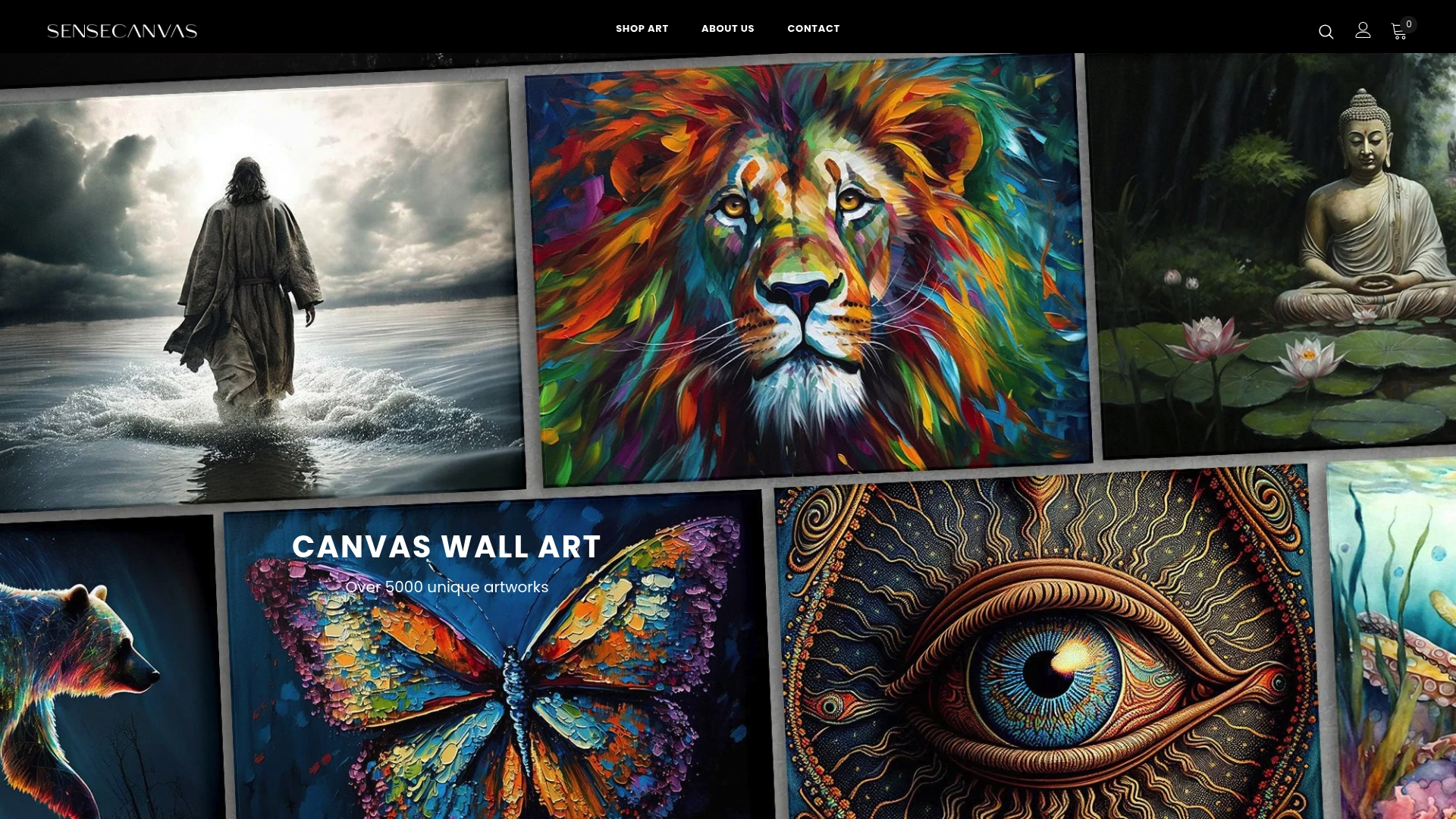
The Canvas Wall Art landing page is a fast way to browse by theme, whether you’re after abstract color fields for a modern minimal room or something bolder for a fan-themed setup. The full collection listing lets you compare styles side by side before you commit. If you’re leaning toward a game-room or lounge-adjacent theater, the playing card canvas is a popular pick for that vibe.
Before you order, measure your primary wall and note the screen width. Then use the custom-size option to get a piece proportioned correctly on the first try instead of returning something that arrived too small.
Sources
- Acoustic panels for home theater — Valerion
- Acoustic panels for home theaters: complete setup guide — Acoustic Sound Panels
- Home theater with a media wall ideas — Houzz
FAQ
What Is the 2/3 Rule for Wall Art?
In a home theater, that usually means measuring against the screen’s width if the art hangs on an adjacent wall, or the full wall width if it’s the focal piece.
How Do I Decorate a Home Movie Theater?
Pick one dominant style first, whether that’s vintage cinema, modern minimal, or a pop-culture fan room, then size your primary art piece using the 2/3 rule. Treat acoustic first reflection points before adding purely decorative pieces, and consider customizable canvas art sized specifically to fit your walls.
What Is the Best Wall Covering for a Home Theater?
Matte or low-gloss canvas is generally the best choice because it resists the glare that glossy paper prints and framed glass create under sconce lighting. Fabric-wrapped acoustic panels and wood-slat panels also work well since they combine sound absorption with a finished look.
What Are Some Good Accessories for a Home Theater?
Dimmable sconces, blackout window treatments, and acoustic panels placed at first reflection points all improve the viewing experience more than most people expect. Rugs and fabric elements also help cut floor-level sound reflection in dual-purpose media rooms.
Does Sensecanvas Offer Custom Sizes for Theater Walls?
Yes, Sensecanvas allows customers to request custom sizing and finishes so canvas art fits irregular or oversized media walls. Pricing starts at $85, with options available across the full collection.