How to Create a Cohesive Home Art Theme
A cohesive home art theme is defined as a unified visual language across your living spaces, where artwork guides your color palette, furniture choices, and lighting rather than simply filling empty walls. Most decorators get this backward. They buy furniture first, then hunt for art that fits the gaps. The result is a room that looks assembled rather than designed. When you start with art, every other decision follows naturally, and the space feels intentional from floor to ceiling.
How do you create a cohesive home art theme that actually works?
The core principle is simple: art leads, everything else follows. An art-focused interior prioritizes artwork as the foundation of design, guiding color palettes, furniture, lighting, and mood for a cohesive, emotionally powerful space. That means before you pick a sofa color or a rug pattern, you choose the artwork that will anchor the room.
This approach changes how you shop, how you arrange, and how you edit. A bold abstract canvas with deep teal and warm ochre tells you exactly what throw pillows, curtains, and accent furniture will work. You stop guessing and start building with purpose.
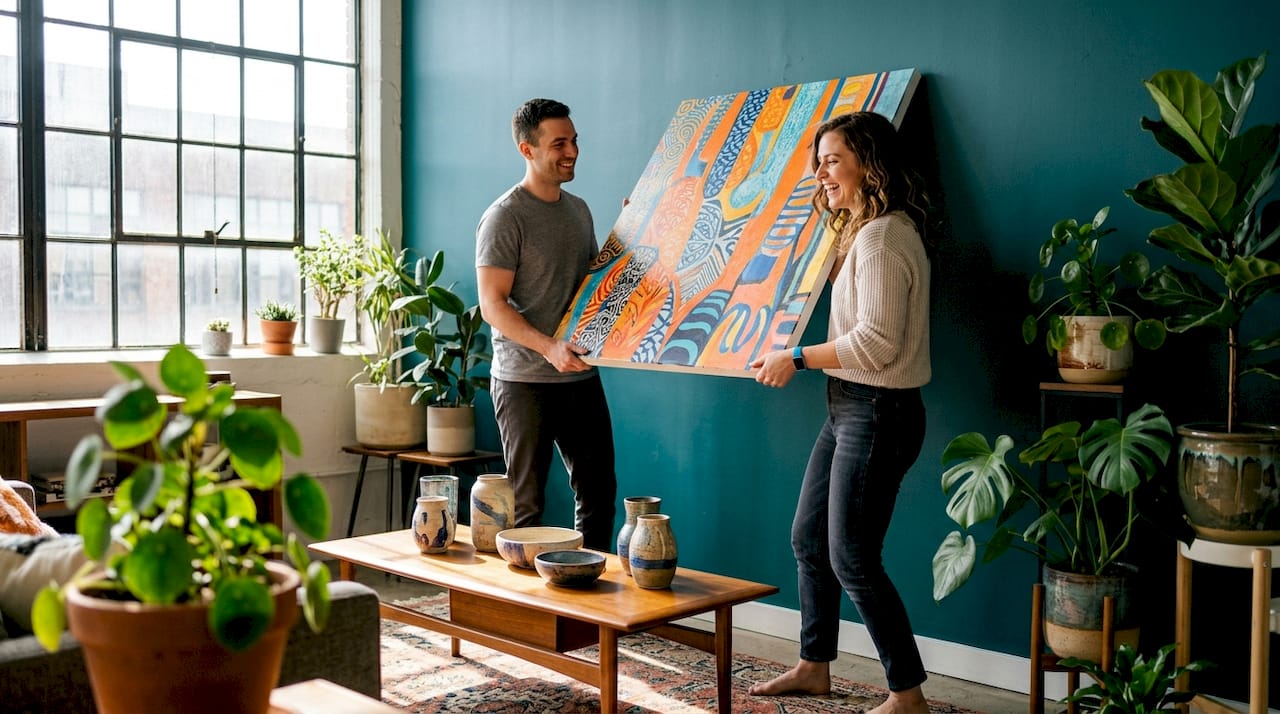
The result is not just a prettier room. It is a space that feels like it belongs to you, because the art you chose reflects your taste and every other element supports it.
How do you choose the focal artwork that anchors your room?
Scale is the first decision, and most people choose too small. Oversized art pieces measuring 60 to 72 inches or larger are a dominant trend in luxury interiors, frequently used as focal anchors replacing multi-piece gallery walls for cleaner aesthetics. A single large canvas commands a room in a way that a cluster of small frames never can.
A single oversized artwork often serves as the emotional center and focal point in a room, evoking a strong personal statement rather than filling space. That distinction matters. You want your focal piece to stop people when they walk in, not blend into the background.
When matching art scale to your room, use these guidelines:
-
Living room: Choose a canvas that spans at least half the length of your main sofa wall.
-
Bedroom: A piece above the headboard works best when it is wider than the headboard itself.
-
Dining room: Art hung at eye level should feel like a window, not a postage stamp.
-
Entryway: A tall, narrow format draws the eye upward and makes ceilings feel higher.
Pro Tip: Select your focal artwork before buying any furniture. Pull the dominant colors from the piece and use them as your palette guide for the entire room. This one step eliminates most decorating mistakes.
What tools and techniques help blend diverse art styles?
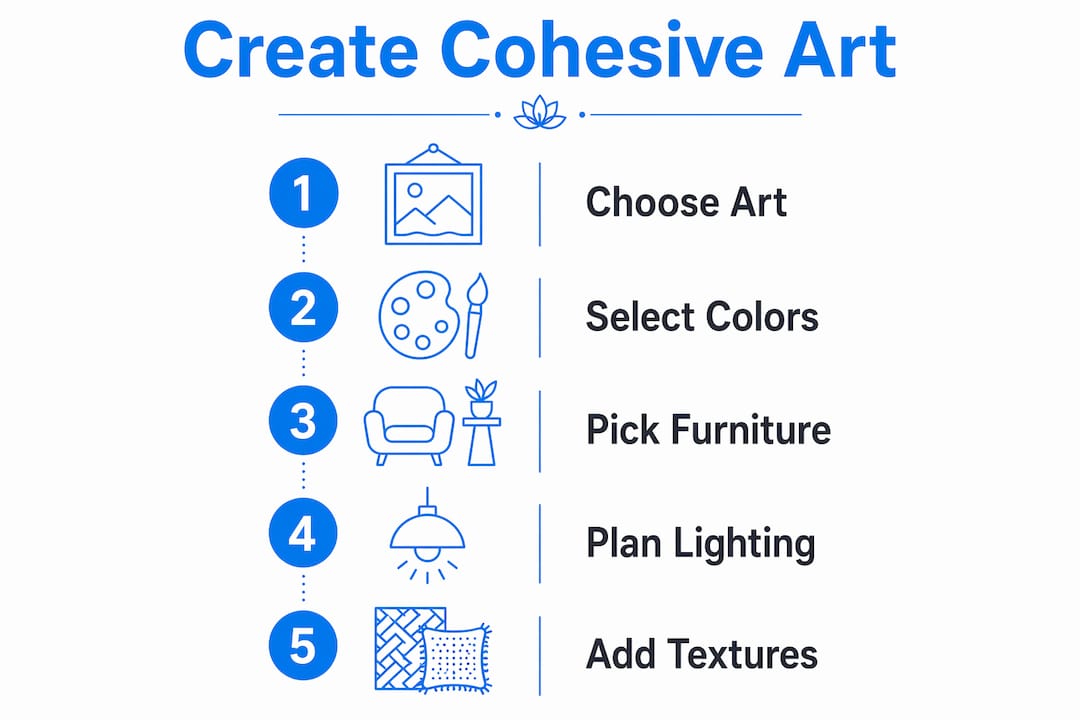
Blending different art styles without creating visual chaos requires a unifying thread. Repeating a color, material, or thematic element across diverse artworks helps create visual connection and flow despite style variety in cohesive home art themes. You do not need every piece to match. You need them to speak the same visual language.
Using a consistent color palette inspired by key artworks across multiple rooms fosters visual flow and cohesion in home interiors. Pull two or three colors from your focal piece and repeat them in supporting art throughout the home.
Here are the most effective techniques for blending art styles:
-
Anchor with color. Choose one or two colors that appear in every room’s art, even if the styles differ wildly.
-
Standardize your frames. Matching frame finishes (all black, all natural wood, all gold) unify pieces that have nothing else in common.
-
Vary subject matter, not tone. A moody black-and-white photograph and a moody abstract painting share an emotional register even if they look nothing alike.
-
Use scale contrast intentionally. Pair one large statement piece with two or three smaller supporting works rather than hanging five medium-sized pieces at random.
Intentional layering of mixed media art elements adds texture and visual depth, helping blend individual pieces into a cohesive thematic display. A canvas print next to a framed textile or a sculptural wall piece creates richness that flat art alone cannot achieve.
Pro Tip: Use a neutral wall color, warm white or soft greige, as your base. Neutral walls let the art carry the color story without competing with it.
How to incorporate art-focused interior design in your home decor
Art-focused interior design means letting your artwork set the rules for every other design decision in the room. The furniture supports the art. The lighting highlights the art. The textiles echo the art’s palette. This is the opposite of how most people decorate, and it produces dramatically better results.
“Treating art as the foundation of interior design rather than an afterthought leads to stronger, more personal and cohesive spaces. When art comes first, every other element has a clear reference point.”
Furniture placement should frame your focal artwork, not compete with it. A sofa centered under a large canvas creates a natural conversation area. Accent chairs in colors pulled from the painting reinforce the connection. The room reads as designed rather than decorated.
Lighting deserves more attention than most decorators give it. Picture lights, directional spotlights, and warm-toned bulbs all change how art reads on a wall. A canvas that looks flat under cool overhead lighting can become vivid and dimensional under a warm directional spot.
Maximalism with intentional layering and quiet luxury with restrained placement combine in modern interiors, making oversized statement art the anchor with textures and objects layered around it. You do not have to choose between a full, layered room and a spare, minimal one. The art determines which direction feels right.
Consider these approaches when applying art-focused design:
-
Let the art set the mood. A serene landscape calls for soft textiles and calm furniture lines. A bold graphic print can handle stronger shapes and brighter accents.
-
Use art to differentiate rooms. Each room can have its own personality while still connecting to the whole through shared color threads.
-
Bring art into unexpected spaces. Bathrooms, hallways, and home offices benefit from intentional art choices just as much as living rooms do.
What are common mistakes to avoid when building your art theme?
The most damaging mistake is treating art as an afterthought. Common mistakes include adding art post furniture selection and neglecting scale or color harmony, which breaks visual cohesion. When art is the last purchase, it rarely fits the room as well as it could.
Watch out for these specific pitfalls:
-
Hanging art too high. The center of a piece should sit at roughly 57 to 60 inches from the floor, which is average eye level.
-
Choosing art that is too small. A piece that looks large in a gallery can disappear on a full-sized living room wall.
-
Ignoring color temperature. Warm-toned art fights with cool-toned furniture and vice versa. Check the undertones before you commit.
-
Overcrowding walls. More art does not mean more cohesion. Negative space gives each piece room to breathe and be seen.
Troubleshooting is part of the process. If a room feels visually cluttered, remove one piece rather than rearranging everything. If it feels empty, the issue is usually scale, not quantity. One larger piece solves the problem faster than adding three small ones.
Pro Tip: Live with your focal artwork for two weeks before buying anything else. You will start to see exactly which colors and shapes the room needs to support it.
How can you personalize your art theme while keeping it harmonious?
Personalization and cohesion are not opposites. The most memorable rooms mix art styles, mediums, and subjects within a unifying framework. Varying art styles linked by color or framing enhances interest rather than creating confusion.
Abstract, floral, and photography styles can coexist beautifully when they share a tonal range. A black-and-white botanical photograph, a monochrome abstract canvas, and a graphic architectural print all feel connected despite their different subjects. The shared palette does the work.
Consider these ways to build a personal, unified collection:
-
Mix mediums. Canvas prints, framed photography, and textile art each bring different textures that add depth to a wall.
-
Include one unexpected piece. A vintage find, a piece from a local artist, or a work with personal meaning gives your collection a story that mass-produced sets cannot replicate.
-
Repeat a motif across rooms. Botanical shapes, geometric patterns, or a specific animal theme can thread through different rooms in different styles and still feel connected.
-
Use DIY art strategically. A hand-painted canvas in your room’s exact accent color ties everything together and costs almost nothing.
Layering textures and materials builds warmth that flat art alone cannot provide. A woven wall hanging next to a canvas print, or a framed piece leaning against a shelf rather than hung, adds the kind of casual confidence that makes a room feel lived-in and curated at the same time.
Key Takeaways
A cohesive home art theme requires choosing artwork first and letting it guide every other design decision, from color palette to furniture placement.
| Point | Details |
|---|---|
| Art leads design | Choose your focal artwork before selecting furniture, paint, or textiles. |
| Scale determines impact | Oversized pieces measuring 60 to 72 inches or larger anchor rooms more effectively than grouped small works. |
| Unify through color | Repeat one or two colors from your focal piece across all supporting art and decor. |
| Avoid art as afterthought | Adding art last breaks cohesion; it should be the first purchase, not the final one. |
| Personalize within a framework | Mix styles, mediums, and subjects freely as long as a shared color or framing thread connects them. |
What I have learned from designing art-first spaces
The single biggest shift I have seen in how people approach home decor is the move from “what art fits my room” to “what room fits my art.” That change sounds small. The results are not.
Rooms designed around art have a quality that furniture-first rooms rarely achieve. They feel settled. Every element has a reason to be there. The art is not decorating the room. The room is honoring the art.
The practical lesson I keep coming back to is this: start bold, then edit down. Choose a focal piece that genuinely excites you, something that would look at home in a gallery, and build the room around it. You will make fewer purchases overall, and the ones you make will be right.
Restraint matters as much as selection. One great piece with breathing room beats five average pieces competing for attention. The rooms that stay beautiful over years are the ones where someone made fewer, better decisions.
— Sense
Find your next statement piece at Sensecanvas
Building a unified art theme starts with finding the right anchor piece, and that is exactly where Sensecanvas delivers. With over 15,000 unique canvas artworks spanning abstract, motivational, animal, and graphic styles, the collection gives you real options for every room and every aesthetic direction.
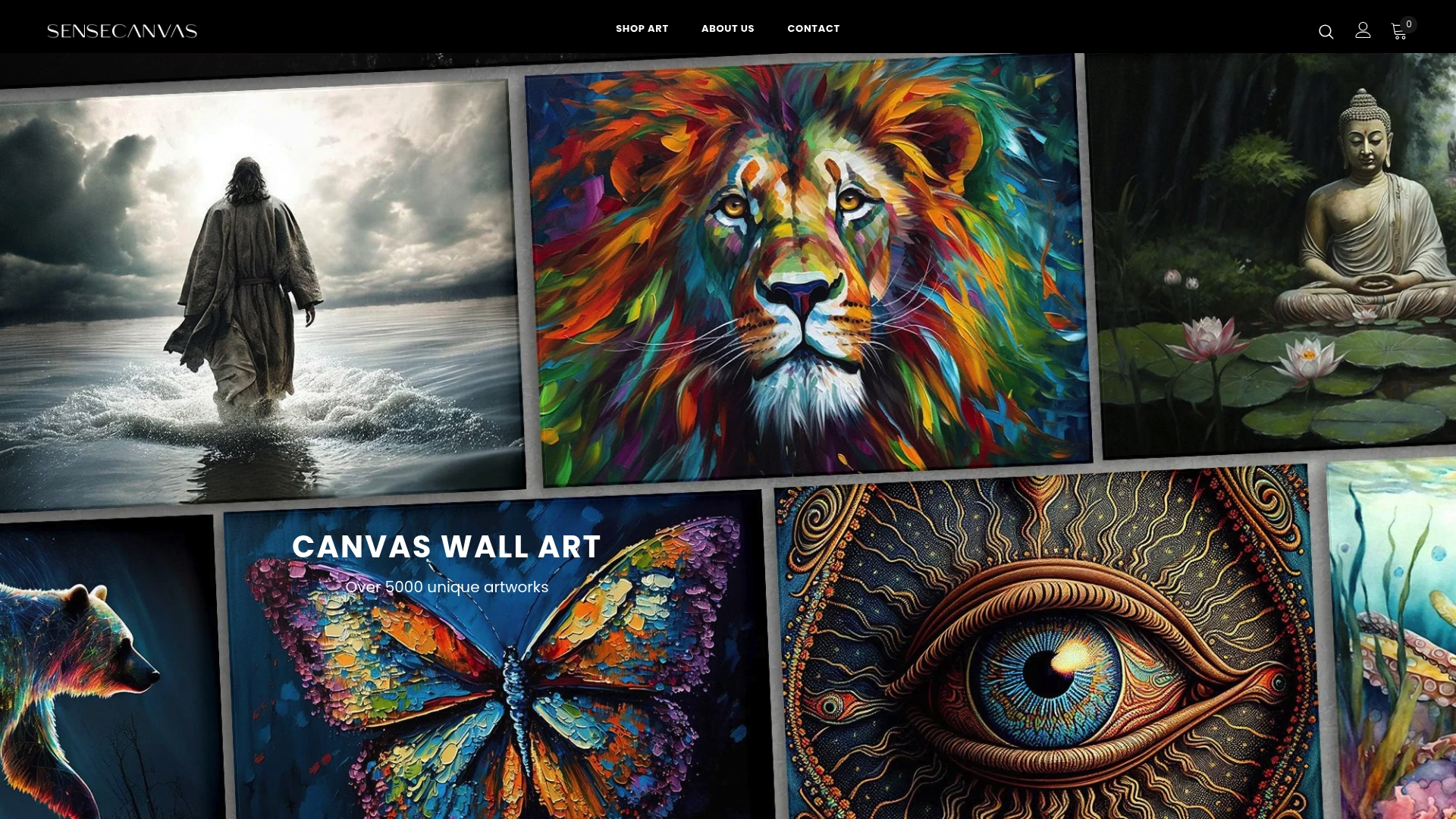
Sensecanvas offers custom sizing so your focal piece fits your wall precisely, not approximately. Prices start at $85, making it practical to invest in a statement canvas that genuinely anchors a room. Whether you are looking for a bold oversized print to command a living room wall or a striking canvas artwork to set the tone for an entire space, the catalog has the depth to match your vision.
FAQ
What is a cohesive home art theme?
A cohesive home art theme is a unified visual approach where artwork guides the color palette, furniture, and lighting of a space. Art leads every design decision rather than filling leftover wall space.
How do I choose the right size art for my wall?
The 2/3 rule suggests artwork width should be roughly two-thirds the width of the furniture below it. For walls without furniture, aim for a piece that fills at least half the wall’s width.
Can I mix different art styles and still look cohesive?
Yes. Repeating a shared color, frame finish, or tonal range across different styles creates visual connection. The styles can vary as long as a unifying thread runs through the collection.
Where should I hang art in a room?
Hang art so the center of the piece sits at 57 to 60 inches from the floor, which aligns with average eye level. This applies to most rooms regardless of ceiling height.
Should I buy art before or after furniture?
Buy art first. Choosing artwork before furniture gives you a clear color palette and mood to build around, which produces more cohesive and intentional results than fitting art into an already-furnished room.