Mood Led Nursery Canvas Art Ideas plus 2 Weekend DIY Projects
The strongest nursery canvas directions for 2026 are tonal abstracts, watercolor woodland animals, botanicals, moon and star motifs, and personalized name or quote prints, all leaning toward warm, earthy tones. Buy ready-made when you want speed and lower cost, customize when size or palette matching matters, and save DIY for small accent pieces. The sections below cover palettes, layout rules, safety, and how to decide between the three.
TL;DR:
- Customization is essential for odd-sized walls, palette matching, and personalized details that standard prints cannot accommodate effectively.
- Earthy tones like sage, clay, and muted sky blue are trending for 2026 nursery art, providing longevity beyond short-lived pastel themes.
- Simple DIY projects, such as decoupage or vegetable-stamped fabric hangings, can be completed in a weekend with common supplies and proper drying time.
- Gallery layouts should follow cohesive ideas and safe hanging practices, avoiding heavy or glass pieces directly above cribs for safety reasons.
- Sense Canvas offers over 15,000 customizable designs starting at $85, making it a practical choice for tailored nursery wall art.
Table of Contents
- 1. Top themes and motifs for nursery canvas art
- 2. Easy DIY canvas projects you can finish this weekend
- 3. 2026 color trends and how to pick a palette that lasts
- 4. Gallery layouts, sizing, and safe placement rules
- 5. Ready-made, customized, or DIY: how to decide
- 6. Why customization solves common nursery art problems
- 7. Choose mood and longevity over short-lived novelty
- 8. Sense Canvas: a simple next step
- Sources
- FAQ
1. Top themes and motifs for nursery canvas art
Choosing a theme is easier once you sort ideas by mood rather than by subject alone. Calm and neutral options wear well over years, storybook pieces invite conversation, and botanicals or abstracts fill in gallery gaps without competing for attention.
- Tonal abstract swirls: soft, layered brushstrokes in one or two hues work well as a hero canvas above a dresser, typically sized to suit the space, printed on matte canvas for a soft finish.
- Watercolor woodland animals: foxes, rabbits, and owls in muted washes suit a small gallery set near the reading nook, with panels sized proportionally to the space.
- Botanical studies: single stems or pressed-leaf style prints pair naturally with a crib wall when kept lightweight and unframed, 16x20 inches is a common size.
- Moon and stars: a simple crescent or constellation line drawing on a dusty sky-blue ground works well above a changing table.
- Storybook character sets: three to six small characters printed as a cohesive cast create a gallery wall that grows with the child, a route watercolor woodland printable makers recommend for building a tiny narrative before printing.
- Personalized name or birth detail prints: a child’s name paired with a birth date or weight makes a meaningful keepsake piece for the space above a crib’s eye level, not directly over it.
- Playful heritage patterns: gingham geometry or simple plaid blocks bring texture without overwhelming a small room, an idea Pehr’s nursery trends report folds into its broader style groupings.
- Coastal calm scenes: pale wave lines or a single sailboat silhouette suit rooms with natural light and light wood furniture, a style well detailed in this Coastal Lighting Style Explained guide.
- Soft minimalist line art: a single continuous line sketch of a parent and child works as an understated accent next to a louder hero piece.
- French countryside botanicals: lavender sprigs or olive branches in muted greens pair with wicker and rattan furnishings.
Finish choices matter as much as subject. A matte, unframed canvas keeps weight down near the crib, while a framed piece suits a reading nook or hallway gallery where weight is less of a concern.
2. Easy DIY canvas projects you can finish this weekend
Two DIY routes cover most nursery needs without requiring painting skill. Both rely on common craft supplies and dry fast enough for a weekend project.
- Paper-to-canvas decoupage: gather an 8x10 canvas, printed cardstock (not regular paper), Mod Podge, and a foam roller. Apply a thin, even layer of adhesive, smooth the cardstock from the center outward to avoid air bubbles, then let it dry overnight before hanging, following the supply and step guidance in this DIY canvas nursery project.
- Vegetable-stamped fabric hanging: use a canvas drop cloth, acrylic paint, wooden dowels, and yarn for hanging. A carrot stamp gives small polka dots while a potato gives broader shapes, and testing the layout on taped printer paper first avoids wasted fabric.
Pro Tip: Thin adhesive layers and an overnight dry time prevent the bubbling that ruins most first-try decoupage canvases.
Keep wet media and small parts, pins, dowel ends, loose yarn, away from areas the child can reach once mobile. Lightweight, unframed canvases are the safer choice for anything hung near the crib itself.

3. 2026 color trends and how to pick a palette that lasts
Nursery palettes for 2026 are shifting toward warm, earthy tones that age well and photograph well in natural light. Mushroom taupe, clay, sage, putty, and muted sky blue are leading the shift away from pastel baby themes, a move the 2026 nursery color trends report ties directly to longevity and layered texture.
Earthy, muted palettes are replacing traditional pastels as the default 2026 nursery direction, according to the same color trends analysis, which recommends pairing these tones with natural materials for rooms that still feel fresh years later.
- Sage plus woodland animals: a muted green background lets animal illustrations stay the visual focus.
- Clay plus botanical studies: warm terracotta tones deepen pressed-leaf or single-stem prints.
- Putty plus storybook characters: a neutral backdrop keeps a multi-piece character gallery from feeling busy.
- Muted sky blue plus moon and stars: a soft blue ground gives line-art constellations room to breathe.
When ordering a print, ask for a color proof before production and favor canvases using water-based, low-VOC inks, a detail worth confirming for any piece hung near where a baby sleeps.
4. Gallery layouts, sizing, and safe placement rules
A nursery wall reads as cohesive when one idea repeats across the pieces, shared palette, line weight, or story, rather than when every canvas depicts the same subject.
- Hero plus two companions: one larger piece (24x36 inches or similar) flanked by two smaller prints works above a dresser or changing table.
- Three in a row: equal-sized canvases spaced evenly suit a long, empty wall opposite the crib.
- Two by two grid: four same-size prints in a tight grid fill a narrow wall without needing a large single piece.
Pro Tip: Measure the hero canvas to roughly two-thirds the width of the furniture below it, then leave 2 to 3 inches between companion pieces for breathing room.
Safety matters as much as layout. Avoid hanging heavy or glass-fronted pieces directly above the crib, use weight-rated anchors rather than adhesive strips for anything beyond a lightweight canvas, and check mounts periodically, guidance drawn from installation safety advice for art above a crib. For more on scaling a single statement piece to a smaller room, this guide on canvas art for small spaces covers similar sizing logic.
5. Ready-made, customized, or DIY: how to decide
Start with budget and timeline. A tight deadline or budget favors ready-made prints, while a flexible schedule opens the door to DIY or a customized order.
- Choose ready-made when you want a finished piece fast and the standard sizes fit your wall.
- Choose customization when you need an exact size, a specific palette match, or a personalized name or birth detail.
- Choose DIY for small accent pieces, a single statement craft, or when the budget is the main constraint.
- Before ordering anything, confirm exact dimensions, orientation, color proof, mounting style, and print material, water-based inks and low-VOC options are worth asking about directly.
Odd wall dimensions, exact palette matching, and personalized keepsakes are the clearest signals that a customizable option beats a standard catalog size.
6. Why customization solves common nursery art problems
Sourcing the right size, matching a specific palette, and adding a personal touch are the three problems ready-made prints solve least well. A catalog of many designs that can be customized by size and composition addresses all three.
- Odd wall sizes: a custom width or height avoids the gaps that standard sizes leave on narrow or oversized walls.
- Palette matching: a design can be adjusted toward a specific tone, such as the sage or clay shades trending for 2026.
- Personalized keepsakes: a child’s name or birth detail can be worked into a single statement canvas rather than a generic print.
7. Choose mood and longevity over short-lived novelty
The strongest nurseries favor one or two calm statement pieces over a wall crowded with trend-driven prints that date quickly. Early-years research on visual arts in learning environments suggests imagery that invites shared looking, familiar animals, gentle landscapes, family symbolism, holds a baby’s attention longer than high-contrast novelty prints. Pick pieces that still feel right in three years, and recheck the hardware every so often.
— Sense
8. Sense Canvas: a simple next step
When a palette needs matching or a wall needs an odd size, Sense Canvas offers over 15,000 designs that can be customized by size and composition, with prices starting from $85.
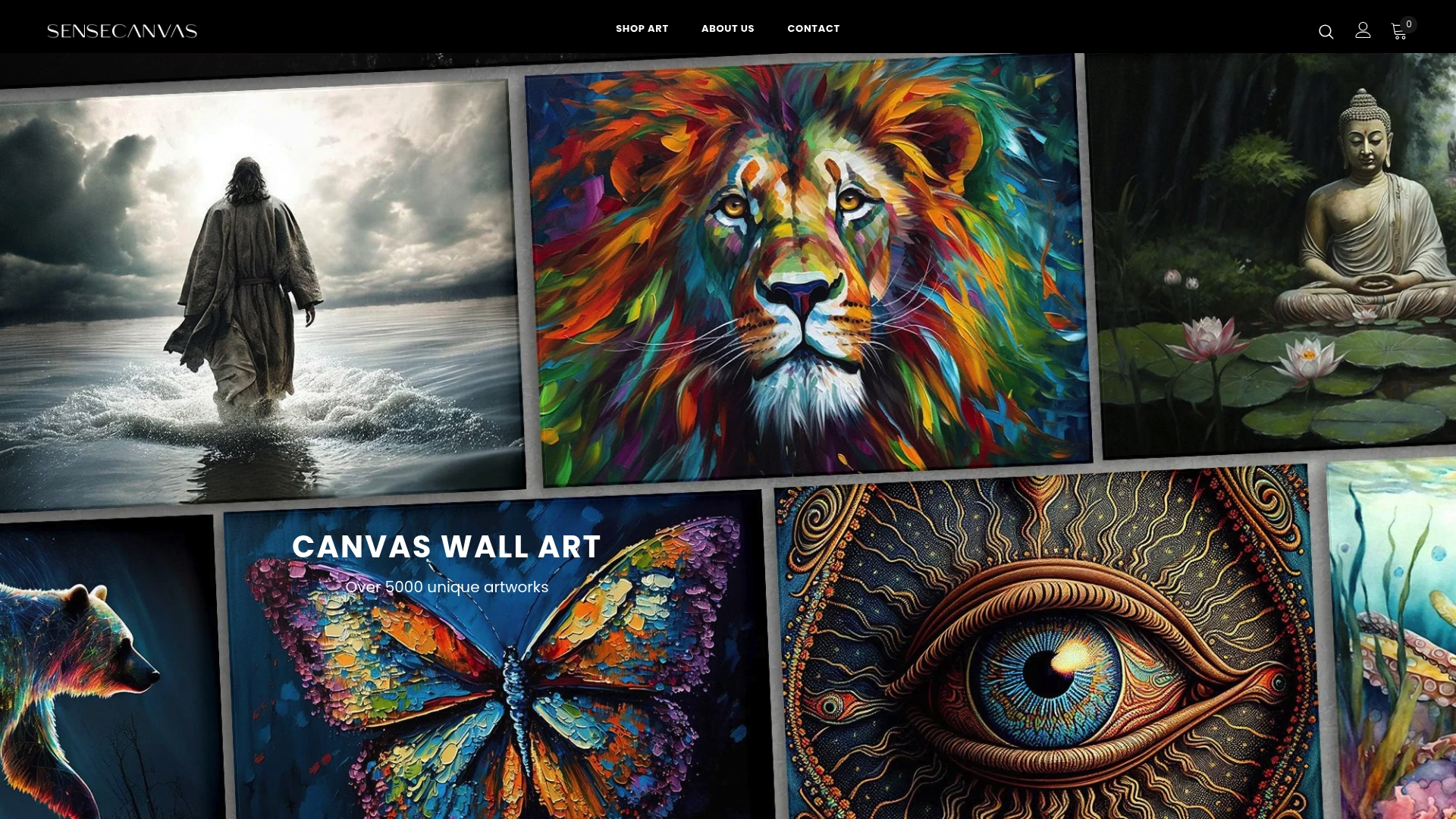
- Browse the full canvas wall art collection to start a custom order.
- Check the Floral collection for botanical, nursery-friendly prints.
- See name wall art ideas for personalized keepsake examples.
Sources
- 2026 Nursery Trends Report – Pehr
- 2026 Nursery color trends: earthy, calming, timeless – Design and Dwelling
- Watercolor Woodland Nursery Wall Art | Bytes of Us
- DIY Canvas Nursery Artwork
- Hanging art over a crib — ILevel
FAQ
What are the latest nursery art trends for 2026?
Nursery art is moving toward warm, earthy tones, mushroom taupe, clay, sage, and muted sky blue, paired with calm, storybook-friendly motifs rather than loud primary colors, a shift detailed in the 2026 nursery color trends report. Mood-led rooms built around a cohesive palette are replacing single rigid baby themes.
What are some creative canvas art ideas for children’s rooms?
Watercolor woodland animals, botanical studies, moon and star line art, and personalized name prints all work well as nursery canvas choices. Grouping a few of these into a hero-plus-companions layout keeps the wall cohesive instead of cluttered.
What are some easy DIY nursery art projects?
Paper-to-canvas decoupage and vegetable-stamped fabric hangings are the two most accessible DIY routes, both using common craft supplies and finishing within a day, as outlined in this DIY canvas project guide. Using cardstock instead of regular paper and letting adhesive dry overnight prevents the most common failure, bubbling.
What are the nursery design trends to expect in 2026?
Designers predict mood-led rooms built around earthy, calming palettes rather than literal baby themes, with layered textures and natural materials supporting the color choices, per nursery trend coverage. Customizable canvas art fits this shift well since it can follow a room’s existing palette instead of dictating a short-lived theme.
Is it safe to hang canvas art above a crib?
Heavy or glass-fronted pieces should not be hung directly above a crib, and any art installed over furniture needs secure, weight-rated hardware rather than adhesive strips alone, according to installation safety guidance. Lightweight, unframed canvases are the safer choice, and mounts should be checked periodically.