Canvas Art for Small Spaces: Style Without the Clutter
Choosing canvas art for small spaces means selecting pieces that add personality and visual depth without shrinking the room further. The right wall art does not just decorate. It defines zones, expands perceived space, and signals that a compact room was designed with intention. Three principles drive every good choice: open imagery, proper proportion, and minimal framing. Get all three right, and even a studio apartment feels curated and complete.
1. Canvas art styles that expand and elevate small rooms
The style of art you choose matters as much as its size. Certain imagery actively makes a room feel larger, while other choices close it in.
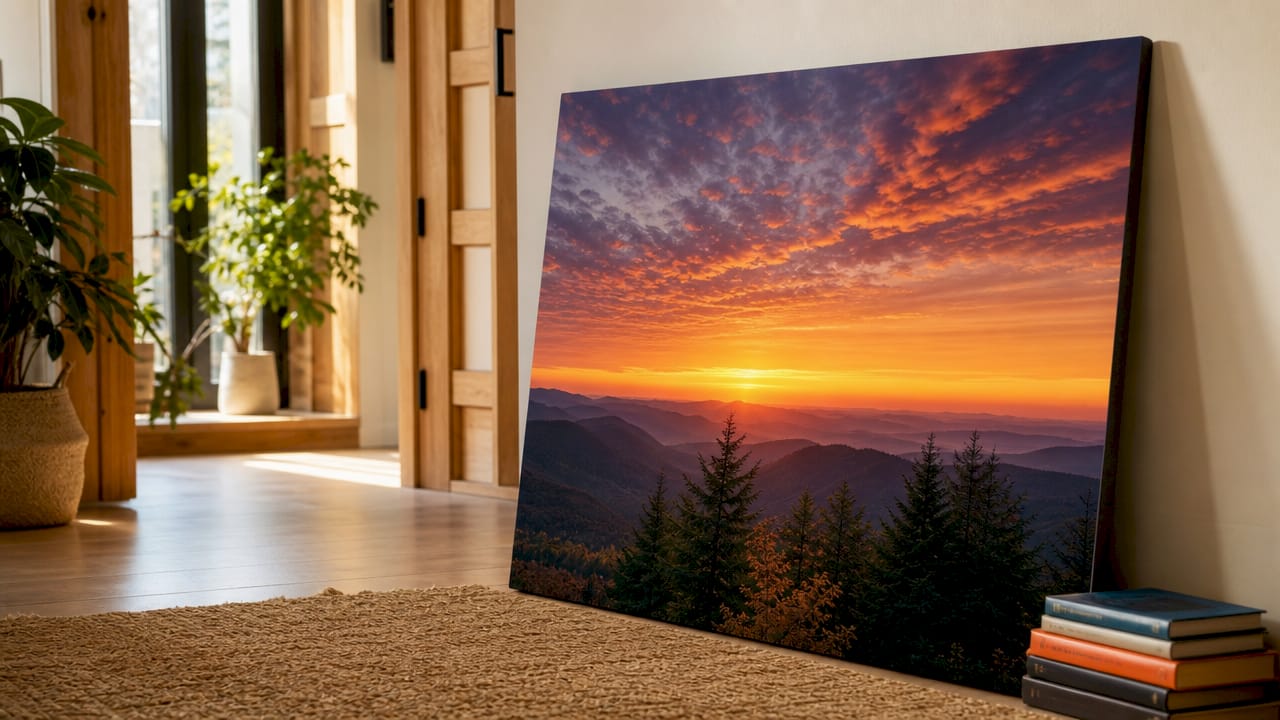
Landscapes with open horizons are the strongest performers in compact rooms. Open horizon imagery draws the eye beyond the wall, creating visual breathing room that no furniture arrangement can replicate. A wide ocean view, a sky-heavy prairie scene, or a misty mountain range all pull focus outward. The brain reads that depth as physical space, and the room feels less contained.
Nature-inspired themes like botanical prints, woodland scenes, and single-branch compositions bring calm without complexity. These work especially well in bedrooms and reading corners where the goal is rest, not stimulation. A single large fern print or a soft watercolor forest scene adds life to a wall without competing with the rest of the room.
Soft abstracts with restrained palettes suit modern small interiors well. Think muted blues, warm grays, and off-whites arranged in loose geometric or organic forms. These pieces add visual interest without demanding attention. They work as background art, which is exactly what a small room needs. Sensecanvas carries abstract ocean art that combines open horizon imagery with soft color, making it a strong fit for compact living rooms and bedrooms.
Place-based art adds personal meaning without adding visual weight. A canvas print of a city skyline, a local landmark, or a neighborhood map connects the space to your story. It gives guests something to ask about and gives you something to look at with genuine feeling. Sensecanvas offers a New York City canvas print that delivers bold urban presence without overwhelming a small wall.
-
Landscapes and water scenes create depth and visual breathing room
-
Botanical and nature themes add calm without complexity
-
Soft abstracts with muted palettes work as background art
-
Place-based prints add personal meaning and conversation value
Pro Tip: Choose art with a clear focal point within the image itself. A single tree, a lone horizon line, or one bold shape gives the eye a place to land and rest. Busy, multi-element compositions create the same visual noise as clutter.
2. How to choose the right canvas size and framing
Size and framing are where most people go wrong. The instinct in a small room is to go small with art. That instinct is almost always incorrect.
Favor one larger piece over many small ones
One large canvas acts as a visual anchor and reduces sensory overload. It gives the eye one clear destination instead of several competing ones. A single canvas measuring 24 by 36 inches on a bedroom wall reads as intentional and finished. Four small 8 by 10 canvases on the same wall read as indecision. The large piece wins every time in a compact room.
A practical rule: the canvas width should be roughly two-thirds the width of the furniture below it. A sofa that is 72 inches wide pairs well with a canvas around 48 inches wide. A desk that is 48 inches wide works with a canvas around 30 to 36 inches wide. This ratio keeps the art grounded to the furniture and prevents it from floating awkwardly on the wall.
Choose frameless or thin-framed canvases
Frameless canvas art connects directly to the wall and maintains a clean, open visual flow. The absence of a frame removes one layer of visual complexity. In a small room, that matters. A thick ornate gold frame adds weight, depth, and visual noise. A frameless gallery-wrap canvas adds only the image itself.
Thin metal or simple wood frames in black or natural wood are the next best option if you prefer a defined edge. Keep the frame profile under one inch. Anything wider starts to compete with the art and the room.
Avoid heavy ornate frames
Ornate frames belong in large rooms with high ceilings and formal furniture. In a compact apartment or small bedroom, they read as heavy and dated. They also make the wall feel busier than it is. A frameless canvas or a simple thin frame keeps the wall feeling open and the art feeling modern.
Pro Tip: Before buying, tape a piece of paper to the wall at the exact dimensions of the canvas you are considering. Live with it for a day. This simple test reveals proportion problems that no online visualization tool can fully replicate.
3. Creative display techniques for compact wall decor
How you display art matters as much as what you choose. Small spaces reward creative placement and punish rigid, conventional hanging.
Leaning canvases on shelves, narrow consoles, or mantels is one of the most practical small space wall art ideas available. Leaning a canvas works especially well because canvas stays flat without bulky frames, making it stable and visually clean. It also lets you swap art seasonally without touching the walls. For renters, this is a significant advantage. A large canvas leaning against the wall behind a console table creates a layered, editorial look that feels intentional rather than temporary.
Vertical canvases solve a specific small-space problem: narrow walls and low ceilings. A tall vertical canvas draws the eye upward and makes the ceiling feel higher. This works particularly well in hallways, beside doorways, and in narrow bedroom corners. A vertical abstract or a tall botanical print in a slim format can transform a dead corner into a design moment.
Creating a single focal point is the most underused technique in small room design. One well-chosen piece reduces visual noise and organizes the room’s look around a clear center. In a living room, that focal point sits above the sofa. In a bedroom, it anchors the wall behind the bed. In a home office, it faces the desk. Each placement gives the zone a visual identity without requiring additional furniture or accessories.
Floating shelves with layered art offer flexibility without commitment. Place one or two canvases on a shelf alongside a small plant or a simple object. This approach creates depth through layering and lets you rearrange without repainting. It also works well for renters who want to avoid wall damage while still building a styled, personal space.
-
Lean canvases on consoles or shelves for a renter-friendly, editorial look
-
Use vertical formats to raise perceived ceiling height in narrow spaces
-
Anchor each room zone with one focal-point canvas
-
Layer art on floating shelves for flexible, damage-free styling
Pro Tip: In a studio apartment, use one large canvas to define separate zones visually. A canvas above a desk signals “work area.” A canvas above a daybed signals “rest area.” Art does the zoning work that walls and doors cannot.
4. Common mistakes to avoid with small space wall art
Most small-space art mistakes come from the same source: trying to fill the wall rather than define it.
Multiple small canvases create visual static. Each small piece demands individual processing. A wall covered in small frames forces the eye to jump from point to point without rest. The room feels busier and smaller as a result. The fix is simple: replace a cluster of small pieces with one medium or large canvas.
Dark, busy imagery compounds the problem. A canvas packed with detail and dark tones absorbs light and closes the room in. Deep burgundy abstracts, dense forest scenes with heavy shadows, and high-contrast graphic prints all reduce perceived space. Save those choices for larger rooms. In a small space, favor light backgrounds, open compositions, and imagery with clear negative space.
Oversized ornate frames add physical and visual bulk. A canvas with a four-inch carved wood frame effectively adds eight inches to the canvas dimensions. In a room where every inch counts, that bulk is a real cost. Frameless gallery-wrap canvases eliminate this problem entirely.
Art that is too small for the wall is the most common mistake of all. A tiny canvas centered on a large wall looks lost and unfinished. It draws attention to the emptiness around it rather than filling the space with intention. Restraint and bold choices provide clarity. One well-proportioned canvas always outperforms several undersized ones.
Key Takeaways
The most effective canvas art for small spaces combines open imagery, proper proportion, and frameless or thin framing to expand visual space and add personality without clutter.
| Point | Details |
|---|---|
| Choose open imagery | Landscapes, water scenes, and soft abstracts make small rooms feel larger by drawing the eye outward. |
| Go larger, not smaller | One medium-to-large canvas anchors a room better than multiple small pieces that create visual noise. |
| Use frameless canvases | Frameless gallery-wrap canvases connect cleanly to the wall and preserve visual openness in compact rooms. |
| Create one focal point | A single well-placed canvas defines a room zone and reduces clutter without additional furniture. |
| Lean art for flexibility | Leaning canvases on shelves or consoles suits renters and allows seasonal refreshes without wall damage. |
What I have learned from one bold canvas in a small room
The first time I placed a single large canvas in a studio apartment, I expected it to feel crowded. The opposite happened. The room organized itself around that one piece. Everything else fell into a supporting role, and the space felt twice as considered as it had before.
The lesson I keep returning to is this: art in small spaces serves a functional purpose beyond decoration. It establishes zones, sets mood, and signals that the space was chosen rather than settled for. That signal matters more in a small room than in a large one, because small rooms are easier to dismiss as temporary or incomplete.
The mistake I see most often is choosing art that matches the furniture rather than art that means something. A canvas that evokes a place you love, a feeling you want to carry into the room, or an image that genuinely holds your attention will always outperform a piece selected purely for color coordination. Meaning creates presence. Presence makes a small room feel full without feeling crowded.
My practical advice: start with one piece. Choose it carefully. Live with it for a month before adding anything else. You will likely find that one strong canvas is all the room needs.
— Sense
Sensecanvas has canvas art sized for small spaces
Finding the right canvas for a compact room takes more than scrolling through generic options. You need art that fits the wall, suits the scale, and carries enough visual weight to anchor the space without overwhelming it.

Sensecanvas offers over 15,000 canvas prints across styles including abstract, landscape, botanical, and motivational, with sizes starting from small accent pieces up to statement formats. Every canvas ships as a frameless gallery wrap, which keeps walls feeling open and clean. Prices start at $85, and custom sizing is available for walls that do not fit standard dimensions. Whether you are decorating a studio apartment, a small bedroom, or a compact home office, browse the full canvas wall art collection at Sensecanvas to find a piece proportioned for your space.
FAQ
What size canvas works best for a small room?
A single canvas sized at roughly two-thirds the width of the furniture below it works best. One larger piece anchors the room more effectively than several small ones.
Are frameless canvases better for small spaces?
Yes. Frameless canvas art connects directly to the wall and maintains a cleaner, more open visual flow than framed alternatives in compact rooms.
What art styles make a small room feel larger?
Landscapes with open horizons, water scenes, and soft abstracts with light palettes all create visual depth. These styles draw the eye outward and reduce the sense of enclosure.
Can renters display canvas art without damaging walls?
Yes. Leaning canvases on shelves or consoles and using Command strips are both damage-free methods that work well in rental apartments and allow for easy seasonal updates.
How many canvas pieces should I hang in a small room?
One well-chosen canvas is almost always the right answer. Multiple small pieces create visual static and make compact rooms feel busier and smaller than they are