Farm Animal Art Ideas: Quiet Countryside, Not Barnyard Motifs
Choose mood-driven, subtle farm-animal canvas art, sized as a statement piece and matched to the right substrate, rather than literal barnyard scenes. We build this kind of piece at Sense Canvas, customized to your wall and finish. This guide covers decor-ready canvas art for homes and offices, not craft projects or kids’ activities.
TL;DR:
- For a modern farmhouse room, choose muted, textured art with one animal and two or three tones; literal barnyard scenes can date quickly.
- For an 84 inch sofa, aim for a canvas 56 to 63 inches wide, roughly two thirds to three quarters of the sofa’s width.
- Canvas adds warmth at home, while metal suits humid, busy areas; acrylic can glare, and framed paper needs UV blocking glass and a dry room.
- Sense Canvas offers exact sizing and crop or color adjustments, with prices starting at $85; square or near square gifts fit more wall layouts.
Table of Contents
- Farm-Animal Style Directions and Visual Approaches
- Sizing, Scale, and Placement Rules for Wall Art
- Materials and Finishes: Canvas, Metal, Acrylic, and Framed Prints
- Styling Examples by Room and Buyer Need
- How Sense Canvas Lets You Customize Farm-Animal Canvas Art to Fit Your Wall
- Creative DIY Farm-Animal Art Ideas and Inspiration Methods
- Designer Perspective: Favoring Subtlety Over Literal Motifs
- Sense Canvas: Start Here to Order Customizable Farm-Animal Canvas Art
- FAQ
- Sources
Farm-Animal Style Directions and Visual Approaches
Farm-animal art ranges from literal to nearly abstract, and picking the right register matters more than picking the right species. The current favorite for modern interiors is quiet countryside: texture-forward pieces that hint at rural life without stacking the wall with roosters and red barns.
- Photographic realism: sharp detail and natural color, best for a den or hallway where you want a true-to-life focal point.
- Painterly or nostalgic: soft brushwork and warm, aged tones, suited to a reading nook or a traditional dining room.
- Minimalist silhouettes: single-tone outlines on a plain ground, strong in a small powder room or a narrow entry.
- Illustrative or whimsical: playful line work and brighter color, a natural fit for a casual kitchen or a child’s shared space.
- Quiet countryside and texture-first: muted palettes, visible brushstroke or canvas grain, subtle cues like a fence line or a wheat field instead of a full animal portrait, which works in nearly any room because it reads as mood rather than subject matter.
If you pair any of these with farmhouse accessories, keep the supporting cast small. A couple of weathered vintage tools, one or two plants, and consistent framing read as curated farmhouse styling, while a shelf crowded with roosters and signs tips the room into kitsch.
Sizing, Scale, and Placement Rules for Wall Art
Art that is too small is the most common mistake in farmhouse rooms, and it usually traces back to skipping a simple ratio.
- Measure the furniture or wall segment the piece will sit above or on.
- Multiply that width by roughly two thirds to three quarters to get your target art width.
- Round to the nearest size your supplier offers in that range, rather than rounding down.
A sofa that runs 84 inches wide calls for a canvas between about 56 and 63 inches wide, not a 30-inch print that disappears above the cushions. Office and reception walls run larger still: commercial art guidance recommends 48 by 72 inches or larger for reception walls, with conference rooms typically taking pieces in the 30 by 40 to 40 by 60 inch range.
One well-placed statement piece beats a scattered collection on most living room walls. A single large canvas keeps the eye anchored, while a grouped series works better in corridors or over a long console, provided the frames and spacing stay consistent. Hang the center of the piece at roughly eye level, about 57 to 60 inches from the floor, and drop that slightly when the art sits directly above a sofa or headboard.

Materials and Finishes: Canvas, Metal, Acrylic, and Framed Prints
Substrate changes both the look and the upkeep, so match it to the room’s traffic and lighting before the subject matter.
- Canvas: adds texture and warmth that suit farm-animal imagery particularly well, works framed or gallery-wrapped, and is forgiving of ambient light and minor dust.
- Metal prints: hold up to handling and humidity, which makes them a strong choice for high-traffic commercial spaces like corridors and break rooms.
- Acrylic face mounts: add depth and a glossy finish that reads as modern, though glare from windows or overhead lighting is worth checking before you commit to a spot.
- Framed paper: offers a tactile, quiet look suited to low-traffic executive offices or formal rooms, but it needs UV-safe glass and careful placement away from direct sun.
A soft, dry cloth keeps canvas and metal clean; acrylic benefits from a microfiber wipe to avoid scratching; framed paper should stay out of damp rooms entirely.
Styling Examples by Room and Buyer Need
The right farm-animal piece changes depending on who uses the room and how hard the space works.
- Living room: one large canvas anchors the main wall above the sofa, with a pair of smaller, same-palette pieces as accents rather than competing focal points.
- Nursery: softer, muted palettes and friendly animal faces read as calming rather than busy, and secure wall mounting matters more than in any other room.
- Kitchen or dining: a grouped trio of smaller prints pairs naturally with vintage enamelware or a wooden utensil crock, giving the wall texture without overwhelming it.
- Office or reception: restrained color, larger scale, and a durable substrate like metal or acrylic hold up to foot traffic and daily handling.
- Gift buying: a standard size in a popular theme, cow, horse, or chicken, with a simple color or crop tweak, keeps the order fast without sacrificing a personal touch.
Pro Tip: When buying for someone else’s home, pick a square or near-square size, since it fits more wall configurations than a long rectangle.
For readers drawn to a single-species focus, our horse wall art ideas collection shows how one animal, styled consistently, can carry an entire room.
How Sense Canvas Lets You Customize Farm-Animal Canvas Art to Fit Your Wall
We build each piece to the wall it is going on, not the other way around. Our catalog covers a large selection of designs, including a dedicated animal theme, with a range of prices to suit different budgets.
- Custom sizing: enter the exact width and height from your two-thirds calculation instead of settling for a stock dimension.
- Cropping and color adjustments: tighten a composition or shift tones to match an existing palette.
- Substrate choice: select canvas for warmth or ask about alternate finishes for higher-traffic spots.
To order: measure the wall, pick a style direction and substrate, then submit your dimensions through the product customization tool before checkout.
Creative DIY Farm-Animal Art Ideas and Inspiration Methods
Not every farm-animal piece has to come from a catalog search. Walking a local farm, flea market, or farmhouse-style café with your phone camera is a fast way to collect reference shots of natural textures, a wheat field, a weathered fence post, a barn door grain, that you can describe when customizing a canvas rather than painting from scratch.
Mood boards built from a handful of tightly related images tend to produce better results than a wide mix of styles. Pull three or four reference photos in the same tonal range, sepia, sage, or soft gray, and use that palette as your brief when requesting color adjustments on a custom order.
A limited-palette sketch, even a rough one, is also useful shorthand for communicating crop and composition before you commit to a final size. If you are updating the millwork around a new piece, coordinating a barn door or farmhouse interior door finish at the same time keeps the whole wall consistent rather than styling the art in isolation.
Collecting swatches of existing decor, a cushion fabric, a stain color, a tile, before you finalize an order prevents the common mismatch between a beautiful print and a wall that already has too much going on.

Designer Perspective: Favoring Subtlety Over Literal Motifs
Literal barnyard scenes date quickly, while textured, restrained pieces hold up for years. Our rule of thumb: limit the palette to two or three tones, pick one animal rather than a crowd, and let negative space do the work. Scale and material carry a room further than detail ever will.
— Sense
Sense Canvas: Start Here to Order Customizable Farm-Animal Canvas Art
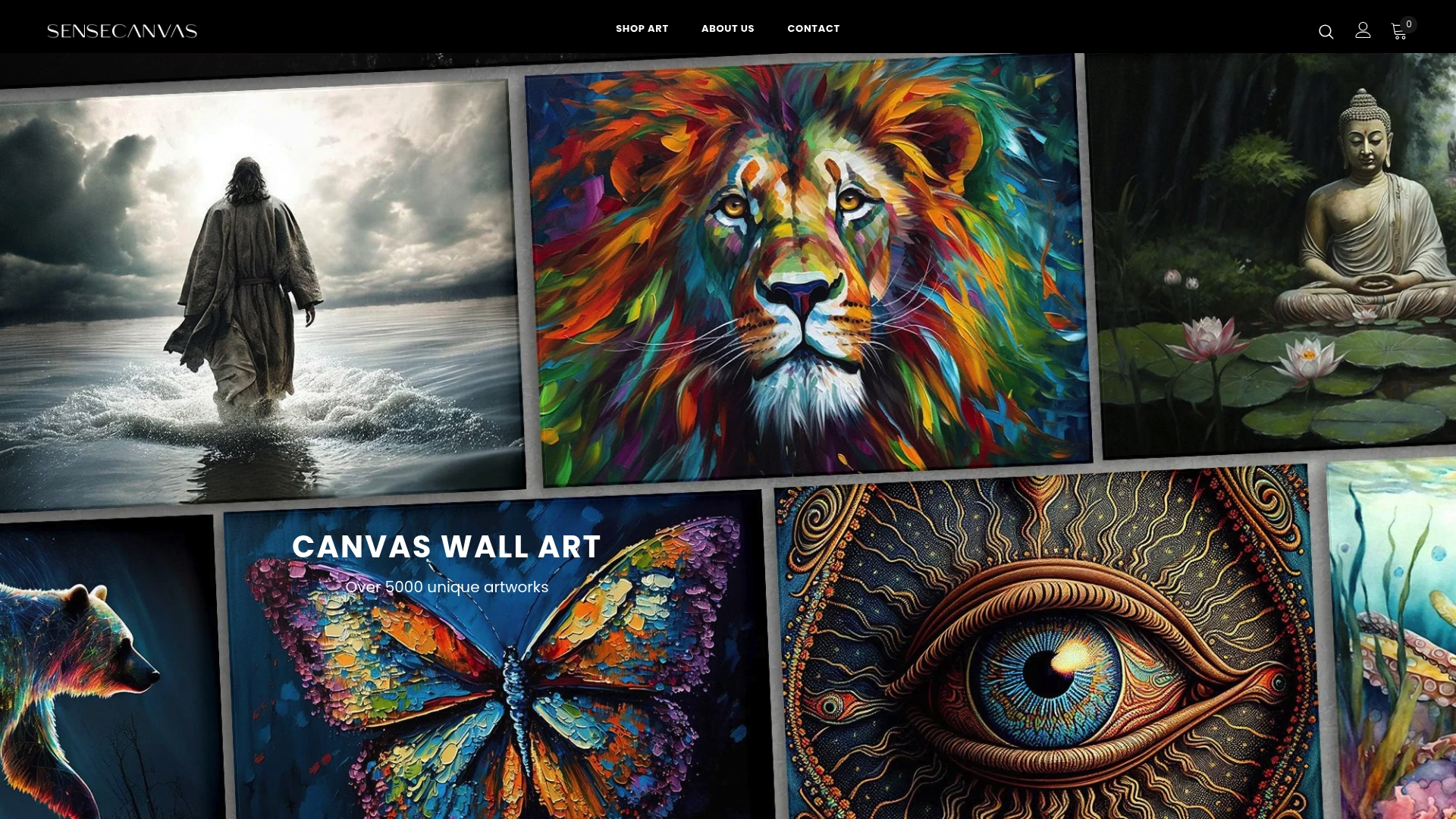
Once you know your size and substrate, ordering is the easy part. Browse our full animal and canvas wall art selection or scan the complete collection to compare styles side by side before narrowing down a favorite.
- Measure your wall first, then use the sizing calculation from earlier in this guide.
- Open the customization tool on any design to set your exact dimensions and finish.
- Expect entry pricing from $85, which keeps a first order low-risk while you test a style in the room.
Start browsing Sense Canvas and place your custom dimensions before checkout.
FAQ
What style of farm animal art works best in a modern farmhouse home?
Subtle, texture-forward pieces, muted palettes, a single species, visible brushstroke or canvas grain, tend to suit modern farmhouse interiors better than literal, brightly colored barnyard scenes. This quiet countryside approach reads as mood rather than theme, which makes it easier to pair with existing decor.
What size farm animal canvas should I buy for my living room?
Measure the sofa or wall segment and aim for art that covers roughly two thirds to three quarters of that width, with the art sized as one statement piece rather than several smaller prints.
Is canvas or metal print better for farm animal wall art?
Canvas adds warmth and texture that suit farm-animal imagery in homes, while metal prints hold up better in high-traffic or commercial spaces like reception areas and corridors. Choose canvas for living rooms and bedrooms, and metal or acrylic for offices and public-facing walls.
How much does custom farm animal canvas art typically cost?
Pricing depends on size, substrate, and customization, and our own animal-themed canvas pieces start from $85. Custom dimensions and color adjustments are available on most designs before checkout.
Can I personalize a farm animal canvas for a specific wall size?
Yes, most canvas suppliers, including our own catalog, let you enter exact width and height along with crop or color tweaks. Measuring the wall first and applying the two-thirds width rule gives you the dimensions to enter before ordering.