Match Home Gym Wall Art to Your Workout, Custom Canvases $85
Pick one feature wall and commit to it: a large canvas or a peel-and-stick mural, paired with a smaller motivational quote piece near your training zone. That combination gives you the biggest visual payoff for the least effort, and it works whether your gym is a converted garage or a corner of the basement. Before you buy anything, grab a tape measure and note the width of the wall you’re targeting. Everything else follows from that number.
TL;DR:
- The most effective gym wall art combines a large statement piece or mural with smaller, purpose-driven prints tailored to workout zones.
- Proper measurement and customization ensure art fits awkward or unique wall dimensions, avoiding visual clutter or gaps.
- Color choices impact motivation: reds and blacks energize strength areas, while blues and greens promote calm in recovery or mobility zones.
- Mounting should prioritize wall support and placement at eye level, with regular cleaning needed to maintain a fresh look.
- Consistent relevance between artwork and workout type, along with personal touches, boosts motivation more than the art’s expense.
Table of Contents
- 8 Gym Wall Art Ideas Based on Vibe and Workout Type
- How to Pick the Right Size, Color, and Material
- Customizing Gym Art to Fit Your Actual Space
- Hanging and Caring for Your Gym Wall Art
- Why Color Choice Changes How Hard You Train
- What Actually Makes a Home Gym Wall Work
- Get Your Gym Wall Sized and Ready with Sensecanvas
- Sources
- FAQ
8 Gym Wall Art Ideas Based on Vibe and Workout Type
Most home gyms fail visually for one reason: the owner buys pieces that look good alone but clash once they’re all on the wall together. Pick a lane first, then fill it.
-
Motivational typography canvases. Short, imperative phrases like “One More Rep” or “No Excuses” work because your brain processes them instantly mid-set, when you don’t have the bandwidth to read a paragraph. Hang these directly in your sightline during lifts, not off to the side where you’ll never look.
-
Large canvas statement pieces. An abstract splash of motion or a silhouette of an athlete mid-stride does something a dozen small prints can’t: it changes the entire feel of the room the second you walk in. This is the piece you build the rest of the wall around, not an afterthought squeezed in later.
-
Murals and peel-and-stick wallpaper. A full mural covering one wall creates a backdrop strong enough to make even a cramped garage gym feel designed rather than assembled. Renters should lean toward peel-and-stick versions since they come off clean at move-out, and many are printed with low-VOC, GreenGuard-certified inks, which matters more than people expect in a small, enclosed room where you’re breathing hard.
-
High-contrast black-and-white prints for strength zones. Bold, stark contrast reads clearly from across the room, which is exactly what you need when you’re staring down a barbell and don’t want to squint at faded pastels. These bold typographic prints belong near your squat rack or bench, not tucked behind the treadmill.
-
Serene geometric or nature prints for mobility work. Yoga mats and stretching corners call for the opposite energy: soft blues, greens, and clean geometric lines that lower your heart rate instead of spiking it. Putting a gritty, aggressive print above your foam roller sends the wrong signal to your nervous system before you’ve even started.
-
Gallery grids for cardio walls. A cluster of four to six smaller prints reads as one larger visual statement, and gallery-style groupings are easy to rearrange as your goals shift. Put this behind your treadmill or bike, where you’ll be looking at it for twenty straight minutes.
-
Functional graphics that double as decor. A printed rep chart, a muscle diagram, or a stretching sequence gives your eyes something useful to land on between sets, and it looks intentional rather than clinical when framed well.
-
Personalized photo or milestone canvases. A shot from your first 5K, a progress photo, or a race bib turned into wall art keeps your “why” visible on days your motivation is running low. These work best mixed into a gallery grid rather than standing alone.
How to Pick the Right Size, Color, and Material
Start with the wall, not the art. A single piece should generally span a significant portion of the wall or the furniture it hangs above, so a medium-sized wall calls for something that covers a visually balanced section. Tape off the intended dimensions on the wall with painter’s tape before you buy anything. It takes two minutes and saves you from ordering something that looks tiny once it’s actually up.
Color does real psychological work here. Reds, oranges, and high-contrast black-and-white pieces read as energizing and pair naturally with strength and HIIT zones, while blues and greens calm the nervous system and suit yoga or mobility corners. If a piece carries text, contrast and readability matter more than the color itself. A pale gray phrase on a white background looks elegant in a showroom and disappears completely once you’re sweating and squinting from ten feet away.
Material shapes both look and lifespan:
- Canvas: durable, low glare, and forgiving under harsh gym lighting.
- Framed print: polished look, but glass or acrylic can throw glare under overhead lights.
- Peel-and-stick mural: covers a full wall fast and stays renter-friendly, though matte finishes hold up better against sun exposure than glossy ones.
Before buying, ask yourself: what size does this wall actually need, how will I mount it, and how easily can I wipe it down after a sweaty session?
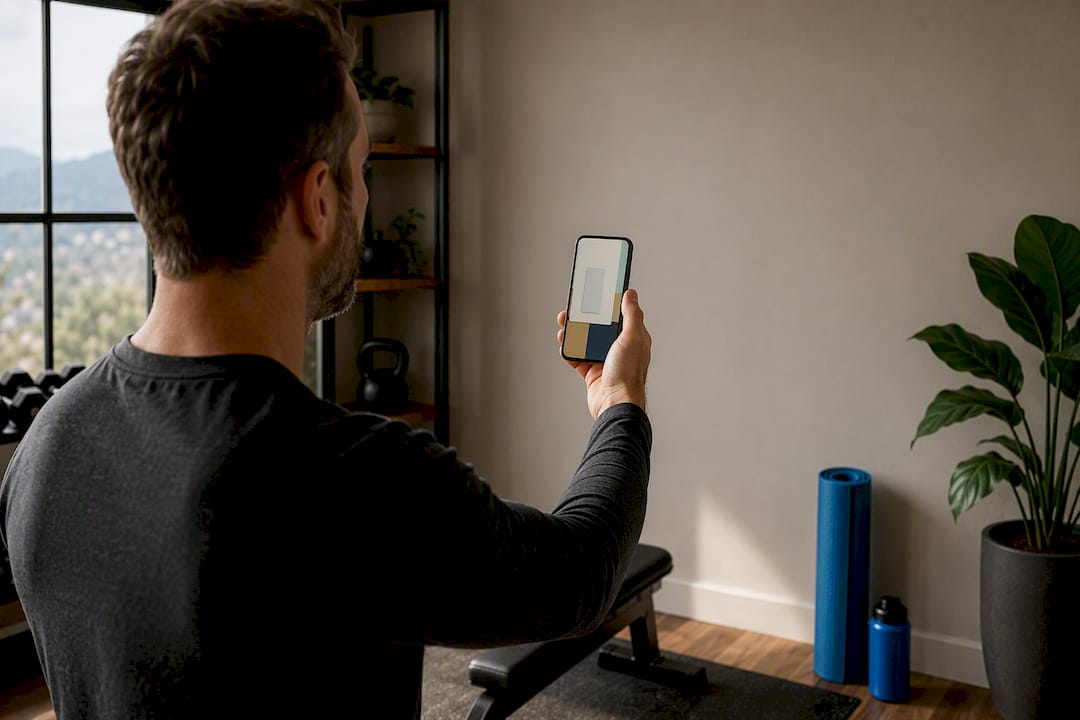
Pro Tip: Snap a photo of your empty wall on your phone, then use a free photo-editing app to drop a mockup of the piece into the frame before you order. It’s a five-minute check that prevents a very expensive guess.
Customizing Gym Art to Fit Your Actual Space
Standard print sizes rarely match the odd dimensions of a converted garage, a sloped basement ceiling, or a narrow strip beside a squat rack. That mismatch is where most home gym decor falls apart, and it’s the exact problem custom sizing solves. Some providers build canvases to the wall instead of asking you to find a wall that fits the canvas.
A few ways customization changes the outcome:
- Crop or resize a design to fill an awkward gap instead of leaving bare wall on either side.
- Add a short personal mantra or a progress photo directly onto the canvas.
- Choose a finish and size that match a small or oddly shaped room without wasting inches.
Sensecanvas offers more than 15,000 design options with custom sizing, and prices start at $85, which keeps the customization route within reach even for a single feature wall rather than a full room overhaul. A tailored canvas built for your exact measurements consistently outperforms an off-the-shelf print that’s almost, but not quite, right.
Hanging and Caring for Your Gym Wall Art
Canvases and framed prints need real support, not a single nail. Find the stud, use a proper anchor if you’re off-stud, and center the piece at eye level for someone standing, since that’s the height you’ll actually be looking at during most exercises.
- Locate studs with a stud finder before drilling.
- Clean the wall surface thoroughly before applying any peel-and-stick mural.
- Measure and align the mural panel by panel, smoothing outward from the center to avoid air bubbles.
- Dust prints weekly and wipe sweat splashes immediately with a dry or barely damp cloth, never a harsh solvent.
Keep art out of the splash zone near water bottles and away from any spot where a dropped dumbbell could reach it.
Pro Tip: Sweat is more corrosive to prints than most people assume. If your gym runs hot and humid, mount art at least a few feet from your main sweat zone, or wipe it down the same day, not the next week.
Why Color Choice Changes How Hard You Train
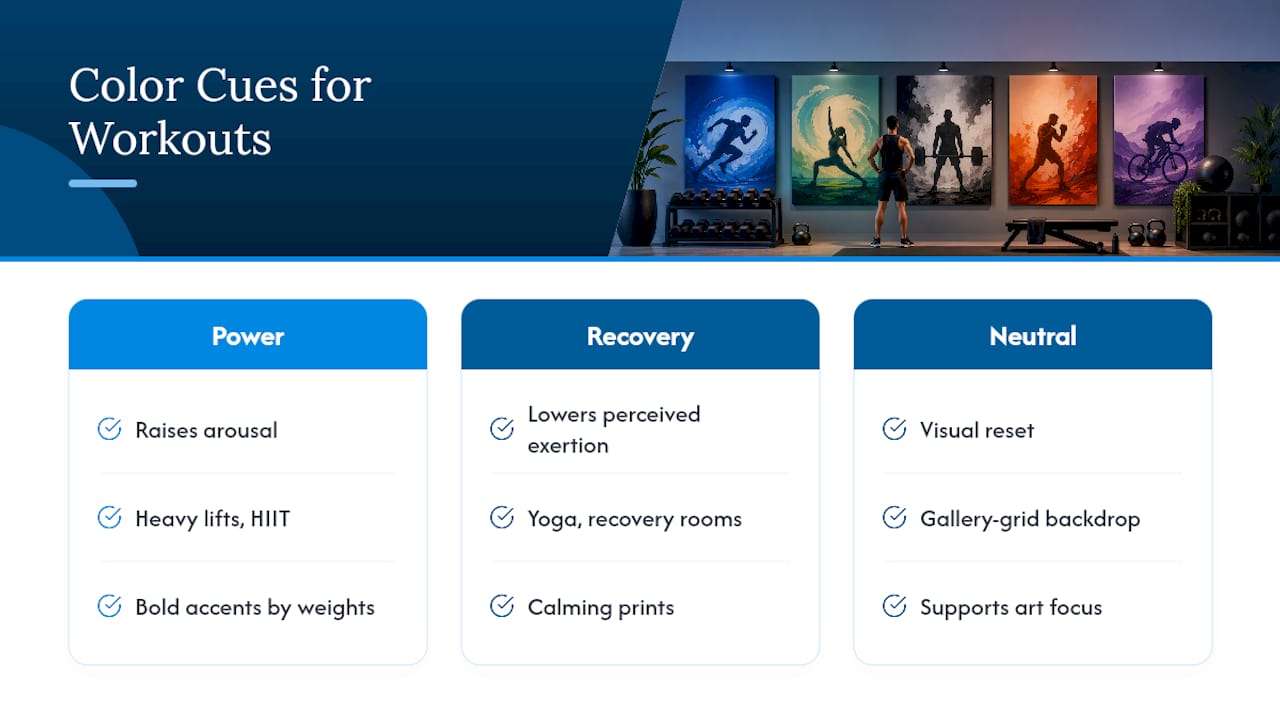
Color isn’t decoration in a gym. It’s a cue your nervous system reads before your brain finishes processing the room. Reds and oranges raise arousal and alertness, which is exactly the state you want walking into a heavy squat session or a HIIT circuit. That’s why so many commercial gyms lean on red accent walls and bold black-and-white graphics near their free weights.
Blues and greens do the opposite: they lower perceived exertion and calm the heart rate, which is why they show up constantly in yoga studios and recovery rooms. Hang a calming blue geometric print where you lift, and you’re fighting your own environment instead of working with it.
Neutral tones, meanwhile, function as a visual reset. A gray or beige wall behind a gallery grid keeps the room from feeling visually loud, letting the actual art carry the energy instead of competing with a busy paint color. The practical takeaway is simple: match the palette to the workout that happens in that exact spot, not to whatever color you happened to like at the paint store.
What Actually Makes a Home Gym Wall Work
The home gyms that hold up over time rarely have the most expensive art. They have art that matches what’s actually happening on that wall, strength cues near the weights, calmer pieces near the mat, and at least one personal touch that has nothing to do with trends. Customers routinely tell us that a single new canvas or a color swap did more for their motivation than any new piece of equipment. Treat the wall the way you treat your training plan: revisit it every few months, and let it evolve as your goals do.
— Sense
Get Your Gym Wall Sized and Ready with Sensecanvas
Most gym art shopping fails at the measuring stage, not the design stage. This provider skips that problem by building to your exact wall instead of making you hunt for a print that happens to fit.
Ordering generally involves measuring your wall, picking a size and finish from a large selection of designs, then uploading a photo or adding a short mantra if you want it personalized. Pricing details should be checked on the provider’s site to fit your budget. If you want the mural route with full coverage and coordinated smaller pieces, browse options like the motivational quote canvases built for exactly this setup, or see how different art choices change a room’s feel before you commit to a size. Start at the Sensecanvas landing page and get your wall measured and matched today.
Sources
For deeper reading on mural design and materials, see Oikar Studio’s gym mural guide and Fancywalls’ peel-and-stick mural specs. For broader decor inspiration, Real Homes’ home gym roundup and the psychology behind motivational apparel messaging offer useful angles beyond wall art alone.
- Gym wall mural ideas that inspire every workout | Oikar Studio
- Motivating gym typography peel and stick wall mural | Fancywalls
- Home gym wall decor ideas – 12 motivational wall art looks | Real Homes
FAQ
What should I put on a gym wall?
Combine one large canvas or mural as a feature piece with a bold, short motivational quote near your main training zone, then add smaller personal or milestone prints around it.
What’s trending in gym wall art right now?
High-contrast black-and-white typography, peel-and-stick full-wall murals, and gallery grids mixing motivational quotes with personal progress photos are the most requested styles.
What are some ideas for decorating a home gym?
Match the art to the workout: gritty, high-contrast pieces near weights, calming geometric or nature prints near a yoga mat, and a gallery strip of smaller prints behind cardio equipment.
What can I gift someone who loves the gym?
A custom canvas built from their own progress photo or a short mantra that matters to them tends to land better than generic fitness gear, and options like Sensecanvas’s custom sizing make it easy to fit any gift budget starting at $85.