How Wall Art Transforms Rooms: A Room-by-Room Guide
Wall art is defined as any visual element mounted on a wall to shape a room’s aesthetic, mood, and spatial identity. Knowing how wall art transforms rooms gives you a direct design tool that costs far less than renovation but delivers comparable visual impact. Art anchors furniture arrangements, defines zones in open floor plans, and communicates personal style in ways that paint and furniture alone cannot. Scale, placement, and subject matter each play a distinct role. Get them right, and a room shifts from functional to genuinely memorable.
How does wall art anchor and define spaces in interior design?
Wall art connects furniture and architecture by creating focal points that give a room visual order. Without a focal point, the eye wanders and the space feels unresolved. A large canvas above a sofa, for example, pulls the seating arrangement into a coherent unit. It tells anyone entering the room exactly where to look first.
Art also softens harsh architectural lines. A tall, narrow canvas beside a doorway breaks the rigidity of a straight wall. In open floor plans, a gallery wall or oversized print signals where the living area ends and the dining area begins. Designers treat wall art as the final “layer” of a room, the element that links every other decision together.
Beyond aesthetics, art reduces sound reflections by softening hard surfaces, which subtly improves room acoustics. This matters most in rooms with hardwood floors and minimal furniture. Canvas prints, in particular, absorb enough sound to reduce echo without requiring acoustic panels.
- Choose art that repeats at least one color from your existing furniture or rug.
- Use a single large piece to anchor a sofa or bed rather than clustering small prints.
- In open floor plans, position art perpendicular to the main sightline to define zones visually.
- For rooms with high ceilings, hang art slightly higher than standard to draw the eye upward.
Pro Tip: Lean a large canvas against the wall before committing to hanging it. Living with the placement for a day reveals whether the scale and position feel right.
What psychological benefits does wall art provide in living and working spaces?
Art placement functions as an affective stimulus that shapes mood and strengthens spatial identity. Environmental psychology research shows that art changes how people interact with a room on a cognitive level. A room with art feels inhabited and intentional. A room without it often feels temporary, regardless of how well the furniture is arranged.
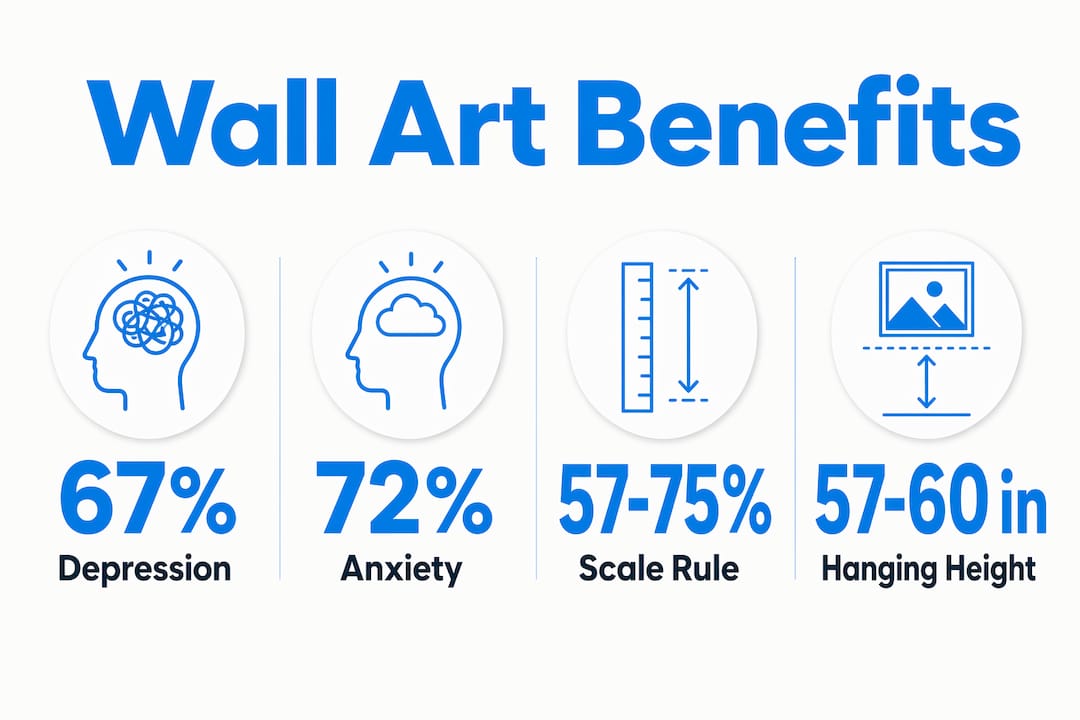
The clinical evidence is striking. Biophilic art installations reduce depression and anxiety symptoms significantly over 12 months. A study of 156 participants showed statistically significant improvements, explaining 67% improvement in depression scores and 72% in anxiety scores. Those numbers confirm that art is not decorative luxury. It is a measurable contributor to mental health.
Healthcare settings reinforce this finding. Murals in hospitals positively correlate with patient well-being and emotional regulation across a study of 525 participants. Patients, staff, and visitors all reported more positive feelings in mural-decorated spaces. The same principle applies to home offices and corporate environments, where art on the walls reduces the psychological weight of a demanding workday.
“Engaging deeply with art through slow-looking amplifies mood-boosting benefits beyond superficial viewing. Guided viewing strategies enhance the positive emotional effects of wall art, encouraging a deeper connection with the space it inhabits.”
Slow, intentional viewing of art enhances these mood benefits further. Spending 60 seconds genuinely looking at a piece, rather than glancing past it, activates a different cognitive response. For home decorators, this means choosing art you actually want to look at, not just art that fills a wall. The science behind art’s mood effects confirms that subject matter, color palette, and composition each influence how a room feels to its occupants.
How to choose and place wall art for maximum impact in different rooms?
Size is the single most common mistake in wall art selection. Optimal artwork covers 57–75% of the furniture width beneath it, or 50–75% of an open wall. A piece that falls short of this range reads as an afterthought. A well-sized piece creates a focal point that anchors the entire room.
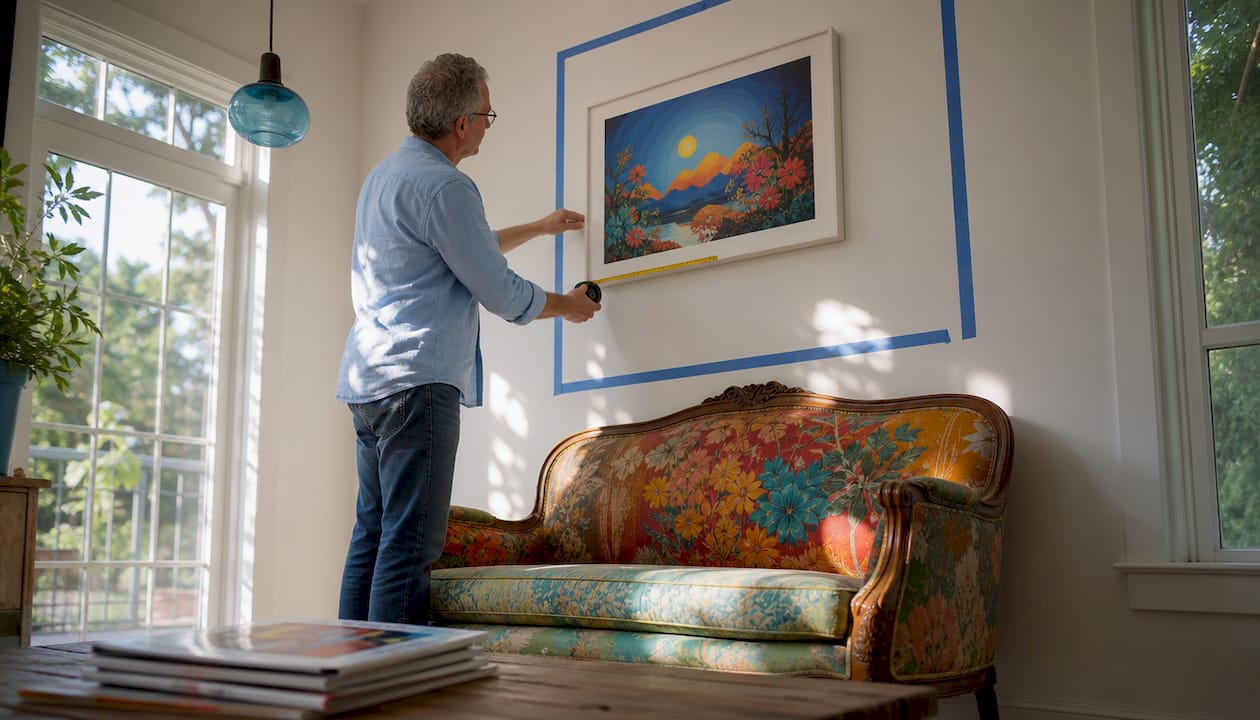
Hanging height follows a consistent rule across professional installations. Art centers at 57–60 inches from the floor, which aligns with average eye level. When hanging above furniture, maintain a 6–10 inch gap between the top of the piece and the bottom of the frame. This gap visually connects the art to the furniture without making them feel like separate decisions.
| Room | Recommended art style | Ideal size |
|---|---|---|
| Bedroom | Calming landscapes, soft abstracts | 57–75% of headboard width |
| Living room | Bold statement pieces, gallery walls | 57–75% of sofa width |
| Home office | Motivational prints, structured abstracts | 50–75% of desk wall |
| Dining room | Dramatic large-format prints | 50–75% of wall above sideboard |
| Hallway | Vertical series, narrow prints | Proportional to wall height |
Room function should guide subject matter and color choices. Bedrooms benefit from calming palettes and organic forms. Dining rooms and offices respond well to bold, high-contrast pieces that generate energy. Finish matters too. Matte canvas absorbs light and feels warmer, while glossy prints reflect light and add visual brightness to darker rooms.
- For small rooms, a single large statement piece creates more impact than a cluster of small prints.
- For expansive rooms, a gallery wall with consistent framing adds depth without overwhelming the space.
- Match art lighting to the piece. Warm-toned spotlights suit earthy or warm-palette art. Cool lighting works for blue-toned or monochrome pieces.
Pro Tip: Use painter’s tape to map the art’s dimensions on the wall before buying. This prevents the most common sizing mistake and saves a return trip to the store.
How can wall art personalize rooms and tell stories?
Wall art personalizes space by reflecting identities, memories, and values. A room decorated with art chosen for meaning feels fundamentally different from one decorated for trend. The difference is legible to anyone who enters. Art chosen for personal resonance makes a room feel lived in and specific to its owner.
Personalization works best when art is not overly matched. Mixing styles and themes adds character and prevents the flat, catalog-page look that comes from buying a matching set. A bold abstract canvas beside a black-and-white photograph creates tension that holds the eye. Rooms that feel too coordinated often feel impersonal, as if no one actually chose anything.
Art also functions as a conversation starter. A piece with an unusual subject or striking composition gives guests an immediate point of engagement. For conference rooms and office spaces, this matters practically. Art that reflects the company’s values or industry creates a more memorable environment for clients and a more motivating one for staff.
- Identify two or three themes that reflect your personal history or values, such as travel, nature, or architecture.
- Select a primary piece that anchors the room and speaks directly to one of those themes.
- Add one or two supporting pieces in complementary but distinct styles.
- Connect the collection through a shared color, not a shared subject, to avoid a themed-room effect.
- Rotate pieces seasonally to keep the space feeling current without redecorating.
Large artwork emotionally commands attention and creates stories that smaller collections cannot. A single oversized canvas with a strong subject delivers dramatic visual impact and emotional reward. It also simplifies the decorating decision. One great piece beats five mediocre ones every time.
Key Takeaways
Wall art transforms rooms by anchoring design, improving mood, and expressing personal identity through scale, placement, and subject matter.
| Point | Details |
|---|---|
| Scale determines impact | Art should cover 57–75% of furniture width to anchor a space effectively. |
| Hang at eye level | Center artwork at 57–60 inches from the floor for consistent visual integration. |
| Art improves mental health | Biophilic art reduced anxiety symptoms by 72% in a 12-month clinical study. |
| Mix styles for character | Overly matched art creates flat interiors; varied styles add depth and personality. |
| Subject matter shapes mood | Choose calming art for bedrooms and bold, high-contrast pieces for offices and dining rooms. |
What I’ve learned from watching rooms change with one piece of art
The most common mistake I see is choosing art that is too small. Homeowners pick a piece they love in the store, hang it above a sofa, and then wonder why the room still feels unfinished. The art is fine. The scale is wrong. A piece that covers less than half the sofa width floats on the wall rather than anchoring the room. Sizing up, even when it feels bold in the store, almost always produces the right result at home.
Scale matters, but so does emotional resonance. A technically correct piece in the right size and at the right height still falls flat if you do not actually connect with it. I encourage slow-looking before buying. Spend two full minutes with a piece in the store or on screen. If your attention drifts, the piece will not hold a room either. If you keep finding new details, it will.
Texture and finish deserve more attention than most decorators give them. A matte canvas in a warm-lit room creates a completely different atmosphere than a glossy print in the same space. Test your room’s lighting before committing to a finish. Natural north light reads cool and suits high-contrast work. Warm lamp light suits earthy, textured canvas prints. Getting this pairing right is the difference between art that looks placed and art that looks like it belongs.
— Sense
Art that fits your space, ready to hang from Sensecanvas
Sensecanvas offers over 15,000 canvas wall art pieces across styles including abstract, motivational, animal themes, and more. Every piece is available in custom sizes, so you can match the 57–75% furniture-width rule without compromise. Prices start at $85, making quality canvas art accessible for both home and office projects.
Whether you need a bold statement piece for a living room or a motivational print for a home office, Sensecanvas ships ready-to-hang canvas prints built for real rooms. Customization options let you specify exact dimensions, so the sizing guesswork disappears entirely. Browse the full collection at Sensecanvas and find the piece that fits your wall and your story.
FAQ
How does wall art change the feel of a room?
Wall art creates focal points, anchors furniture arrangements, and acts as an affective stimulus that shapes mood and spatial identity. Rooms with art feel more intentional and inhabited than rooms without it.
What size wall art should I choose for above a sofa?
Art should cover 57–75% of the sofa’s width. A piece that falls below this range reads as too small and fails to anchor the seating arrangement.
Does wall art actually improve mental health?
Clinical research shows biophilic art installations reduced depression symptoms by 67% and anxiety symptoms by 72% over 12 months in a study of 156 participants. Art in healthcare settings also improved emotional regulation for patients and staff.
How high should wall art be hung?
Hang art so its center sits 57–60 inches from the floor, which aligns with average eye level. When hanging above furniture, leave a 6–10 inch gap between the top of the furniture and the bottom of the frame.
Can wall art work in a home office?
Art in office environments reduces stress and strengthens place identity, according to environmental psychology research. Bold, motivational, or structured abstract pieces work particularly well in work spaces where energy and focus matter.