Why Art Affects Room Mood: What Science Reveals
Art directly shapes the emotional atmosphere of a room by triggering neurological responses before you consciously register what you are looking at. This effect, which interior designers call affective ambiance, operates through color psychology, visual composition, placement, and personal meaning. Understanding why art affects room mood gives you real control over how a space feels, not just how it looks. The right piece on the right wall does not just decorate. It changes how your brain processes the room around it.
Why art affects room mood: the core science
Art changes how a room feels because it engages the brain’s emotional processing centers the moment your eyes land on it. Researchers confirm that art taps right-brain functions including creativity, emotional processing, and abstract thinking, bypassing the rational filters of the left hemisphere entirely. That is why a painting can make you feel calm or energized before you have formed a single conscious thought about it.
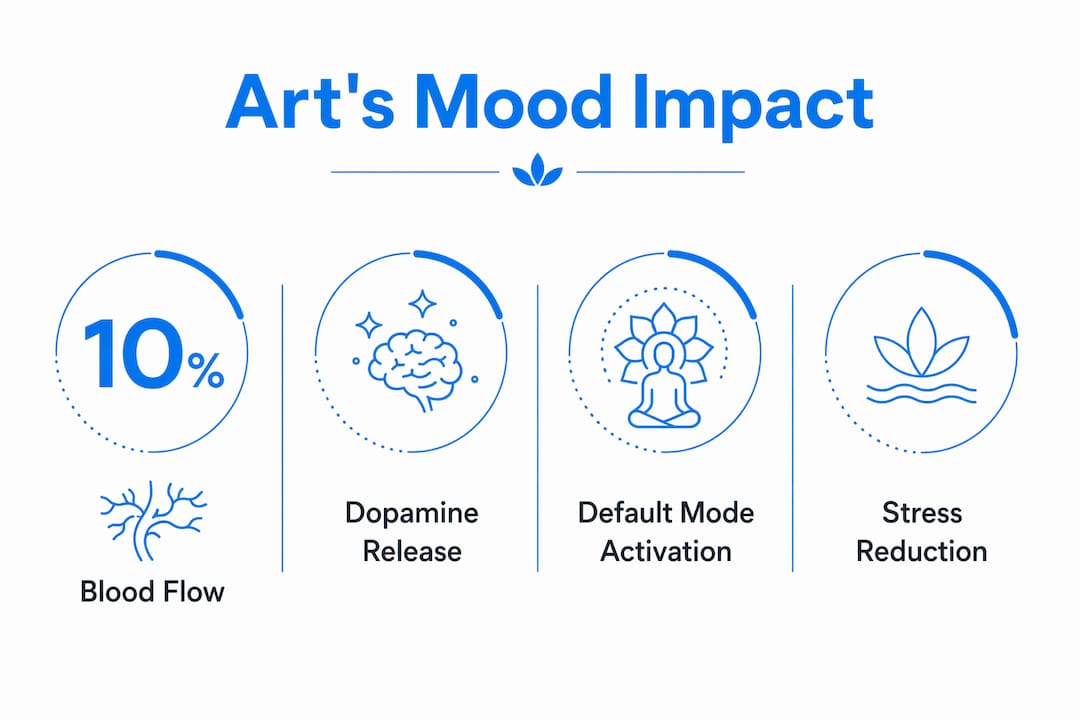
The neurological response is measurable. Viewing art you find beautiful increases blood flow to the brain’s reward center by about 10%, a response comparable to seeing someone you love. That 10% shift is not trivial. It means a well-chosen piece of art produces a genuine physiological reward every time you walk into the room.

Art also activates the brain’s default mode network, the system linked to contemplation and self-reflection. When a piece holds personal meaning, this network fires more strongly, deepening the emotional impact. The result is a room that feels psychologically richer, not just visually appealing.
How does color in art influence room ambiance?
Color is the fastest signal the brain reads in any artwork. Warm tones like red, orange, and gold activate energy and passion. Cool tones like blue, green, and gray promote calm and lower perceived stress. The intensity of those effects scales with saturation: a deeply saturated cobalt blue hits harder than a washed-out powder blue.
| Color family | Emotional effect | Best room use |
|---|---|---|
| Warm reds and oranges | Energy, excitement, appetite | Dining rooms, home gyms |
| Soft yellows and creams | Optimism, warmth | Kitchens, entryways |
| Cool blues and greens | Calm, focus, relaxation | Bedrooms, home offices |
| Deep purples and indigos | Luxury, introspection | Living rooms, reading nooks |
| Neutral grays and whites | Balance, openness | Any room needing visual rest |
Consistent color themes across a room’s art and furnishings compound the effect. A bedroom with a calming abstract ocean print in cool blues reinforces the room’s function as a rest space. Mixing warm and cool art in the same room without intention creates visual conflict that registers as low-level unease.
Pro Tip: Match the dominant color in your art to the emotional goal of the room, not just the wall color. A piece that clashes emotionally with the room’s purpose will undercut the atmosphere even if it coordinates perfectly with the furniture.
Research confirms that warm tones and balanced compositions generate positive emotions, while chaotic or jagged forms evoke unease. Color and composition work together. A warm palette in a chaotic composition still produces tension.
How composition and imagery shape emotional responses
Visual composition is the architecture of feeling inside a frame. A balanced, symmetrical arrangement signals safety and order to the brain. An asymmetrical or fragmented composition creates tension, which can read as dynamic energy or anxiety depending on the viewer and the room.
Imagery type carries its own emotional weight:
- Nature scenes (forests, oceans, open skies) activate the parasympathetic nervous system, the body’s rest-and-digest mode, and measurably reduce cortisol levels.
- Abstract forms give the brain interpretive freedom, which can feel liberating or unsettling depending on the viewer’s personal associations.
- Figurative art (portraits, figures in motion) creates a sense of human presence, which adds warmth and social energy to a space.
- Motivational text art like a neon hustle print activates goal-oriented thinking and works well in offices or workout spaces.
- Symbolic imagery with personal meaning amplifies emotional impact because the default mode network responds more strongly to personally relevant content.
The key insight here is that imagery type is not just aesthetic preference. It is a functional choice that determines how your nervous system responds to the room. A bedroom hung with high-contrast, jagged abstract art will fight against sleep. A living room with soft landscape compositions will pull people toward relaxation without anyone understanding why.
Does art placement height change how a room feels?
Placement is the variable most home decorators underestimate. Eye-level placement creates a sense of integration and belonging, as if the art is in conversation with you. Hanging art higher draws the gaze upward, which expands the perceived ceiling height and creates a feeling of openness and grandeur.
| Placement height | Psychological effect | Ideal use case |
|---|---|---|
| Eye level (57–60 inches center) | Intimacy, connection, belonging | Living rooms, bedrooms, hallways |
| Above eye level | Spaciousness, formality, grandeur | Entryways, rooms with low ceilings |
| Below eye level | Grounding, coziness | Reading nooks, floor-level displays |
Scale matters as much as height. Large-scale art energizes a room and commands attention. It works in open-plan spaces where the art needs to anchor the visual field. Small-scale pieces create intimacy and work best in clusters or in rooms where the goal is quiet focus.
The visual weight of art shifts with hanging height in ways that are subtle but consistent. A piece hung too high feels disconnected from the room. A piece hung too low feels heavy and cramped. Getting the height right is not a stylistic preference. It is a spatial psychology decision.
Pro Tip: The standard gallery rule of 57 inches to the center of the piece works in most rooms because it aligns with average eye level. Adjust up by 4–6 inches in rooms with ceilings above 10 feet to maintain the sense of proportion.
What are the neurological mechanisms behind art’s mood impact?
The brain does not process art the way it processes a piece of furniture. Art engages emotional memory, reward pathways, and the imagination simultaneously. That combination produces an experience that is closer to a relationship than an observation.
“Art engagement is more than aesthetic. It functions as a social and psychological environment that enables emotional regulation and a valued sense of self, shaping how feelings are processed on a daily basis.”
Arts engagement produces significant mood improvements, with participants reporting relaxed mood shifting from rarely to some of the time after regular exposure. That shift is meaningful because it represents a change in baseline emotional state, not just a momentary lift. The room you spend time in shapes your resting mood over weeks and months.
Longer-term engagement with art reduces tense arousal. Research shows art-making reduces tension with a statistically significant link to increases in global wellbeing. The effect compounds over time, which means the art on your walls is not a one-time mood event. It is a daily input.
The concept of the arts exposome captures this well. Just as the body’s health is shaped by cumulative environmental exposures, emotional life is shaped by cumulative aesthetic exposure. Daily contact with art that resonates with you stabilizes emotional processing and builds psychological resilience. The art you live with is part of your mental environment, as real in its effects as light, temperature, or noise.
Art also triggers dopamine release through the brain’s reward system, similar to other pleasurable experiences. That release is why a room with art you genuinely love feels different from a room with art you are merely neutral about. The brain rewards you for being near things it finds beautiful.
How to choose art that enhances your room’s atmosphere
Choosing art for mood is a different process than choosing art for style. Start with the emotional goal of the room, then work backward to the art.
- Define the target feeling. Calm, energized, focused, warm, inspired. Write it down before you shop. This single step eliminates most poor purchases.
- Choose color first. Match the dominant hue in the artwork to the emotional goal using the color psychology principles above. Cool for calm, warm for energy, neutral for balance.
- Evaluate the composition. Balanced and harmonious for peace, dynamic and asymmetrical for energy, minimal for focus. Avoid chaotic compositions in rooms meant for rest.
- Select imagery that fits the room’s function. Nature for relaxation, figurative for social warmth, abstract for creative stimulation, motivational text for productivity spaces.
- Plan placement before you buy. Measure the wall, decide on height, and confirm the scale works before committing to a piece. A print that looks right online can feel wrong at the wrong scale on the actual wall.
- Check for personal resonance. Art that holds personal meaning amplifies every other effect. A piece that connects to a memory, a value, or an aspiration works harder than a technically perfect piece that leaves you cold.
- Consider how art interacts with design elements. Pairing art thoughtfully with fine ceramics and objects creates layered visual interest that deepens the room’s atmosphere without adding clutter.
The most common mistake is choosing art that matches the sofa. Matching the sofa produces a room that looks coordinated but feels flat. Choose art that matches the feeling you want, and let the furniture follow.
Key Takeaways
Art shapes room mood through measurable neurological and psychological mechanisms, not subjective preference alone.
| Point | Details |
|---|---|
| Color drives the first emotional response | Match dominant art color to the room’s emotional goal before considering style or furniture coordination. |
| Composition signals safety or tension | Balanced forms promote calm; chaotic or jagged compositions create unease regardless of color palette. |
| Placement height changes spatial perception | Eye-level hanging creates intimacy; higher placement expands perceived ceiling height and openness. |
| Art produces cumulative mood effects | Daily exposure to resonant art shifts baseline emotional state and supports long-term wellbeing. |
| Personal meaning amplifies every effect | Art connected to memory or values activates the brain’s default mode network more strongly than neutral pieces. |
What I have learned from living with intentional art
Most people treat art as the last decision in a room, the thing you add after the furniture is placed and the paint is dry. That approach almost always produces rooms that look finished but feel empty. The rooms that genuinely affect how you feel when you walk in are the ones where the art was chosen first, or at least chosen with the same deliberateness as the structural decisions.
The science on this is now clear enough to act on. A 10% increase in reward-center blood flow is not a small effect. It is the difference between a room that you want to spend time in and one you drift through without noticing. The art on your walls is doing neurological work whether you are aware of it or not. The only question is whether it is working for you or against you.
What I find most compelling is the concept of the arts exposome. The idea that daily aesthetic exposure shapes emotional processing the way environmental factors shape physical health reframes the entire conversation about home decor. You are not decorating a room. You are building a daily psychological environment. That is a decision worth taking seriously.
The practical implication is simple. Choose art that you genuinely respond to, place it at the right height, and match its emotional tone to the room’s purpose. Those three decisions, made with intention, produce rooms that feel different from rooms where art was chosen for convenience or coordination. The difference is not subtle once you know what to look for.
— Sense
Art that works as hard as your space does
Choosing the right piece becomes much easier when you have a catalog built around mood, style, and scale.
Sensecanvas offers over 15,000 canvas wall art prints across styles ranging from calming abstracts to bold motivational pieces, with sizes customizable to fit any wall. Prices start at $85, making it practical to choose art based on emotional fit rather than budget compromise. Whether you need a neon statement piece for a game room or a serene canvas for a bedroom, the full Sensecanvas collection is organized to help you match art to the feeling you want the room to produce. Premium canvas printing means colors stay true to what you see on screen, so the mood you choose is the mood you get.
FAQ
Why does art change how a room feels so quickly?
Art engages the brain’s emotional processing centers before conscious thought kicks in, triggering immediate neurological responses through color, composition, and imagery. The effect happens in milliseconds, which is why a room can feel different the moment a new piece goes up.
What art colors are best for a calming bedroom?
Cool tones like blue, green, and soft gray promote relaxation by signaling calm to the brain’s emotional centers. Avoid high-contrast or warm-dominant art in bedrooms, as these colors activate energy and arousal rather than rest.
Does the size of artwork affect room mood?
Large-scale art energizes a space and anchors open rooms, while smaller pieces create intimacy and work best in clusters or focused areas. Scale affects both the visual weight of the room and the intensity of the emotional response the art produces.
How high should I hang art for the best emotional effect?
Hang art so the center of the piece sits at 57–60 inches from the floor, which aligns with average eye level and creates a sense of connection and belonging. Higher placement draws the gaze upward and expands the perceived height of the room.
Can art on the walls actually improve my wellbeing over time?
Research shows that regular arts engagement shifts relaxed mood from rarely to some of the time and links to statistically significant increases in global wellbeing. The cumulative effect of living with resonant art is a measurable improvement in emotional baseline, not just a momentary lift.