The Role of Art in Home Decor: A Homeowner's Guide
Art is defined as the single most powerful tool a homeowner has for expressing identity and shaping the emotional tone of a living space. The role of art in home decor goes far beyond filling empty walls. It sets the mood of a room before a single piece of furniture is chosen, tells visitors who you are, and gives every space a sense of intention. Design professionals treat art as a foundational element, not an afterthought. When you understand how art functions as both a personal narrative and a design anchor, every placement decision becomes more deliberate and more rewarding.
How does art shape the atmosphere and identity of home interiors?
Art creates emotional ambience in a way that paint colors and furniture alone cannot. A single large-scale canvas in a living room can establish the entire emotional register of the space, whether that means calm, energy, nostalgia, or boldness. Designer Joyce Huston notes that art reveals interests, values, and stories of the residents far more directly than any other decor element. That means the piece you hang above your sofa communicates something specific about who you are.
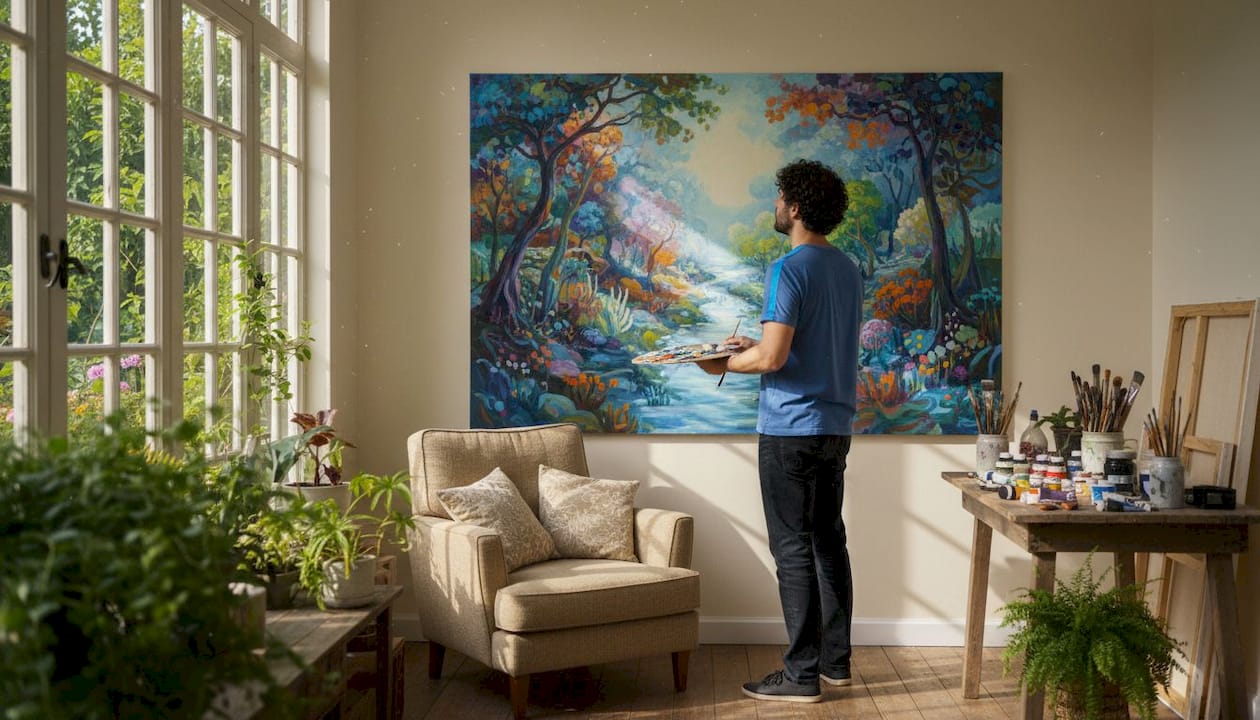
The distinction between identity art and decorator art matters enormously. Decorator art is chosen purely to match a sofa or echo a paint color. It fills space without adding meaning. Identity art, by contrast, creates what designers call narrative tension. It might contrast with the furniture, introduce an unexpected color, or reference a personal experience. Experts caution that selecting art for color matching alone produces predictable, personality-free interiors. The rooms that feel most alive are the ones where the art seems to have arrived with a point of view.
Art also controls how the eye moves through a room. A focal artwork placed on the wall opposite a doorway draws attention immediately and anchors the entire spatial composition. Designer Will Meyer advises integrating art early in the design process so it can guide visual focus and shape room scale. When art comes last, it competes with everything already in the room. When it comes first, everything else responds to it.
- A large abstract canvas above a fireplace creates a vertical anchor that makes low ceilings feel taller.
- A horizontal triptych along a hallway wall slows foot traffic and makes a narrow passage feel intentional.
- A single small, deeply personal piece in an unexpected spot, like a bathroom or stairwell landing, adds surprise and warmth.
- Grouping several smaller works at eye level creates a gallery effect that reads as one cohesive statement.
Pro Tip: Before buying new art, photograph your room and sketch where a focal piece would land. Seeing the empty wall in context reveals the right scale far more clearly than measuring alone.
What practical factors should homeowners consider when integrating art?
Scale is the factor most homeowners get wrong. Art that is too small for a wall disappears. Art that is too large overwhelms the room. The standard rule among interior designers is that a piece should occupy roughly two-thirds of the wall width it anchors. Above a sofa, that means a canvas spanning most of the sofa’s length, not a modest print centered in the middle of a large expanse.
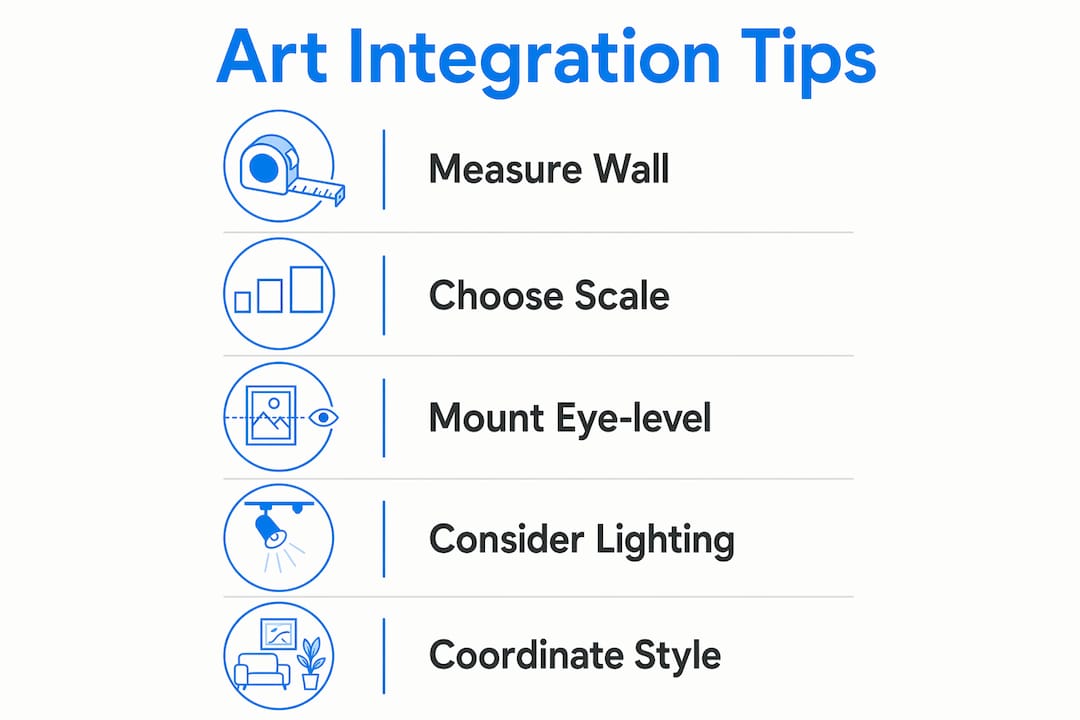
Lighting shapes how art looks and how long it lasts. Designer Zélika García notes that light deepens texture and shifts colors in ways that change throughout the day. A piece that looks warm and rich in morning light may appear flat by afternoon. Direct sunlight is the most damaging factor for prints and canvas works. UV exposure fades pigments over months, not years. For rooms with large south-facing windows, UV-filtering glazing or custom framed posters with protective coatings are worth considering.
Placement by room function changes the emotional expectation of the art. Bedrooms call for calmer imagery, softer palettes, and works that promote rest rather than stimulation. Kitchens and dining rooms tolerate bolder, more energetic pieces because those spaces are built for activity. Home offices benefit from motivational or focused imagery. Properly positioned lighting, whether track lighting, picture lights, or adjustable spotlights, enhances artwork’s colors and textures and makes the space feel dynamic at different times of day.
- Measure before you buy. Mark the intended wall space with painter’s tape to simulate the art’s footprint before committing.
- Test lighting conditions. Hold a sample print in the intended spot at different times of day to see how natural light affects it.
- Consider surface texture. Matte canvas absorbs light and reduces glare. Glossy prints reflect ambient light, which can create hotspots in brightly lit rooms.
- Account for traffic patterns. Art hung in high-traffic hallways should be secured firmly and placed above shoulder height to avoid accidental contact.
- Protect from humidity. Bathrooms and kitchens require art printed on moisture-resistant materials or sealed with protective coatings.
Pro Tip: Hang art so the center of the piece sits at eye level, roughly 57–60 inches from the floor. This is the standard used by most museums and it works in residential spaces for the same reason: it keeps the work in natural sightline without straining the neck.
What are effective ways to refresh home decor with art?
Refreshing a space does not require buying new art. Repositioning existing works is one of the most effective ways to refresh home decor with art and costs nothing. Moving a piece from the living room to a bedroom, or rotating a seasonal work into a prominent spot, creates a genuinely new experience in a familiar space. Designers suggest moving art to unexpected places and mixing vintage or personal items to add uniqueness and depth.
Mixing established works with personal finds adds layers that purely purchased collections rarely achieve. A framed child’s drawing placed alongside a gallery-quality print creates contrast that feels intentional rather than accidental. Antique maps, handwritten letters under glass, or objects from travel displayed as art all contribute to what designers call a layered narrative. The goal is a collection that combines personal and local finds with more formal works, creating depth that evolves over time.
Complementary accessories amplify art’s effect without competing with it. A small plant placed near a botanical print reinforces the theme. A warm-toned lamp positioned beside a canvas with amber hues makes the colors appear richer after dark. Textiles like a throw or rug that echo one color from a painting create visual continuity across the room.
- Rotate art seasonally. Lighter, brighter works in spring and summer; deeper, warmer pieces in fall and winter.
- Lean art against the wall on a shelf or mantel instead of hanging it. This creates a casual, gallery-like feel and makes rearranging effortless.
- Layer smaller framed pieces in front of larger ones on a console or bookshelf to build depth.
- Introduce a new frame on an existing print. A frame change alone can shift a piece from casual to formal or vice versa.
Pro Tip: Before spending anything, pull every piece of art you own into one room and look at them together. You will almost always find combinations and placements you have never tried.
How does art coordination with furniture styles amplify home decor impact?
Art and furniture work as a system. When they speak the same visual language, the room feels resolved. When they clash without intention, the space feels unsettled. Matching or complementing colors, textures, and scale between art and furniture creates interiors that feel considered rather than assembled by accident.
The relationship does not have to be literal. A mid-century modern sofa with clean lines pairs naturally with abstract geometric art because both share a preference for order and restraint. A heavily upholstered, traditional settee creates an interesting tension when paired with a bold contemporary canvas. That contrast, when deliberate, reads as sophistication. When accidental, it reads as confusion. The difference is whether the homeowner made a choice or simply placed things without thinking.
Art also affects how furniture feels in scale. A large canvas behind a low-profile sectional makes the seating feel grounded and intentional. The same sectional without art behind it can look like it is floating in the room. For a deeper look at how to match specific art styles to furniture types, the art and furniture coordination guide from Sensecanvas covers the practical pairings in detail.
| Furniture style | Art that works well | Why it works |
|---|---|---|
| Mid-century modern | Abstract geometric, minimalist prints | Shared preference for clean lines and restrained color |
| Traditional/classic | Landscapes, portraiture, botanical prints | Reinforces the formal, layered aesthetic |
| Industrial | Urban photography, raw-texture canvas | Echoes the material honesty of exposed metal and wood |
| Bohemian | Mixed-media, folk art, textile-inspired prints | Supports the layered, globally influenced aesthetic |
| Scandinavian | Monochrome prints, nature-inspired minimalism | Aligns with the light, functional, uncluttered ethos |
Key takeaways
Art functions as the primary identity signal in a home, shaping atmosphere, guiding spatial perception, and expressing the homeowner’s values more directly than any other design element.
| Point | Details |
|---|---|
| Art defines identity | Choose works that reflect personal values and stories, not just furniture colors. |
| Scale and placement matter | Art should span roughly two-thirds of the wall it anchors and hang at eye level. |
| Lighting protects and enhances | Avoid direct sunlight on prints and use adjustable lighting to shift the mood. |
| Refreshing costs nothing | Repositioning existing art and mixing personal objects creates a genuinely new space. |
| Art and furniture are a system | Deliberate coordination, or intentional contrast, between art and furniture makes a room feel resolved. |
What I’ve learned about treating art as a design foundation
Most homeowners treat art as the last decision. They furnish the room, paint the walls, add the rugs and cushions, and then look at the blank walls and wonder what to hang. That sequence produces rooms that feel complete but not personal. The art ends up serving the furniture instead of the other way around.
The rooms that genuinely stop you when you walk in are the ones where art arrived first, or at least early. The furniture was chosen to support the art, not the other way around. That shift in sequence changes everything about how a space feels. Art becomes the reason the room exists, not a finishing touch applied after the real decisions were made.
The other mistake I see constantly is treating art as permanent. Homeowners hang a piece, decide it belongs there, and never move it again. Art should be an evolving partner in how you live. Move it. Rotate it. Put a piece away for a year and bring it back when you have forgotten it. You will see it fresh, and so will everyone who visits. A home that changes its art is a home that stays alive.
— Sense
Wall art that fits your space and your story
Finding art that genuinely reflects who you are is harder than it sounds. Generic prints fill walls without adding meaning. Sensecanvas offers over 15,000 unique canvas artworks across styles including abstract, animal themes, motivational quotes, and more, with custom sizing available so every piece fits its intended wall precisely.

Prices start at $85, making it possible to invest in meaningful art without committing to gallery-level budgets. Whether you are looking for a bold focal piece for your living room or a quieter work for a bedroom, the full Sensecanvas wall art collection covers the range. For something with a strong graphic presence, the abstract ocean canvas is a strong starting point for modern interiors.
FAQ
What is the role of art in home decor?
Art defines the emotional tone and personal identity of a living space. It shapes how a room feels, guides the eye, and communicates the homeowner’s values more directly than furniture or color alone.
How do I choose the right size art for a wall?
A piece should span roughly two-thirds of the wall width it anchors. Above a sofa, that means a canvas close to the sofa’s full length, centered and hung so the midpoint sits at eye level.
Does lighting really affect how art looks?
Light shifts the perceived color and texture of art throughout the day, and direct sunlight causes UV damage that fades pigments over time. Use adjustable artificial lighting and keep prints away from direct sun exposure.
How can I refresh home decor with art without buying anything?
Reposition existing works to new rooms or unexpected spots, mix personal objects like framed drawings or travel finds alongside formal pieces, and rotate art seasonally to create a fresh experience in familiar spaces.
Should art match my furniture?
Art does not need to match furniture literally. Deliberate coordination, where art and furniture share a color, texture, or stylistic sensibility, creates harmony. Intentional contrast between styles can also work well when the choice is made consciously rather than by accident.