Vacation Rental Hosts: Hang One Hero Wall Art This Weekend
Buy one large, photo-ready statement canvas for your living room or master bedroom before touching anything else. Size it to fill the space above your sofa or headboard, choose a durable material that survives cleaning crews and curious guests, and get it hung within your first week of listing. Everything else, from gallery walls to guest room touches, comes after that hero piece is done.
TL;DR:
- Prioritize buying a large, durable canvas as the hero piece for your rental to create a visual focal point that attracts bookings and enhances reviews.
- Match the style and color palette of wall art to the property’s location and feel, using landscape for rural retreats or abstract for modern apartments.
- Use sizing guidelines to ensure artwork is proportionate to furniture, with large pieces over beds and sofas spanning 60-75% of the available width for optimal photographic impact.
- Choose materials like matte canvas or waterproof prints for durability, and keep a spare ready to replace any damage during turnovers.
- Focus your decor budget on the hero room’s art, ordering well in advance, to maximize the return of improved photos and increased booking rates.
Table of Contents
- Why Vacation Rental Wall Art Matters for Bookings
- Which Wall Art Styles Photograph Best in Rentals
- Where to Buy Durable, Affordable Vacation Rental Wall Art
- How to Size and Place Wall Art So It Reads in Photos
- Keeping Wall Art Durable Through Guest Turnovers
- What to Budget for Wall Art and When You’ll See a Return
- Sense Canvas and This Guide’s Sizing Rules
- A Quick Staging Routine Worth Running This Weekend
- Get Your Hero Room Wall Art From Sense Canvas
- Sources
Why Vacation Rental Wall Art Matters for Bookings
Guests do not book a property. They book the photograph of it. That is the blunt way Awning frames it in its 2026 decor guide, and it explains why so many high-performing listings share one trait: a single, unmistakable visual anchor in the room that becomes the cover photo. A textured landscape over a sectional. A bold abstract piece behind a king bed. Something that stops the scroll on a search results page crowded with beige rentals that all look the same.
Statistic Callout: Design experts tracking 2026 short-term rental trends point to hero-room statement pieces, paired with better lighting and texture, as some of the highest-ROI upgrades hosts can make without a renovation, according to InTheSunVR’s revenue-focused design analysis.
The mechanism is simple. A property manager scrolling through 40 nearly identical listings stops at the one with a genuine focal point, because it signals someone actually designed the space instead of furnishing it from a clearance aisle. That perception shows up later in review language, too. Guests who stay somewhere with intentional decor tend to write about the space itself, not just the location, and those richer reviews carry more weight with future bookers than a generic five-star rating.
Wall art is also the cheapest square footage you own. A $150 canvas covers more visual real estate per dollar than almost any furniture purchase, and unlike a sofa, it does not need to survive spills or naps. It just needs to photograph well and hold up to a cleaning crew wiping down the wall behind it. That combination, low cost and high visual weight, is why art belongs at the top of any host’s decor priority list, not the bottom.
Which Wall Art Styles Photograph Best in Rentals
The style you choose should match the property, not your personal taste. A moody, gallery-worthy abstract piece that looks stunning in a downtown loft will feel out of place in a lake cabin, and vice versa. Matching art to context is what makes a listing feel curated instead of random.
A few pairings work consistently well across property types; for example, beach houses and coastal rentals benefit from a distinctive Coastal look that enhances their shore-side charm.
- Beach houses and coastal rentals: oversized ocean or shoreline photography, coastal-toned canvases, and driftwood-adjacent color palettes that echo the location outside the window.
- Modern apartments and urban stays: large-scale abstract art with bold color blocking, which photographs sharp under any lighting and reads as intentional rather than sparse.
- Mountain cabins and rural retreats: landscape photography or regional artist work that ties the interior to the destination guests booked in the first place.
- Destination or culturally distinct stays: local artist prints or city-specific pieces, like skyline art for an urban stay, that give guests a reason to photograph the wall itself.
Color strategy matters more than most hosts realize. Keep walls neutral and let one accent color do the work through the art, pillows, and maybe a throw blanket. Warm earth tones, rust, ochre, deep green, tend to photograph better on a phone camera than cool grays, which can read flat or clinical under artificial light. Stick to one visual theme throughout the property so a guest scrolling through your photo gallery feels like they are touring one cohesive space, not five different Pinterest boards stitched together.
Pro Tip: Buy your accent pillows and throw blankets after you pick your wall art, not before. Matching decor to a piece of art is easier than finding art to match a couch you already committed to.
Where to Buy Durable, Affordable Vacation Rental Wall Art
Hosts generally choose between four sourcing paths, and each comes with real tradeoffs worth knowing before you order.
- Ready-made canvases. Fast to order, consistent quality, and available in standard sizes that fit most walls without custom framing. The tradeoff is less uniqueness if a competing listing picks the same print.
- Downloadable art printed locally. Cheap and flexible on sizing, but quality depends entirely on the print shop, and turnaround can stretch longer than a canvas order during busy seasons.
- Peel-and-stick wallpaper as an accent wall. EazzyWalls positions commercial-grade peel-and-stick options as more durable and photographically striking than a painted accent wall, and it installs without professional help.
- Commissioned local artists. The most unique option and a strong story for your listing description, but pricing and lead times vary widely, and you are trusting one person’s schedule.
Before ordering from any source, run through a short checklist: confirm shipping lead time against your listing launch date, check whether the size can be customized rather than forced into a preset dimension, read the return policy in case the color looks different in person, and confirm the material resists fading near windows.
Custom canvas earns its slightly higher price when the piece is your hero room’s focal point, since it will appear in every listing photo for years. Inexpensive framed prints make more sense for secondary bedrooms or hallways, where the art supports the space but is not carrying the photographic weight of your cover image.
How to Size and Place Wall Art So It Reads in Photos
Scale is where most hosts go wrong, and it is the single easiest thing to fix. Art that is too small over a bed or sofa reads as an afterthought in photos, even if the piece itself is beautiful.
A few working rules from host-facing sizing guides make this simple:
- Bedroom art should measure roughly two-thirds the width of the bed, and hang about 15 to 25 centimeters above the headboard.
- Living room art over a sofa should span 60 to 75% of the sofa’s width for visual balance.
- In small spaces, one larger piece almost always outperforms a cluttered grouping of small frames, since it reads clearly even when a listing photo is compressed to a thumbnail.
- Gallery walls work in hallways and stairwells, where guests linger, but keep them out of your primary hero shot.
Lighting affects how any of this reads on camera more than most hosts expect. Warm bulbs in the 2700K to 3000K range make colors and wood tones look inviting rather than sterile, and photographing during golden hour, an hour or so after sunrise or before sunset, adds warmth that overhead lighting cannot fake. Statistic Callout: Lighting adjustments and golden-hour timing are cited among the most immediate fixes hosts can make to improve how color and texture appear in smartphone photos, according to Awning’s decor analysis.
Clear the wall of clutter before shooting, angle the camera slightly upward to make ceilings feel taller, and always shoot the hero piece straight on to avoid distortion. For tight rooms, a sizing guide built for small spaces can help you avoid the oversized-frame mistake that makes a small bedroom feel cramped in photos.
Keeping Wall Art Durable Through Guest Turnovers
Material choice determines how much time you spend replacing damaged art, and that time adds up fast across a busy rental calendar. Short Term Shop’s 2026 design guidance is blunt about this: durable, intentional choices beat cheap decor that needs replacing every few months, even when the cheap option looks fine on day one.
Here is how the common materials stack up:
- Canvas: matte finish avoids glare in photos, resists minor scuffs, and wipes clean easily, making it a strong fit for high-turnover properties.
- Framed prints behind glass: protected from scratches but prone to reflections that ruin listing photos taken near windows.
- Metal or acrylic prints: hold up well in bathrooms or kitchens where humidity is a factor.
- Peel-and-stick wallpaper: ideal for renters or leased properties where temporary, no-drill decor is required by a lease agreement.
Keep a spare print or two in storage so a damaged piece never leaves a wall bare between guest stays. Use standard picture hooks for lightweight prints, but switch to security hangers or museum putty for larger canvases in high-traffic rooms, since a piece that shifts or falls creates a maintenance call you do not want mid-season.
Pro Tip: Photograph your finished walls once, right after install, and keep that reference photo on file. If cleaning staff move a piece during turnover, they can rehang it exactly where it belongs without guessing.
What to Budget for Wall Art and When You’ll See a Return
Furnishing a two-bedroom rental on a budget often runs roughly $6,000 to $9,000 total, and decor touches like art make up a small slice of that number despite carrying a disproportionate amount of the visual impact. That asymmetry is the whole argument for prioritizing art early.
Sequence your spending around your listing photos, not your whole property. Nail the hero room first, since that is what appears in your cover photo and drives clicks in search results. Secondary bedrooms and hallways can wait a few weeks without hurting bookings. Order art with enough lead time to have it installed and photographed at least a few days before your listing goes live or relaunches.
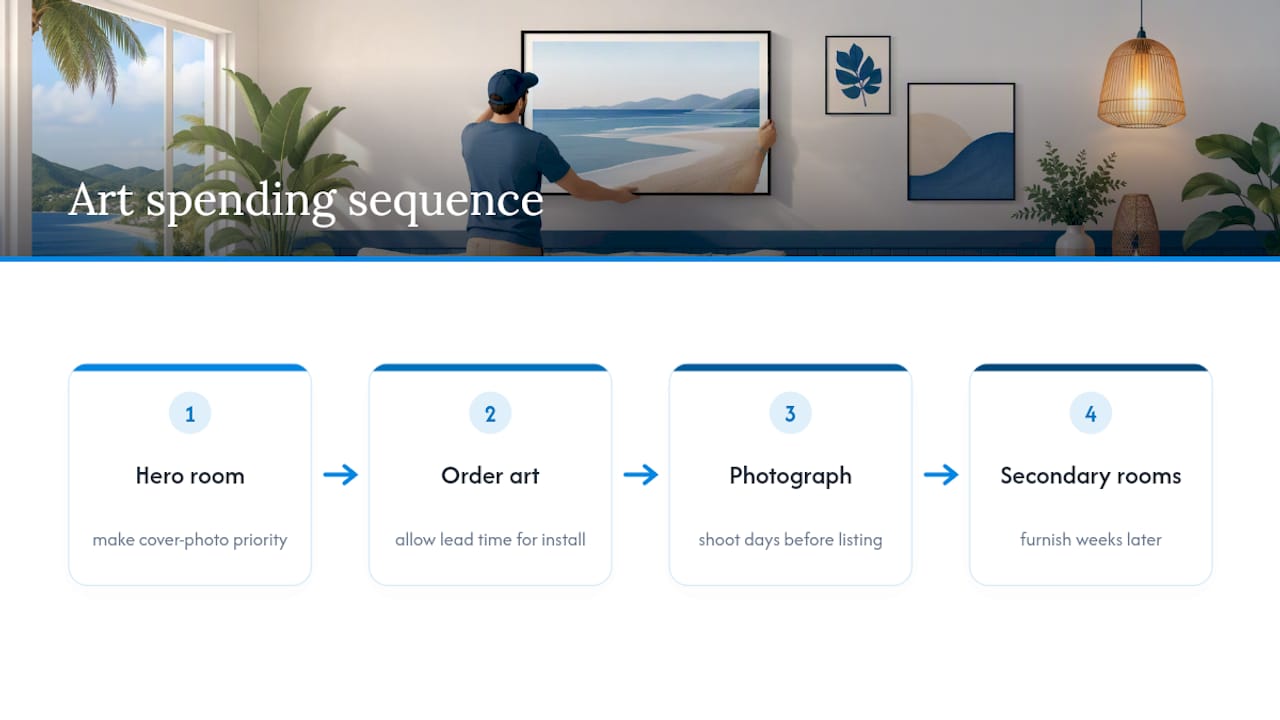
The ROI logic is straightforward even without hard tracking data: better photos generate more clicks, more clicks generate more bookings, and consistent bookings let you raise your nightly rate over time. If you are deciding between a DIY print and a finished canvas, ask one question: will this wall appear in my primary listing photos? If yes, spend the extra money. If it is a guest room nobody photographs, save it for later.
Sense Canvas and This Guide’s Sizing Rules
Sense Canvas builds directly toward the rules already covered in this guide. The catalog runs across a wide range of designs including abstract, coastal, and typographic pieces, covering most of the property types discussed above without forcing a host to compromise on theme.
A few specifics that matter for rental hosts:
- Pricing starts at various points, which lands comfortably inside the low-cost to mid-range budget tiers outlined earlier.
- Some pieces can be customized to size, which helps address the scale problem directly. Instead of forcing a preset canvas into an awkward gap above a headboard, a host can order to fit their space more precisely.
- Canvas material can offer matte, glare-free finishes and may withstand routine cleaning between guest turnovers.
For a host trying to execute a hero-room upgrade without hiring a designer, that combination of size flexibility and price accessibility removes most of the guesswork from sourcing.
A Quick Staging Routine Worth Running This Weekend
Set aside 60 to 90 minutes this weekend: unbox and hang one hero piece using the scale rules above, then stage the room exactly as a guest would see it, clutter cleared, warm bulbs on, camera angled slightly upward.
Shoot the before-and-after during golden hour if you can. Swap your listing’s cover photo, then track your click-through rate over the next two to three weeks. That single before-and-after comparison tells you more about what actually moves bookings than any amount of theorizing about decor trends.
— Sense
Get Your Hero Room Wall Art From Sense Canvas
Sense Canvas gives you the size flexibility this guide keeps pointing back to. Instead of hunting through generic marketplace listings hoping something fits your headboard width, you pick a design from over 15,000 options and have it custom sized to the exact scale rules covered above, starting around $85.
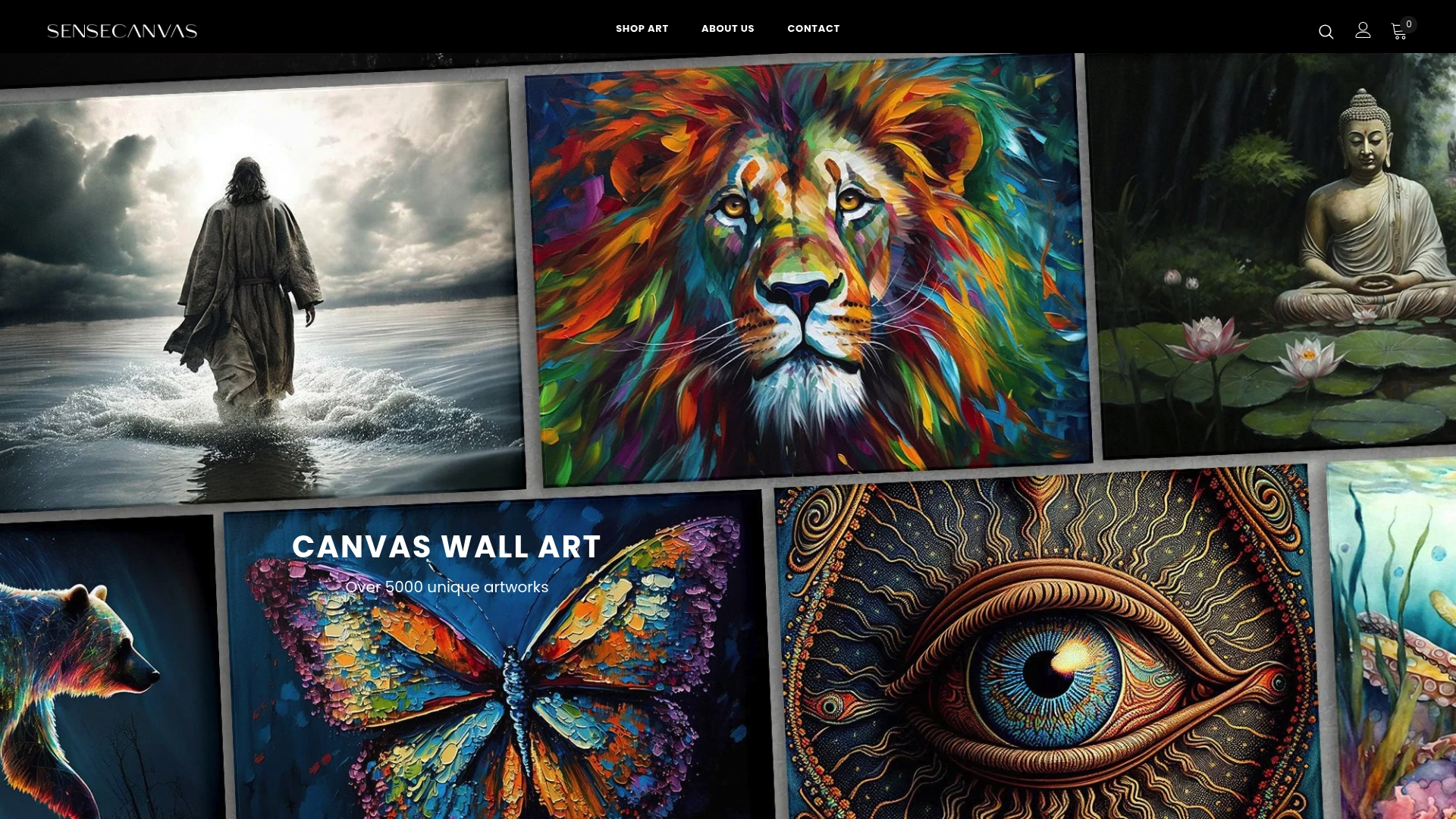
Start with the Sense Canvas landing page to browse by style and filter toward whatever theme fits your property, coastal, abstract, or city-specific. If you want a fast example of what a bold hero piece looks like in practice, the statement canvas designs show how a strong graphic print reads at scale in a living room shot. Order your hero-room piece this week, keep a spare print in storage for turnovers, and refresh your listing cover photo as soon as it is hung on the wall.