The Best Modern Farmhouse Wall Art for Every Room
For most rooms, a gallery-wrapped canvas print in a neutral or muted palette is the smartest buy. Sensecanvas offers a very large collection of designs with customizable sizing starting at a modest price, which means you can match scale to your exact wall rather than forcing a standard size to work.
- Verdict: Custom canvas art gives you farmhouse warmth with a clean, modern finish. It works above a sofa, in a kitchen nook, or anchoring an entryway.
- Why it wins: You control the size, motif, and finish. No guessing whether a 24" x 36" will look right above a 90" sofa.
- Quick buying tip: If you’re between sizes, order one size up. A piece that fills a substantial majority of your wall’s width reads as intentional. A piece that’s too small reads like an afterthought.
Key Takeaways
The most effective approach to modern farmhouse wall art is to choose the right scale first, then motif and material, and to use customizable canvas prints when you need a size that standard retail doesn’t carry.
| Point | Details |
|---|---|
| Scale before style | Art should span a substantial majority of the furniture width below it; size up when between options. |
| Canvas is the workhorse | Gallery-wrapped canvas suits most farmhouse rooms and needs no frame to look finished. |
| Muted tones define the style | Neutrals, warm grays, and soft blacks keep motifs reading modern rather than country. |
| Motif mix for gallery walls | Anchor with one motif family and break the pattern with one typography or abstract piece. |
| Sensecanvas for custom sizing | Over 15,000 designs with customizable dimensions starting at $85, gallery-wrapped and ready to hang. |
Table of Contents
- What does modern farmhouse wall art actually look like?
- What motifs and subjects define the style?
- What materials and finishes work best?
- How do you choose the right size and layout?
- Which rooms benefit most from farmhouse wall art?
- What should you expect to pay, and what are the shipping and return policies?
- Why Sensecanvas is worth a close look for farmhouse art
- How do you evaluate wall art quality before buying?
- How do you assess seller credibility and customer reviews?
- Online versus in-store: which is better for farmhouse art?
- What most farmhouse art advice gets wrong
- Sensecanvas has what you need for farmhouse-ready walls
- Sources
What does modern farmhouse wall art actually look like?
Architectural Digest defines modern farmhouse as a blend of traditional farmhouse details with contemporary lines, lighter palettes, and simplified ornamentation. The wall art follows the same logic: familiar, warm motifs stripped of fussiness.
The visual hallmarks are consistent across rooms:
- Neutral palette: Whites, creams, warm grays, soft blacks, and weathered taupes
- Muted prints: Low-contrast imagery with soft edges rather than vivid, saturated color
- Natural textures: Wood grain, linen, and distressed surfaces that suggest age without looking worn out
- Hand-drawn or photographic motifs: Botanical sketches, pastoral scenes, and close-up florals
- Matte or low-sheen finishes: Glossy prints tend to read as contemporary or commercial; matte keeps the farmhouse feel
Homes & Gardens notes that trend interest is shifting toward cozier transitional and cottage-influenced schemes, which means the most durable farmhouse art choices lean warmer and more layered rather than stark white-on-white.
What motifs and subjects define the style?
Pinterest’s farmhouse wall-decor collections make the dominant motifs clear: florals, farm animals, pastoral landscapes, botanical sketches, vintage typography, and abstract neutrals account for the vast majority of what people actually hang.
Here’s what each looks like in practice:
- Florals: Loose watercolor wildflowers, dried botanicals, or single-stem sketches in cream and dusty rose
- Farm animals: Cows, horses, roosters, and sheep rendered in a simplified, graphic style rather than photorealistic
- Pastoral landscapes: Rolling fields, barns at dusk, or misty tree lines in muted earth tones
- Vintage typography: Farmhouse sayings, family names, or single words in serif or hand-lettered fonts on aged backgrounds
- Abstract neutrals: Organic shapes in warm whites, taupes, and soft charcoals that read modern but feel grounded
The treatment matters as much as the subject. A horse rendered in vivid color reads as Western or country. The same horse in soft charcoal on a cream background reads as modern farmhouse. Muted tones and soft contrast are what make a motif fit the style.
BayToBeachBuilders recommends mixing materials and industrial accents to push farmhouse interiors toward a more modern edge. The same principle applies to art: pairing a botanical sketch with a simple black metal frame, or a wood-plank sign with a clean canvas print, creates that layered modern-rustic tension.
Pro Tip: When building a gallery wall, pick one motif family as the anchor (say, botanicals) and let one or two pieces break the pattern with typography or an abstract neutral. Full thematic consistency looks curated in a catalog and flat in a real room.
What materials and finishes work best?
The physical format of a piece shapes how farmhouse it reads, sometimes more than the image itself.
Gallery-wrapped canvas is the workhorse of the style. No frame required, the image wraps around the stretcher bars, and the result is clean without being cold. It suits living rooms, bedrooms, and entryways equally well.
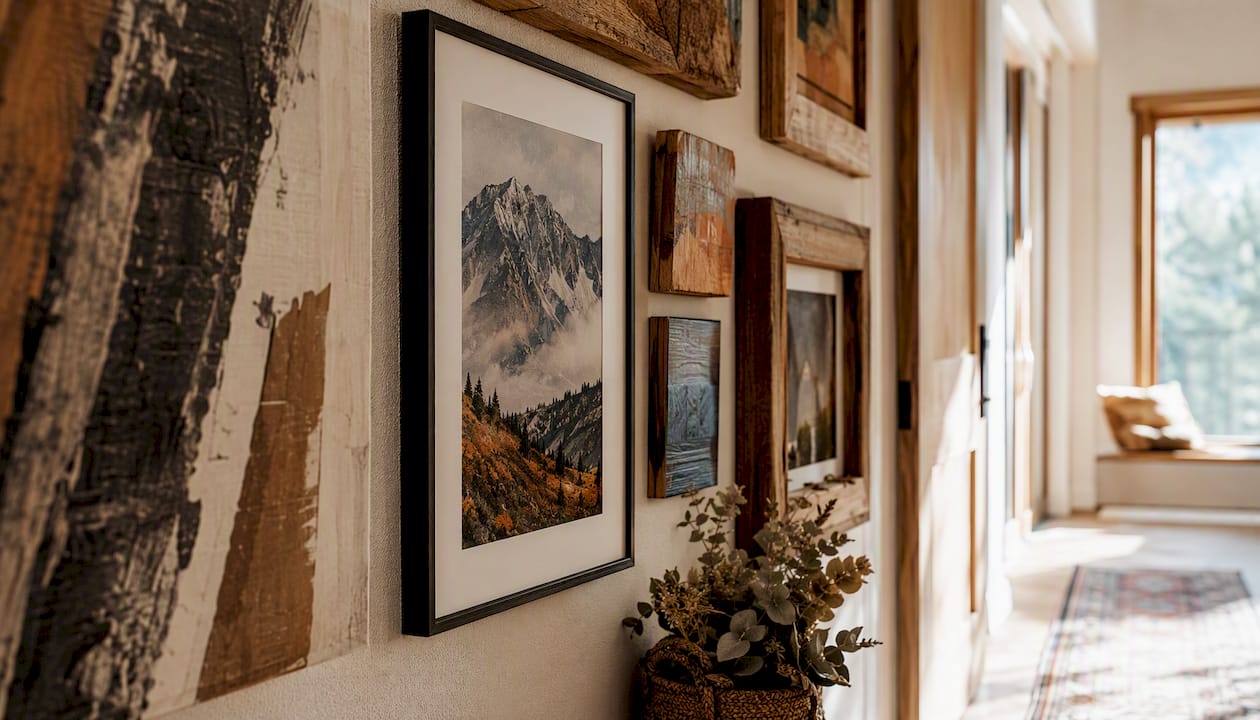
Framed paper prints add a more traditional, collected feel. Rustic walnut or black metal frames both work. Standard sizes like 30" x 20" or 48" x 32" pair well with a simple mat for a gallery-ready look.
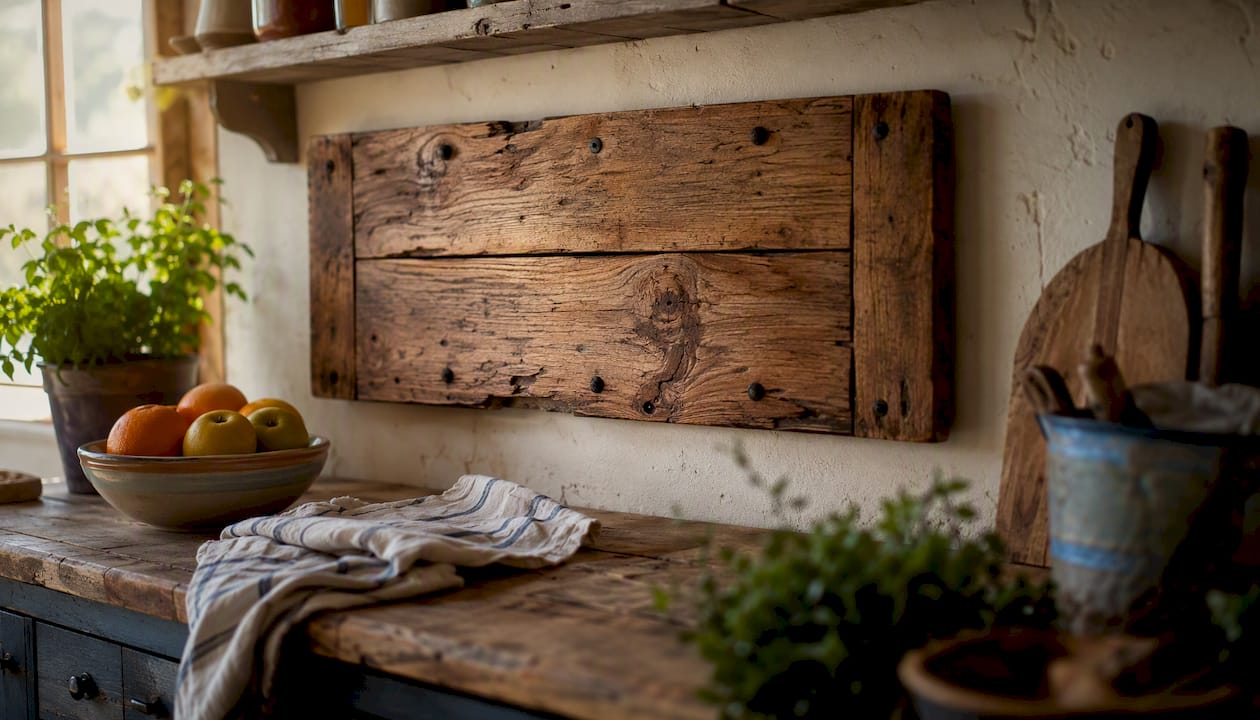
Wooden plank signs bring literal texture. Three-dimensional layered wood pieces, often made from maple, walnut, or reclaimed timber with hidden cleats for mounting, add architectural presence that canvas cannot replicate. They work especially well in kitchens and mudrooms.
Metal accents (thin black frames, wire-hung prints) are the industrial touch that tips a farmhouse room toward modern. A single metal-framed piece in a grouping of wood and canvas prevents the space from reading as purely rustic.
For finishes, prefer matte or low-sheen surfaces. A low-gloss eco-friendly seal on wood retains grain tone while keeping the look contemporary. Avoid high-gloss canvas coatings; they catch light in ways that flatten the image and break the warm, organic feel.
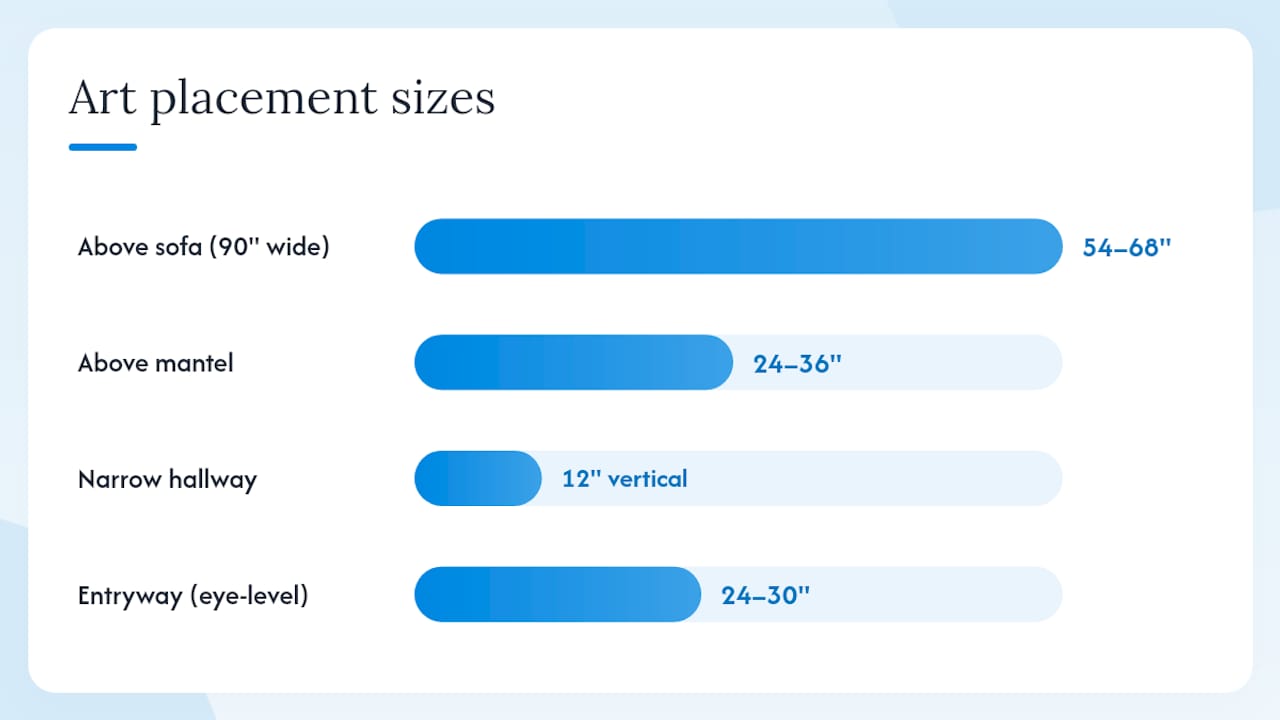
| Placement | Recommended size |
|---|---|
| Above a sofa (90" wide) | 54"–68" wide single piece or grouped set |
| Above a mantel | 24"–36" wide, proportional to mantel width |
| Narrow hallway | 12" vertical piece |
| Entryway statement | 24"–30" wide, eye-level center |
How do you choose the right size and layout?
Getting scale right is the single biggest difference between art that looks placed and art that looks designed.
- Measure your wall. Note the full width and height of the wall or the furniture piece below the hanging spot.
- Determine focal width. For above a sofa, target 60–75% of the sofa’s width. A 90" sofa calls for art spanning roughly 54"–68".
- Decide: single piece or gallery. A single large piece reads bold and modern. A gallery wall reads collected and warm. Both work in farmhouse rooms.
- Plan gallery spacing. For a tight grid, keep gaps at 2–4 inches between frames. For a salon-style arrangement, 6–8 inches between larger pieces gives each one room to breathe.
- Choose your layout style. A grid (uniform frames, even spacing) reads more modern. A salon arrangement (mixed sizes, organic grouping) reads more rustic. Mixing both in one room works if you keep the palette consistent.
- Mock it up before you hang. Cut paper templates to your intended sizes and tape them to the wall. Spend a day living with the layout before committing.
Pro Tip: Most phones now have AR room-visualization features. Sensecanvas and similar platforms let you preview a piece in your actual space before ordering. Use it. The difference between a 24" and a 30" piece is subtle on screen and obvious on a wall.
Which rooms benefit most from farmhouse wall art?
Room function and lighting should drive both motif and scale choices.
- Living room above the sofa: The highest-traffic visual anchor in most homes. A large single canvas or a three-piece set in a neutral botanical or abstract works here. Keep the bottom of the art 6–8 inches above the sofa back.
- Kitchen over open shelving or a breakfast nook: Farmhouse kitchen wall art tends to run smaller and more personal. Vintage typography, herb botanicals, or a simple animal sketch fits the scale of a nook without competing with cabinetry.
- Bedroom above the headboard: Soft florals, abstract neutrals, or a muted landscape. The art should feel restful. Avoid high-contrast black and white farmhouse art here unless the rest of the room is very warm.
- Entryway as a statement piece: This is where you can go bolder. A single large vertical canvas or a customized family-name piece sets the tone for the whole house.
For styling, anchor art with complementary textiles: a linen throw in the same cream tone as the canvas, or a jute rug that echoes the wood frame. Repeat finish tones across the room rather than matching them exactly.
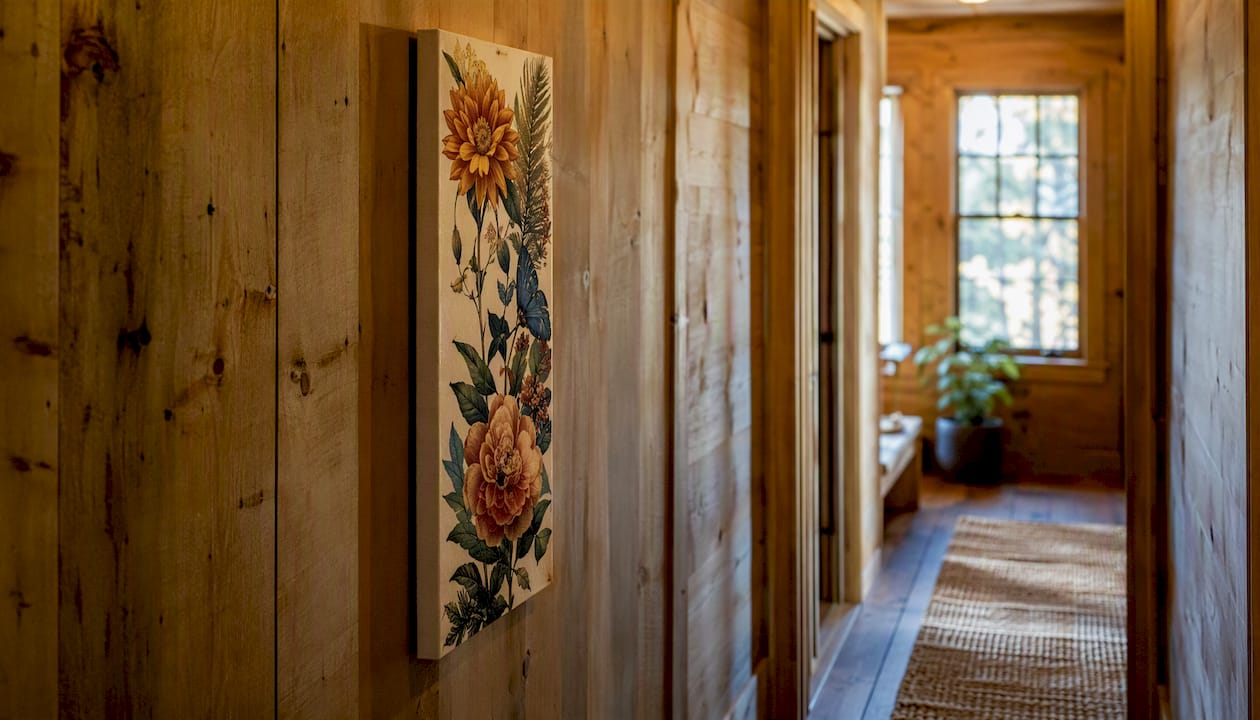
Pro Tip: In narrow spaces, vertical pieces make ceilings feel taller. A 12" x 36" botanical print in a hallway does more visual work than a square piece of the same area.
What should you expect to pay, and what are the shipping and return policies?
Price is driven by four factors: size, material, framing, and customization. Here’s how it typically breaks down:
- Entry-level single canvas (small, ready-made): $85–$150
- Mid-range custom canvas (medium, gallery-wrapped): $150–$300
- Premium large or framed pieces: $300–$600+
- Wooden plank or 3D layered pieces: Often $200–$500 depending on size and material
Custom canvases take longer to ship than ready-made pieces. A ready-to-hang print from stock can arrive in 3–7 business days. A custom-sized or custom-motif canvas typically runs 7–14 business days from order to delivery, sometimes longer during peak seasons.
Before ordering any custom piece, confirm three things: whether the seller offers a digital proof before printing, what the return window is for custom orders (many are final sale), and whether the size you’re ordering matches the dimensions you measured, not the dimensions listed on the product page.
Returns on custom art are often limited or nonexistent. Read the policy before checkout, not after. For standard sizes, most reputable sellers offer 30-day returns on undamaged pieces.
Why Sensecanvas is worth a close look for farmhouse art
Sensecanvas’s catalog of over 15,000 designs covers the full range of farmhouse-adjacent motifs: animals, abstract neutrals, botanical themes, and typographic pieces. The customization options are the real differentiator. You choose the size to match your wall, not the other way around.
Key strengths:
- Customizable sizing: Order the exact dimensions your wall needs, not a standard size you have to work around
- Gallery-wrapped canvas finish: Clean, frame-optional, and suited to both modern and rustic rooms
- Price accessibility: Pieces start at $85, with options across a range of sizes and complexity
- Broad motif range: From animal-themed canvas prints to abstract neutrals, the catalog covers most farmhouse style directions
- Customizable family-name and typographic pieces: Ideal for entryways and personalized farmhouse decor
Pro Tip: Use Sensecanvas’s size customization to order one size larger than you think you need. Most buyers who go back for a second piece wish they’d gone bigger the first time.
How do you evaluate wall art quality before buying?
Print quality is hard to assess from a product thumbnail. Look for these signals:
- Resolution and print method: Giclée printing on archival-grade canvas produces sharper detail and longer color life than standard inkjet. Ask or check the product description.
- Stretcher bar depth: A 1.5" deep gallery wrap looks more substantial on the wall than a 0.75" wrap. Depth matters more than most buyers realize.
- Color accuracy: Check customer photos, not just the product image. Real-room photos show how colors actually render under home lighting.
- Material sourcing: Acid-free canvas and UV-resistant inks prevent yellowing and fading over time.
How do you assess seller credibility and customer reviews?
A high star rating means less than the content of the reviews. Look for:
- Photos from real buyers: Text-only reviews are easy to fabricate. Photos of the piece in an actual room are not.
- Review recency: A seller with 500 reviews from three years ago and none this year is a different risk profile than one with consistent recent feedback.
- Response to negative reviews: How a seller handles a complaint tells you more about their service than the complaint itself.
- Return and customization policy clarity: Credible sellers state their policies plainly. Vague or buried policies are a warning sign.
- Third-party verification: Look for sellers with verified purchase badges or reviews on platforms independent of their own site.
Online versus in-store: which is better for farmhouse art?
Both have real advantages, and the right choice depends on what you need most.
Buying online gives you access to far more designs, custom sizing, and lower prices than most brick-and-mortar stores can match. The tradeoff is that you cannot assess texture, color accuracy, or scale in person before committing. AR preview tools and detailed product photos close some of that gap, but not all of it.
Buying in-store lets you hold the piece, see the finish under real lighting, and know exactly what you’re getting. The selection is narrower, prices tend to be higher, and custom sizing is rarely available off the shelf.
For most modern farmhouse wall art purchases, online wins on selection and value, especially when the seller offers customization, digital proofs, and clear return policies. In-store makes more sense for one-of-a-kind pieces, local artisan work, or when you need to match a very specific existing finish in the room.
Homes & Gardens’ trend coverage also points to the growing influence of cottage and transitional styles, which means online catalogs are updating faster than most retail floors. If you want current farmhouse-adjacent motifs, online is where they appear first.
What most farmhouse art advice gets wrong
The standard advice is to pick a theme and stick to it. Choose botanicals, buy five botanical prints, hang them in a grid, done. That approach produces rooms that look like a mood board rather than a home someone actually lives in.
The farmhouse rooms that read as genuinely warm and considered are almost always the ones where something breaks the pattern. A single piece of black and white farmhouse art in a room full of warm creams. A typographic piece among botanicals. A wood-plank sign next to a gallery-wrapped canvas. The contrast is what creates the sense that the collection was built over time rather than ordered in one afternoon.
The other thing most guides underplay is scale. Buyers consistently go too small. A 16" x 20" print above a full sofa looks like a postage stamp. The hesitation is understandable: a larger piece costs more and feels like a bigger commitment. But a piece that fills the wall properly transforms a room in a way that a correctly themed but undersized piece never will.
The last thing worth saying: the trend cycle is real. Homes & Gardens notes that transitional and cottage-influenced aesthetics are gaining ground as the next wave. That doesn’t mean modern farmhouse is over. It means the pieces most worth buying are the ones that work in both registers: a botanical sketch, an abstract neutral, a muted landscape. Those pieces outlast any single trend.
Sensecanvas has what you need for farmhouse-ready walls
Most homeowners spend more time second-guessing size and motif than actually shopping. Sensecanvas cuts that friction. With over 15,000 designs and the ability to order any piece in the exact dimensions your wall needs, you skip the “will this fit?” problem entirely.

Pieces start at $85, gallery-wrapped and ready to hang. The catalog covers every major farmhouse motif: animals, botanicals, abstract neutrals, typography, and more. Whether you need a single statement piece for above the sofa or a set of three for a kitchen nook, the Sensecanvas canvas wall art collection has options sized and styled to fit. Browse the full catalog and use the size customization tool to order the dimensions your room actually calls for.
Sources
- Farmhouse Style 101: Everything You Need to Know | Architectural Digest
- 5 styles replacing modern farmhouse kitchens in 2025
- Modern Farmhouse Design Guide: Essential Features & Elements
- 160 Farmhouse Wall Decor for Homes ideas - Pinterest