50–75% Rule: Exact Art Sizes and Hang Steps for Above Your Bed
Aim for artwork that spans generally between half and three quarters of your bed or headboard width, then hang the bottom edge about 6–10 inches above the headboard. That single ratio solves most of the guesswork. Sense Canvas stocks ready sizes and custom canvas dimensions built around exactly this range, so once you know your target width, finding a piece that fits is the easy part.
TL;DR:
- Artwork should generally be between half and three quarters of the bed width, with some variation depending on style and headboard measurements.
- Hang the art 6 to 10 inches above the headboard, adjusting up or down based on headboard height and room proportions.
- Use paper templates or painter’s tape to mock up placement and confirm scale from multiple viewing angles before drilling.
- Mount heavy or glass-framed art with appropriate hardware into studs or anchors for safety and stability above a sleeping area.
- Custom art options from Sense Canvas allow precise sizing to match your bed’s exact width, avoiding the common issue of ill-fitting stock sizes.
Table of Contents
- Above Bed Art Size by Bed Width: Width Rules That Actually Work
- How High Above the Headboard Should Art Hang?
- Single Canvas or Gallery Wall? Choosing Your Layout
- How to Measure, Mock Up, and Hang Art Above a Bed
- Mounting Heavy or Glass-Framed Art Safely
- Quick Reference: Bed Size to Art Width Chart
- Sense Canvas: Sizing Made Simple for Your Bedroom Wall
- The Rule Most People Get Half Right
- Get a Canvas Sized to Your Exact Bed, Not the Nearest Standard Size
- Sources
Above Bed Art Size by Bed Width: Width Rules That Actually Work
Interior designers generally treat this as a range, not a fixed number, because the right proportion for above-bed artwork depends on style.
Here’s how that math plays out for common US bed sizes:
- Twin: target width about half to three quarters the bed width. A single 24×30 canvas works well.
- Full: target width about half to three quarters the bed width. Think 30×40 or a 36×24 horizontal piece.
- Queen (60 inches wide): roughly 30 to 45 inches, which lines up with the 30 to 49 inch range design guides commonly recommend for queen beds. A 40×30 canvas or two 24×30 panels both land comfortably inside that zone.
- King: target width about half to three quarters the bed width. A single 48×30 canvas is a classic fit.
One catch: headboards and mattresses aren’t always the same width. A slim metal frame headboard might measure narrower than the mattress beneath it, while an upholstered wingback headboard can run wider. When they differ, measure the headboard itself, since that’s the visual anchor your eye reads first, not the mattress hiding underneath the sheets.
How High Above the Headboard Should Art Hang?
Height matters just as much as width, and it’s the detail most people get wrong. Hang the bottom edge of the artwork 6 to 10 inches above the top of the headboard for most setups. Adjust from there based on what you’re working with:
- Tall or dramatic headboards: 4 to 6 inches is plenty, since the headboard already fills a lot of visual space.
- Low or platform-style headboards: 7 to 8 inches keeps the art from feeling glued to the frame.
- No headboard at all: 8 to 12 inches gives the piece enough separation to feel intentional rather than random.
Height detached from the bed breaks the visual pairing between furniture and art, which is often why a perfectly sized piece still looks off. Keep at least 6 inches of clearance between the top of the art and the ceiling in a standard-height room, and give it more room to breathe if your ceilings run tall.
No tape measure handy? Use the hand-width trick: an adult hand held vertically on the headboard measures close to 7 inches, which lands you right in the sweet spot without any math.
Single Canvas or Gallery Wall? Choosing Your Layout
A single large horizontal canvas is the cleanest choice when you want a calm, cohesive look, and it’s usually the least fussy to hang since there’s only one set of measurements to get right. Multiple pieces make sense when you want visual rhythm, when you’re working with a mix of sizes you already own, or when a single canvas that size isn’t available or affordable.
The math changes slightly for grouped layouts.
- Two panels: two 24×30 canvases with a 3 inch gap total 51 inches, a solid fit above a queen or king bed.
- Three-panel spread: three 20×24 pieces with 3 inch gaps land around 66 inches, ideal for a king headboard.
- Small gallery row: four smaller 12×16 pieces spaced 2 to 4 inches apart can substitute for one large canvas above a full or queen bed.
Keep spacing between frames consistent (2 to 4 inches is the standard range) and align either the tops or the centerlines of each piece so the grouping reads as one composition, not a scattered collection.
How to Measure, Mock Up, and Hang Art Above a Bed
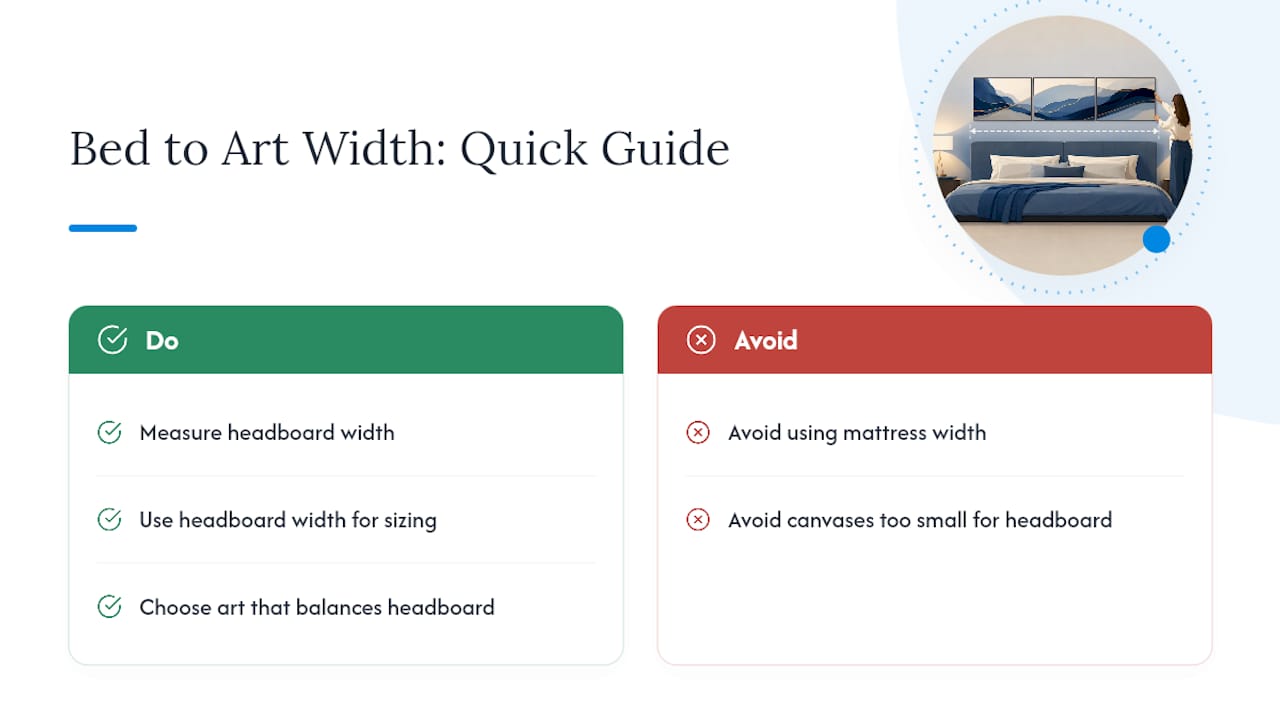
- Measure the headboard width (or mattress width if there’s no headboard) and calculate your 50–75% target range.
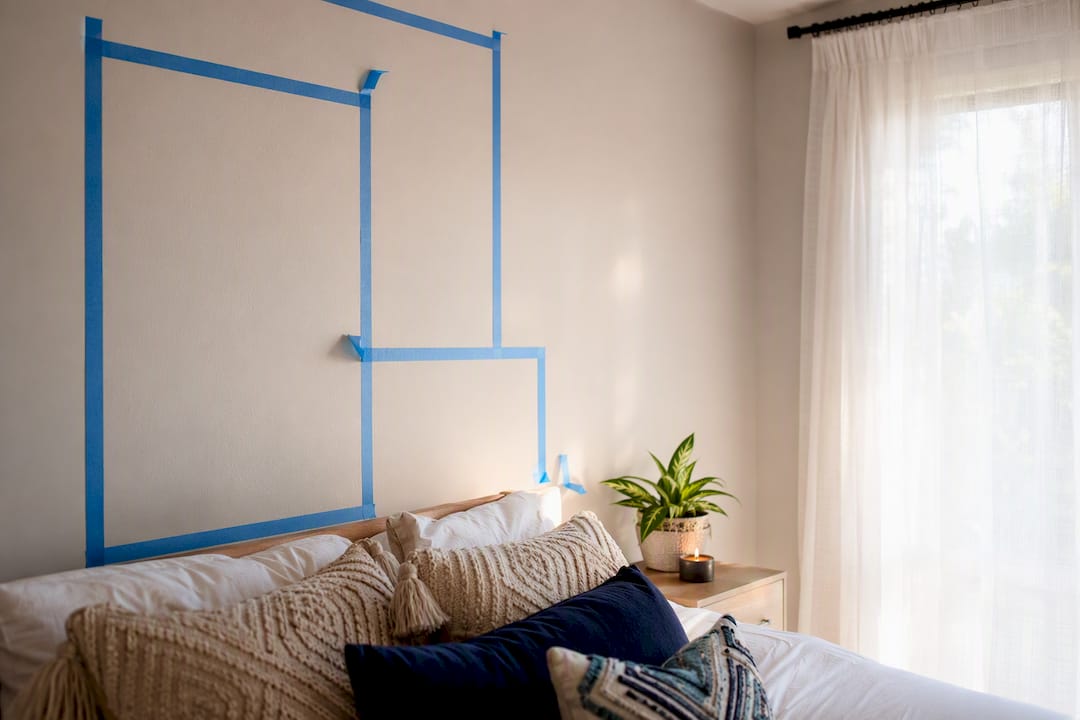
- Cut paper templates or use painter’s tape on the wall to outline the exact dimensions of your chosen piece, or pieces, before anything touches a drill.
- Step back and check the mockup from across the room and from a seated position on the bed, since sightlines from where you’ll actually be matter more than a straight-on wall view.
- Mark your centerline above the headboard’s midpoint, then measure down from your target top edge to confirm the 6 to 10 inch bottom clearance.
- Use a level to mark anchor points, then drill into wall studs where possible.
- Hang and recheck. Sit up in bed and view the piece from a few angles before calling it finished.
Pro Tip: Leave the painter’s tape mockup up for a full day before drilling. Lighting shifts from morning to evening can make a piece look bigger or smaller than it did when you first taped it up.
This mockup step isn’t optional if you’re working with an expensive or oversized canvas. Painter’s tape templates catch sizing mistakes before they become holes in your drywall, and a quick sitting-up check confirms the placement actually works from where you’ll be lying every night.
Mounting Heavy or Glass-Framed Art Safely
Anything hanging directly above a sleeping surface needs hardware that matches its weight, not just its size. For canvases and frames beyond a few pounds, skip basic sawtooth hangers and use anchors or screws driven into studs instead. Wide or heavy pieces do better with two mounting points rather than one central hook, since that spreads the load and keeps the piece from tilting over time.
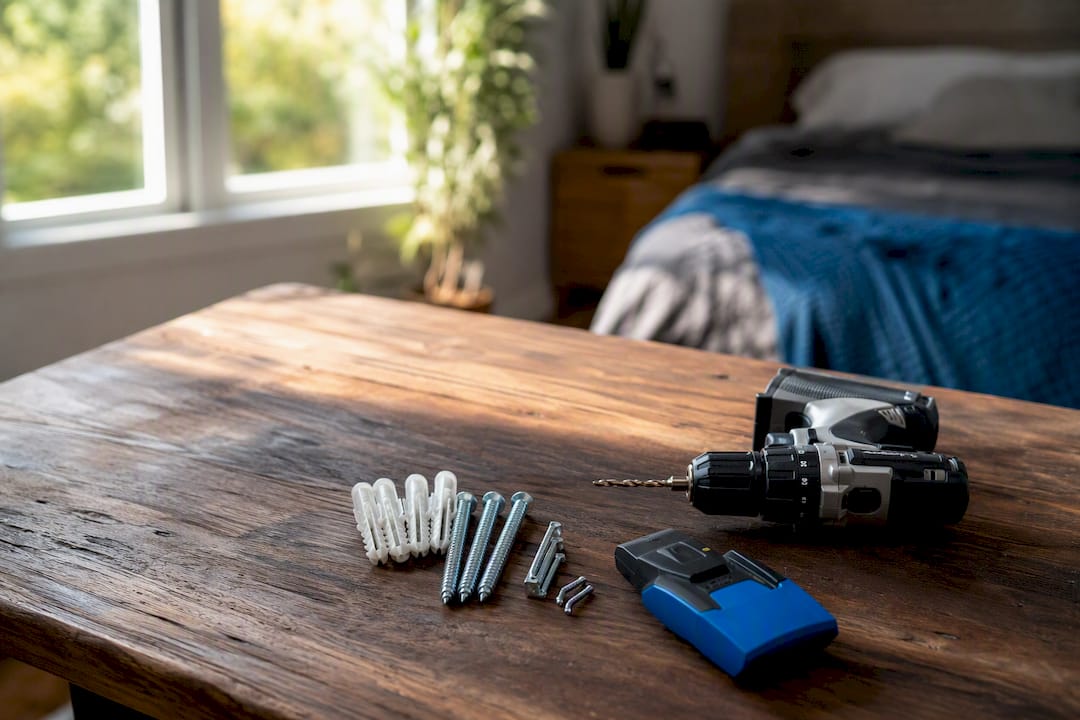
If studs aren’t available where you need them, toggle bolts or heavy-duty wall anchors rated above the frame’s weight are the safer substitute. Glass-framed pieces carry extra risk above a bed. A float-mounted canvas or a plexiglass-fronted print removes the shatter risk entirely, which is one reason stretched canvas has become the default choice for this particular wall. For anything oversized, unusually heavy, or going into plaster or brick, it’s worth bringing in a professional installer rather than guessing at anchor ratings.
Quick Reference: Bed Size to Art Width Chart
If your headboard runs narrower or wider than the mattress, use the headboard’s actual width for these calculations, not the standard mattress figure. A canvas sized to the bed but dwarfed by a tall upholstered headboard will still look undersized once it’s hung.
Sense Canvas: Sizing Made Simple for Your Bedroom Wall
Matching a canvas to these ratios is easier when you’re not stuck choosing between three stock sizes. Sense Canvas carries over 15,000 designs across abstract, nature, and statement styles, with both ready sizes and fully custom dimensions built to order. Prices start at $85, and because sizing is customizable, you can request the exact width your bed calculation calls for instead of rounding up or down to whatever a standard frame offers. For more on picking dimensions for other rooms, the guide to choosing art size for home walls covers the same width-to-furniture logic applied throughout the house.
The Rule Most People Get Half Right
Most advice about above-bed art size stops at width, and that’s exactly where it falls short. Plenty of bedrooms have a perfectly proportioned canvas hanging four inches too high, floating disconnected from the headboard like an afterthought. Width tells you how bold the piece feels. Height tells you whether it belongs to the bed at all.
If you only fix one thing, fix the gap between headboard and frame before you touch the width math. A slightly-off width is forgivable. A piece hung two feet above the headboard looks like it wandered in from a different room. Start narrow rather than wide if you’re unsure.
Buy the size that matches your math, not the size that happened to be on the shelf. That’s the whole difference between a bedroom that looks styled and one that looks assembled.
— Sense
Get a Canvas Sized to Your Exact Bed, Not the Nearest Standard Size
Most stores force you to round up or down to whatever stock size they happen to carry, which is how so many bedrooms end up with art that’s technically fine but never quite right. Sense Canvas skips that compromise: browse over 15,000 designs in ready sizes, or request a custom width built to your bed’s exact measurement, starting at $85.

Whether you’ve settled on a single 48×30 statement piece for a king bed or a paired set of 24×30 panels for a queen, you can filter by size or submit custom dimensions directly on the Sense Canvas site. If you want a concrete style to start from, the abstract ocean piece on the abstract wall art page shows how a single large canvas fills a headboard wall without needing to piece together a gallery layout. Measure your headboard, plug in your target width, and place your order.