Start With an $85 Canvas: Botanical Wall Art Ideas That Fit Every Room
The easiest way to get botanical wall art right in 2026 is to mix eras: pair a vintage botanical illustration with a bold, modern color-blocked abstraction rather than committing to one look. A curated gallery wall or a single oversized botanical canvas both deliver the calm, organic texture that makes this style work in almost any room, from Japandi minimalism to maximalist cottagecore. Customizable canvas options are a good choice if you want to start with one strong anchor piece.
TL;DR:
- Large botanical abstracts on canvas are ideal for bold statement pieces, with customization options starting at $85 for tailored sizing and vibrant colors.
- Vintage engravings suit traditional and eclectic spaces, while modern abstractions work best in contemporary or minimalist interiors.
- Accurate sizing and strategic lighting, such as picture lights or UV-protective glass, are crucial to preserve delicate botanical prints and pressed flowers.
- Gallery layouts should follow room functions, using tight grids or salon styles with varied frame sizes and maintaining 2 to 3 inches between frames for visual rhythm.
- Mixing eras and styles, from vintage to modern, creates a curated, personal botanical wall rather than overwhelming a space with a single look.
Table of Contents
- Botanical Wall Art Ideas Worth Copying
- Where Botanical Art Works Best Room by Room
- Planning a Gallery Wall That Looks Intentional
- Canvas, Paper, or Giclée: Choosing the Right Material
- Sizing Formulas and a Quick Frame Checklist
- Why Canvas Holds Up as a Botanical Medium
- Mixing Botanical Art with Other Decor Styles
- Choosing a Color Palette for Botanical Art
- How to Make Your Own Botanical Wall Art
- Lighting Botanical Wall Art Correctly
- Keeping Botanical Wall Art Looking Its Best
- Designer-First Take: Mixing Eras Makes Botanical Art Personal
- Order Your Own Botanical Canvas from Sense Canvas
- Sources
Botanical Wall Art Ideas Worth Copying
Botanical prints have stayed relevant for years because they flex across styles without demanding you commit to a single theme, and that versatility is exactly what’s driving renewed interest in the category for 2026. Here’s what’s actually working right now.
- Vintage botanical engravings. Think old scientific illustrations of ferns, botanical diagrams, or Audubon-style florals. They sit comfortably in traditional, farmhouse, and eclectic spaces, and they age well because they never chased a trend to begin with.
- Oversized leaf or palm statement prints. A single large-scale monstera or banana leaf print can have the visual impact of multiple smaller pieces. Scale it to cover a substantial portion of the available wall width for real visual weight.
- Watercolor botanical sets. Soft, muted watercolor florals in a series of two or three create a quiet, collected feel, especially in bedrooms and reading nooks.
- Minimal line-art botanicals. Single continuous-line stems or leaves suit pared-back interiors where you want a plant motif without visual noise.
- Bold abstract color-block botanicals. This is the modern half of the 2026 mix: clean-lined abstractions in blush, sage, and terracotta that read as contemporary art first and plant reference second.
- Pressed-flower and mixed-media textures. Framed pressed botanicals or paper-collage florals add tactile depth that flat prints can’t match.
- Small-format botanical sets. Sets of three to five mini prints work well leaning on console tables, floating shelves, or bookcases where a large frame would overwhelm the surface.
Where Botanical Art Works Best Room by Room
Placement matters as much as the print you choose, and botanical art has go-to solutions for nearly every room in the house.
- Living room. Size art to roughly two-thirds the width of your sofa. A single oversized canvas reads as a focal point; a horizontal trio of matching botanicals spreads the same visual weight across a wider wall.
- Bedroom. Use botanical art as a headboard alternative in muted sage, dusty blush, or warm cream tones. Keep it centered over the headboard and scaled to approximately the width of the bed frame.
- Dining room. A tight grid of several botanical prints, especially herb studies or fruit illustrations, suits the room’s more formal rhythm.
- Hallway or entry. Narrow spaces favor vertical columns of small botanicals or a single tall, slim print rather than wide horizontal groupings.
- Bathroom or kitchen. Choose moisture-safe framing, sealed glass or laminated finishes, and hang away from direct shower spray or stovetop steam.
- Home office. Pick botanicals with enough visual interest to hold attention on a video call, but calm enough not to compete with focus during deep work.
Room type really does dictate the best layout and sizing choice, so match the arrangement to how the space actually gets used before you pick the print.
Planning a Gallery Wall That Looks Intentional
Three layout families cover almost every botanical gallery wall you’ll see: tight grids, horizontal rows, and salon-style mixes. Grids suit dining rooms and hallways where symmetry reads as calm. Horizontal rows work over consoles, sofas, and beds. Salon-style, an intentional mix of sizes and frame types, suits living rooms and stairwells where a collected look feels right.
For spacing, keep 2 to 3 inches between frames in a grid, and mix two or three sizes (think 8x10, 11x14, and 16x20) rather than one repeated size for visual rhythm.
- Mock the layout on the floor first, then trace it onto kraft paper if you want a foolproof hanging guide.
- Measure your furniture width before buying frames, not after.
- Center the arrangement’s midpoint at about standard eye-level height.
- Limit yourself to one or two frame finishes across the whole wall.
Pro Tip: On a stairwell, follow the angle of the staircase rather than fighting it. Step each frame’s center line up in parallel with the handrail instead of trying to keep everything level.
Canvas, Paper, or Giclée: Choosing the Right Material
Canvas handles large-scale, bold botanical abstractions well. It has enough texture to soften color blocking and it holds up to statement sizing without needing glass. Fine-art paper suits smaller, detailed vintage illustrations where crisp linework matters more than texture.
Giclée printing, a high-resolution inkjet process, is worth asking about specifically because it preserves fine botanical detail and color accuracy better than standard inkjet output.
- Choose laminated or sealed finishes for bathrooms and kitchens.
- Look for public-domain botanical downloads or budget print sets to fill a gallery wall without overspending.
- Remember that matte finishes mute color slightly, while glossier finishes intensify saturation, so factor that into palette choices.
Sizing Formulas and a Quick Frame Checklist
Two measuring rules cover almost every hanging decision. The two-thirds rule says your art (or art grouping) should span about two-thirds the width of the furniture below it.
- Measure the furniture or wall section before you shop for frames.
- Choose mat width based on room formality. Wider mats (3 to 4 inches) suit vintage illustrations; narrow or no mats suit bold modern abstractions.
- Match frame finish to your palette: black for high contrast, natural wood for warmth, gold for vintage botanical charm.
- Confirm hanging hardware and wall type (drywall, plaster, brick) before ordering, since heavier canvases need sturdier anchors.
Sizing missteps are the most common reason a beautiful print looks wrong on the wall, so working from a measurement-first approach saves a return trip to the hardware store.
Why Canvas Holds Up as a Botanical Medium
Canvas gives botanical art room to breathe at scale, which matters for the oversized leaf prints and bold color-block abstractions defining 2026’s look. Sense Canvas carries over 15,000 unique designs across styles, so finding a botanical piece that matches a specific palette or room isn’t a matter of settling for the closest option in a limited catalog.
Customization solves the scale problem directly. Instead of cropping a favorite botanical print to fit a frame you already own, Sense Canvas lets you tailor the size and layout to the actual wall. Buyers report strong satisfaction with color vibrancy and the visual impact once a piece is hung, which matters most with botanical subjects where color fidelity carries the whole composition. Pricing starts at $85, which keeps a statement canvas within reach even for a single anchor piece.
As a rule: choose canvas for large-scale or bold abstract botanicals, and reach for framed paper when the appeal is fine detail in a smaller vintage illustration.
Mixing Botanical Art with Other Decor Styles
Botanical art rarely needs to match everything else in the room. It needs to relate to one or two other elements, usually color or material, and then let the rest of the space carry its own personality.
In a boho living room, pair botanical prints with woven textures and a layered area rug to echo the organic, collected feel without repeating the plant motif twice. In a mid-century space, a botanical line drawing in a slim walnut frame sits naturally alongside teak furniture and brass accents. In a modern farmhouse room, vintage botanical engravings in black frames read as intentional rather than mismatched when hung near shiplap or reclaimed wood.
The mistake to avoid is treating botanical art as a theme rather than an accent. A wall full of botanicals in a room with no other plant-adjacent detail (no greenery, no natural materials) can feel like a costume rather than a design choice. One or two well-placed botanical pieces, balanced against a leather sofa, a linen roman shade, or a stone side table, do more work than a wall saturated with the same subject.
Door and trim finishes matter here too. Botanical prints in warm wood frames pair naturally with natural wood interior doors, while black-framed modern abstractions suit painted or paneled doors better. Small consistency choices like this keep a mixed-style room from feeling accidental.
Choosing a Color Palette for Botanical Art
Palette decides whether botanical art reads as calming background or bold focal point, and the choice should follow the room’s existing colors rather than fight them. Muted, earthy tones (sage, dusty blush, warm cream) create a soft, restful feel suited to bedrooms and reading corners. These tones dominate current botanical color trends for a reason: they photograph well and pair easily with neutral furniture.
Bolder palettes, especially terracotta, deep green, and saturated color-blocked combinations, suit living rooms and dining rooms where you want the art to anchor attention rather than recede into the background. These work particularly well in the abstract, modern half of the 2026 botanical trend.
A few practical rules help narrow the decision. Pull one color directly from an existing textile, rug, or piece of furniture in the room, so the art doesn’t feel like an unrelated addition. Limit a gallery wall to two or three dominant tones across all the pieces, even if the individual illustrations vary in subject. And consider the room’s light: north-facing rooms with cooler light suit warmer botanical tones like terracotta and gold, while south-facing rooms with warm natural light can carry cooler greens and blues without looking washed out.
If you’re unsure where to start, choose the palette before the specific prints. It’s far easier to find botanical art in a target color range than to build a palette around whatever prints you already like.
How to Make Your Own Botanical Wall Art
DIY botanical art rewards patience more than skill, and three methods cover most skill levels and budgets.
Pressing plants is the simplest entry point. Pick flat-profile flowers and leaves (pansies, ferns, and small clematis blooms press especially well), place them between sheets of parchment paper inside a heavy book, and leave them for two to three weeks. Mount pressed specimens on acid-free cardstock and frame with UV-protective glass to slow fading.
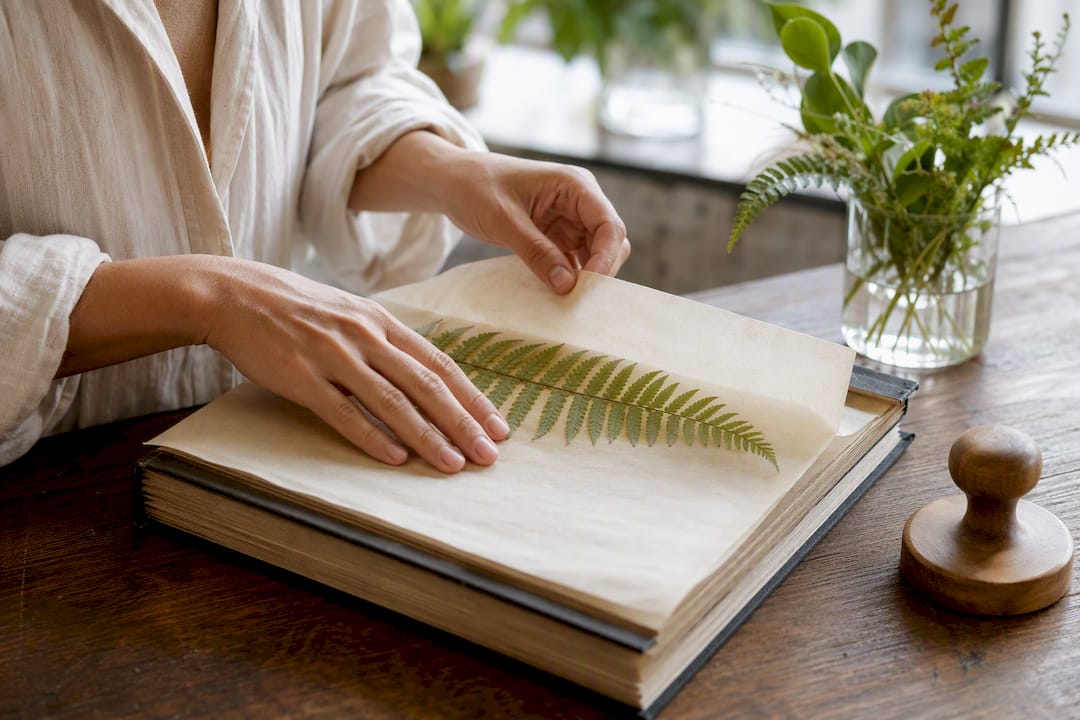
Painting doesn’t require fine-art training if you start simple. A single-stem watercolor botanical, one leaf or flower rendered loosely, looks intentional in a way that an ambitious full bouquet attempt often doesn’t. Working from a photo reference keeps proportions honest.
Printing is the fastest route. Public-domain botanical illustrations from historic scientific texts are widely available to download and print at home or through a print shop, and this is the most budget-friendly path to filling a full gallery wall quickly. Print several on matching paper stock and frame identically for a cohesive set even when the source illustrations vary in age or style.
Whichever method you choose, consistency in framing does more to make DIY art look finished than the art itself.
Lighting Botanical Wall Art Correctly
Botanical art depends on color and fine detail more than most decor styles, which makes lighting a bigger factor than it is for solid-color abstracts or typography prints. Flat, dim lighting mutes the sage-and-blush palettes that define much of 2026’s botanical trend, while harsh direct light washes out delicate watercolor work and pressed-flower texture.
Picture lights mounted directly above a frame give the most even, gallery-quality illumination and work particularly well for a single statement canvas over a sofa or bed. Track lighting angled at roughly 30 degrees from the wall avoids glare on glass-framed pieces, which matters for pressed-flower work behind glass. Avoid placing botanical art in direct, unfiltered sunlight altogether. UV exposure fades pigment on paper prints and pressed specimens far faster than ambient room light does.
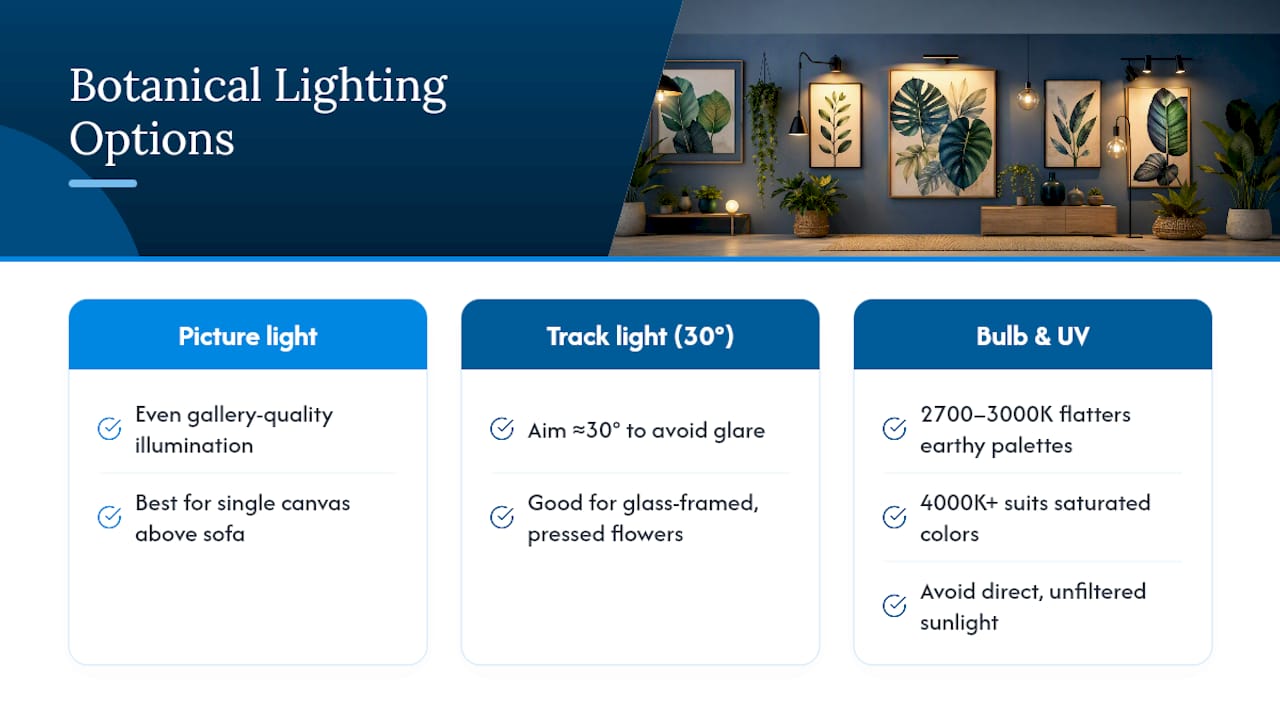
Warm-toned bulbs (around 2700K to 3000K) flatter earthy botanical palettes like terracotta and sage, while cooler bulbs (4000K and above) suit bold, saturated color-block abstractions better. If a gallery wall spans a hallway with no natural light, adding a slim LED picture light strip above the arrangement keeps colors accurate rather than dulled under standard overhead fixtures.
Keeping Botanical Wall Art Looking Its Best
Pressed flowers and paper prints both fade and degrade differently than more durable decor, so maintenance habits matter more here than with most wall art.
For pressed-flower pieces, UV-protective or museum glass is the single biggest factor in longevity. Standard glass allows enough UV transmission to noticeably fade pressed botanicals within a year or two of direct or indirect sun exposure. Keep pressed arrangements away from radiators, baseboard heaters, and humid rooms, since both heat and moisture accelerate deterioration.
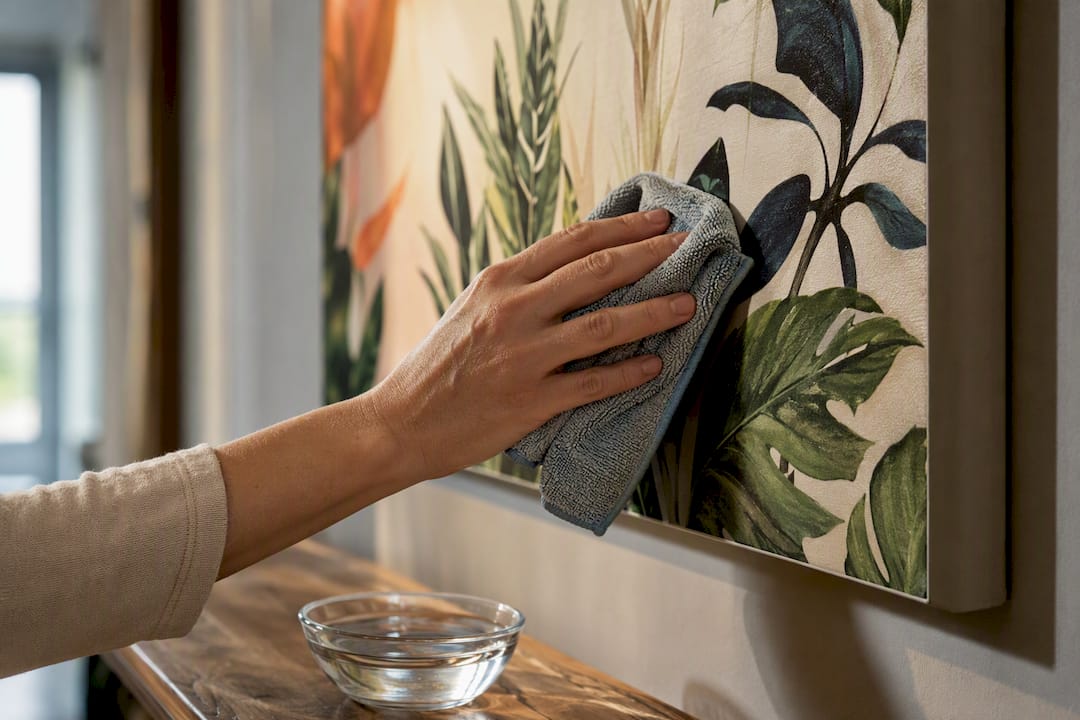
For printed botanical art, dust gently with a dry microfiber cloth rather than glass cleaner sprayed directly onto the frame, which can seep behind the mat and cause staining. Canvas prints tolerate a lightly damp cloth for surface dust but should never be scrubbed. Rotate or reposition art if you notice one section of a gallery wall getting more direct sun than the rest, since uneven fading across a grouped display is more noticeable than fading on a single isolated piece.
Check hanging hardware annually, especially for larger canvases, since drywall anchors can loosen slightly over time with seasonal humidity shifts.
Designer-First Take: Mixing Eras Makes Botanical Art Personal
The best botanical walls rarely come from one collection or one moment of buying. They come from mixing a vintage engraving found at a flea market with a bold modern abstraction bought last month, and letting the contrast do the work.
Try this over a weekend: lay every botanical piece you own, plus a few candidates, on the floor in different arrangements and photograph each one from above. Patterns emerge that are hard to see when frames are scattered around a room. Pick one piece as your anchor, then commit to a single frame finish across the rest so the mix reads as curated rather than accidental.
— Sense
Order Your Own Botanical Canvas from Sense Canvas
Sense Canvas gives you a faster path to the exact botanical look this guide describes, without hunting through multiple print shops for matching sizes and finishes. Choose a design from the collection, pick your size and any customization, and order a sample or a full canvas in one checkout.
If you’re not ready to commit to a full gallery wall, start with one anchor piece and build around it once you see how the scale and color work in your space. Browse the full canvas wall art collection to find a botanical piece that fits your room, or check a representative product page to see the size and customization options available before you order.