Restaurant Wall Art Ideas That Make Dining Rooms Memorable
The best restaurant wall art does three things: it fits your concept, it is sized to the wall and the furniture below it, and it hangs where seated guests actually see it. Get those three right and a bare wall becomes part of the meal. Below you will find ideas by cuisine and mood, feature wall options, scale and placement rules, and a plan for choosing custom canvas art for a dining room.
TL;DR
- Match art to your concept, not to a trend: it should hint at your cuisine, your neighborhood or your mood rather than illustrate the menu literally.
- Spend where guests can see and touch. Designers advise that features above 7 feet get noticed less and rarely deserve a big budget.
- Size a piece to its wall: for art above a table or banquette, aim for roughly 60% of the furniture width, and center it near seated eye level.
- Mix one hero piece with a quieter supporting layer, such as a grouped set of canvases, a mural wall or warm lighting.
- Custom canvas lets you set the exact size and composition, so one design can fit a booth wall, a long banquette and a host stand.
Table of Contents
- Start with the feeling you want guests to leave with
- Wall art ideas by restaurant concept
- Feature wall ideas that give art a stage
- Scale, height and placement
- Gallery walls, grids and picture ledges
- Lighting, greenery and the details that finish a wall
- Choosing custom canvas wall art for your dining room
- Bring your concept to the wall
- FAQ
- Sources
Start with the feeling you want guests to leave with
Before you browse a single design, write down three words that describe the room: cozy, lively, polished, playful. Every choice afterward is a test against those words.
The diners you are designing for care about this more than you might expect. In a 2026 OpenTable report on restaurant design, 48% of Americans said cozy, local character is the most appealing interior style, and 54% said they would pay more for a one-of-a-kind dining experience. A quarter said a restaurant’s Instagram or TikTok appeal is extremely important.
That last number is a practical hint. A wall that photographs well, with one bold focal piece behind a table or bar, works as free marketing every time a guest posts a picture.

Quietly refer, do not illustrate
The most useful curating advice we have seen comes from a design executive at the group behind Bobbie’s and il Bracco. She told Modern Restaurant Management that art should quietly refer to the cuisine, the locale or the feeling of the restaurant, but not in a literal way. A taqueria does not need a canvas of tacos. It needs color, texture or a pattern that feels like the place the food comes from.
Wall art ideas by restaurant concept
Use these as starting points. Each pairs a mood with a style of artwork that tends to suit it.
| Concept | Wall art direction | Why it works |
|---|---|---|
| Mediterranean or coastal | Textured landscapes, coastal scenes, olive branch illustrations, abstracts in terracotta and sea blue | Warm, sunlit palette that echoes the food |
| Modern fusion | Abstract expressionism, bold line art, large contemporary canvases with strong contrast | Signals a creative, confident kitchen |
| Steakhouse or tavern | Dark-toned animal portraits, large single pieces, moody abstracts | Gives a heavy, intimate room a focal point |
| Café or brunch spot | Floral canvases, soft abstracts, pop art | Bright and approachable, easy to photograph |
| Bar or lounge | Trippy, vivid abstract or pop pieces | Energy that works in low light |
| Family restaurant | Personalized family-name art, warm florals, playful animals | Feels like a home, invites lingering |
The first two rows follow suggestions from a restaurant theme guide: Mediterranean rooms suit textured landscapes, coastal photography and olive branch illustrations, while modern fusion suits abstract expressionism and bold line art.
Abstract for a modern or upscale room
Abstract art is the easiest way to add color without committing to a story. Pick two or three colors from your upholstery, tile or menu design and let the canvas repeat them. A large abstract above a banquette gives a long wall a single calm focal point.
Animal themes for character
A lion, a heron or an octopus portrait adds personality fast. Animal art suits steakhouses, seafood spots and wine bars where you want a confident, slightly dramatic tone. Keep the palette limited so the room does not feel like a zoo.
Florals and botanicals for warmth
Florals soften hard surfaces such as concrete, brick and metal. They suit cafés, tea rooms and brunch restaurants, and they pair naturally with real greenery. Our floral canvas collection covers everything from romantic roses to graphic botanical prints.
Pop and trippy pieces for nightlife
If your concept is playful, late-night or music-driven, saturated pop and psychedelic designs read well in dim light. One oversized piece is usually stronger than many small ones.
Personalized family art for neighborhood restaurants
Family-owned places can make the story literal in a charming way: a family-name canvas near the entrance, or a colorful monogram behind the host stand. It tells guests who is behind the food without a paragraph of menu copy.
Feature wall ideas that give art a stage
Art does best when the wall itself is considered. Trade coverage in rd+d describes wall coverings as backdrops that frame a space, provide wayfinding cues or make a bold statement as a feature wall or mural. Materials range from vinyl, brick and wood to metal, ceramic tile and wallpaper.
The same article describes how Sweetgreen’s New York locations use feature walls to reflect their neighborhoods: a mural with colorful graffiti in Brooklyn, and more subdued monochrome or lightly textured geometric walls in Manhattan. Local character, expressed through the wall, is a design strategy even at a national chain.
Practical ways to build a stage for art:
- Paint one wall a deep color. Deep green, navy or terracotta makes lighter canvases glow. If you want to see how paint and accent treatments change a room, these feature wall ideas show a range of finishes that translate to dining spaces.
- Add wood slats or beadboard on the lower half. A two-tone wall gives you a natural line to hang canvases above.
- Use wallpaper above a protective base. rd+d’s product guide recommends commercial-grade, wipeable wallcoverings, and suggests placing wallpaper on upper walls with painted wood wainscot below for protection in busy rooms. Canvas then hangs on the plain painted areas or across the wallpaper at eye level.
- Repeat a motif. At El Bolero in Dallas, a cactus wallpaper reappears in the mosaic tile around the kitchen expo window, as rd+d’s wall covering roundup reports. Repetition ties a room together. A canvas that repeats one of your wall colors does the same job.
- Commission or choose a local look. The same roundup notes Vidorra pairs a local illustrator’s mural with a moss wallcovering. A hero canvas with a local flavor can play that role on a smaller budget.
Scale, height and placement
Most restaurant walls look wrong for one reason: the art is too small. A single 12 by 16 inch print on a 10-foot wall disappears. Think in proportions.
Size to the furniture
For art above a banquette, booth or console, aim for about 60% to 75% of the furniture’s width. We walk through the math for tables in our guide to dining room wall art sizing, and the same logic works for a long bench seat. When you need a wall of many pieces, a triptych or a set of three equal canvases reads as one large piece.
Larger commercial rooms follow different rules because ceilings are higher and sightlines are longer. Our notes on scaling artwork for commercial interiors cover that case.
Hang at the seated sightline
In a dining room, people are mostly sitting. A common gallery standard is to center art around 57 inches from the floor, and a little lower above banquettes where guests sit for an hour or more. Our guide to art hanging height explains the 57-inch rule, wire drop and the gap above furniture.
Spend where people look
Daniel Chapman, a senior interior designer at CORE architecture + design, advises in rd+d to put money where customers can see and touch, noting that features above 7 feet are noticed less and generally do not warrant high spending. For art, that means your best pieces belong at booth height and along the main walking path, not near the ceiling line.
Plan around the realities of service
Restaurants are busy. Modern Restaurant Management reports that operators think carefully about protecting art: works on paper under glass are common, and one operator noted it is tricky to keep artwork safe when tomato sauce is on the menu. The practical lesson is placement. Put your hero pieces on the dining-room walls that guests see from their seats, and keep them out of the direct path of trays, hot pass traffic and tight corners.

Gallery walls, grids and picture ledges
A gallery wall can fill a large blank space without a single giant piece, but in a restaurant it should look deliberate.
- The grid. Four to six canvases of identical size, evenly spaced, look sharp in a modern room. Keep gaps consistent, about 2 to 3 inches.
- The anchor and satellites. One large canvas in the center with smaller ones around it. This is the most forgiving layout.
- The long row. Three or four canvases in a line above a banquette. It works for narrow walls and brings order to a long room.
- The ledge. Picture ledges let you rotate pieces seasonally and layer different sizes. Lean one large canvas on the ledge and a few small ones in front.
Whatever you choose, hold the group to one or two dominant colors. Gallery walls fail when every piece has its own palette. Lay everything on the floor first, photograph it, and only then mark the wall.
Lighting, greenery and the details that finish a wall
Light changes art more than almost any other factor. Warm bulbs in the 2700K to 3000K range flatter food, skin and canvas colors alike. If you can, put a dedicated art light on a dimmer so you can lower it for dinner and raise it for lunch.
Then add layers. Hanging plants or a planter shelf near a floral canvas soften edges. A neon quote can sit across the room from a calm abstract so the two do not compete. Seasonal swaps are easy when pieces are light and installed on simple hooks, which is one reason canvas suits rooms that like to refresh their look.
Choosing custom canvas wall art for your dining room
Canvas is a good fit for restaurants that want strong color, a soft texture and a clean, frameless look. Our designs are exclusive to Sense Canvas, and you can customize size and composition, which is useful when your walls are not standard.
Here is a simple process:
- Measure the wall and the furniture. Write down width, height and the distance from the floor to the top of the banquette or table.
- Pick the hero wall. Usually the one guests face when they walk in, or the one behind the host stand or bar.
- Choose a style from your concept table. Limit yourself to two themes across the room.
- Set the size. Use the 60% to 75% rule for furniture walls, and go larger on open walls.
- Plan the hanging. Mark the center at seated eye level, then check the gap above any furniture.
- Think in sets. If you need several rooms to feel related, order pieces with a shared palette.
If your space is a coffee shop rather than a full-service restaurant, our ideas for coffee shop wall art cover counters and seating zones. For a hotel dining room, see our hotel wall art ideas written for procurement teams.
Our perspective
We think restaurant owners underestimate how much one well-chosen, well-sized piece can do. A dining room does not need twenty small decorations. It needs a clear focal wall, a color story and a size that matches the furniture below it.
That is why we build around customization. Every design in our catalog of more than 15,000 is exclusive to us, and you can adjust the size or composition so the canvas fits your wall, not the other way around. We make our pieces by hand with premium artist-grade materials, and we designed them to be easy to install, so a staff member with a level can hang a set in an afternoon.
Our advice is simple: choose the mood first, measure second, and order third. The art will do the rest.
Sense
Bring your concept to the wall
If you are ready to turn a blank wall into the room’s best feature, browse our canvas wall art collection, from abstract and animal designs to pop, floral and personalized family pieces. Choose a size that matches your furniture and let us handle the rest. Orders come with free global shipping and a satisfaction guarantee.
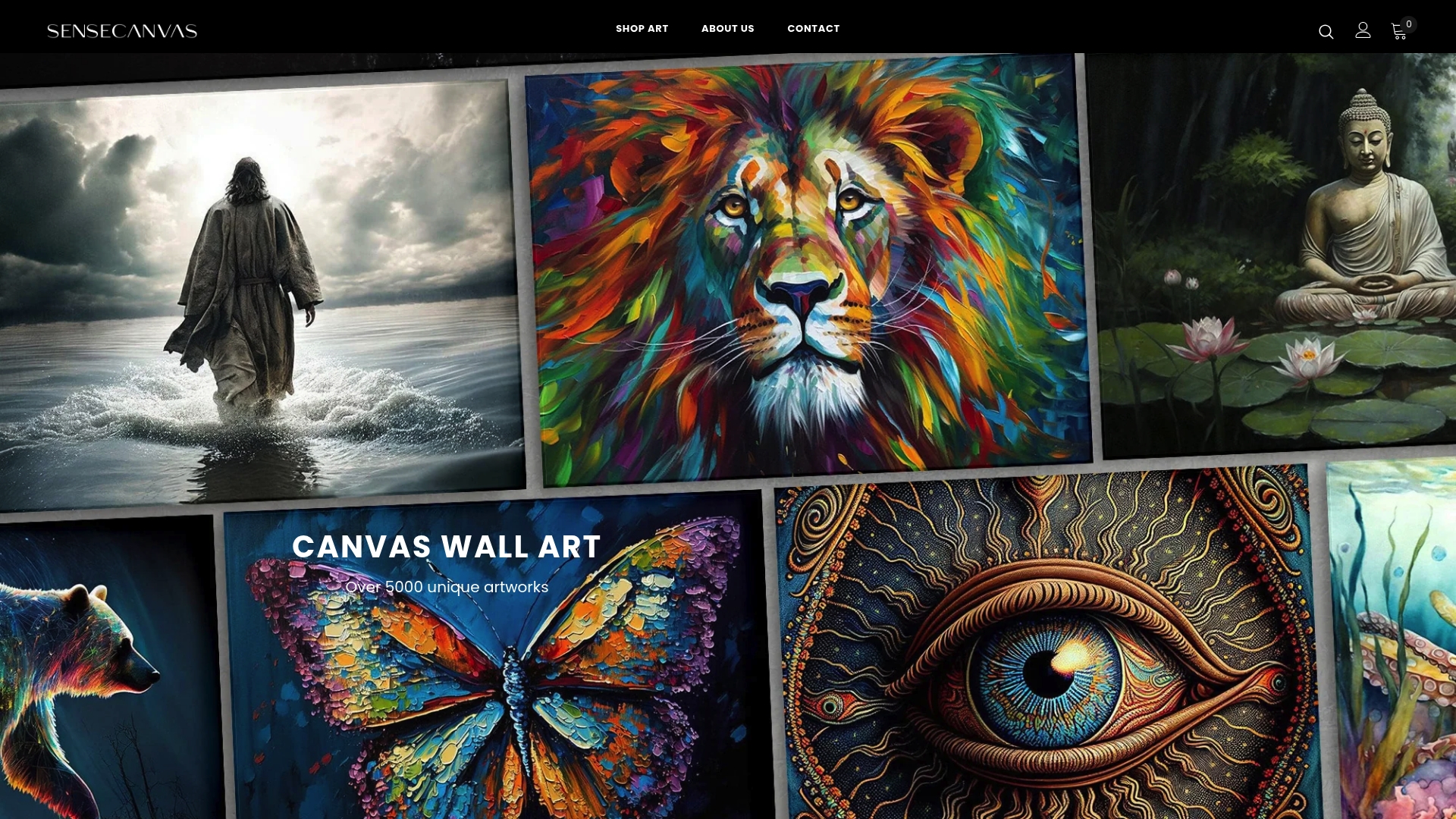
For a closer look at the botanical side of the catalog, the floral designs pair beautifully with greenery and warm lighting.
FAQ
What kind of art should hang in a restaurant dining room?
Choose art that echoes your concept without illustrating it literally: abstracts in your palette, landscapes or botanicals for warm rooms, bold portraits for moodier ones. Size matters as much as subject. Pick one hero piece for the main wall and keep supporting pieces in the same colors.
How big should wall art be above a booth or banquette?
Aim for roughly 60% to 75% of the width of the seating below it, with a small gap above the backrest. For very long walls, use a set of two or three matching canvases instead of one huge piece. Our dining room sizing guide gives worked examples.
How high should restaurant art hang?
Center most pieces around 57 inches from the floor, and slightly lower over banquettes where guests sit. Art placed above 7 feet is noticed less, so keep your best pieces within the guest sightline.
Can I use canvas prints in a busy restaurant?
Yes. Place them on dining-room walls guests see from their seats, away from the busiest service paths and tight corners. Easy-to-install canvas also makes seasonal swaps simple.