Make Dining Room Wall Art Fit: Size It to 60% of Your Table
Pick one focal approach for your dining room wall: an oversized statement canvas, a curated gallery wall, or a round mirror, and size it to your table before you shop. Choosing one clear anchor keeps the room from feeling cluttered and gives guests something to look at during a long dinner. Sensecanvas builds statement canvases to the exact width your table calls for, which removes most of the guesswork below.
TL;DR:
- The art should be sized to cover about 60% of the table width or match the sideboard for balanced proportions.
- Center the wall art 57 to 60 inches from the floor, leaving 6 to 12 inches of space above furniture for proper placement.
- Use a mockup with painter’s tape or a photo from the doorway to accurately assess the artwork’s scale before purchasing.
- Incorporate layered lighting, such as sconces or picture lights, to enhance the art’s visual impact during meals.
- For durable, customizable options, Sensecanvas offers over 15,000 designs built to specific sizes starting at $85.
Table of Contents
- Dining Room Wall Art Ideas Worth Copying
- How to Choose Art and Size It Correctly for Your Dining Room
- Styling, Placement, and Lighting for a Room People Actually Eat In
- Materials, Texture, and Care for Everyday Hosting
- Sizing a Canvas the Easy Way With Sensecanvas
- Mixing Art Styles and Frames Without It Looking Random
- Making the Wall Feel Like Your Home
- Why Dining Room Walls Matter More Than People Think
- Order a Custom Canvas Sized to Your Table
- Where to Learn More
- Sources
Dining Room Wall Art Ideas Worth Copying
A dining room only needs one strong idea, executed well, to feel finished. These ten approaches cover the range from formal entertaining spaces to casual everyday kitchens, and each one works with a different table shape or room size.
-
Oversized statement canvas. One large piece anchors the whole wall and does the heavy lifting on its own. Size it to roughly match your table or sideboard width so it reads as intentional rather than accidental.
-
Gallery wall. A cluster of framed pieces adds personality, but keep the frame color and matting consistent so the collection feels cohesive instead of mismatched. Align the overall cluster width with your table’s edge.
-
Round mirror. In a small or dim dining room, a large mirror bounces available light around and makes the space read as bigger than it is. Hang it opposite a window for the biggest payoff.
-
Botanical or landscape series. Calm, nature-led imagery suits formal dinners and elevated entertaining, and it rarely clashes with existing decor.
-
Textile or tapestry art. Woven pieces add warmth and soften noise in a room full of hard surfaces like tile floors and glass tabletops.
-
Woven baskets or 3D wall objects. Texture-forward and casual, these work well in boho or farmhouse dining rooms where a flat canvas would feel too formal.
-
Plate or ceramic display. Heirloom plates or a collected set look intentional when arranged in a grid or an asymmetrical cluster with consistent spacing between pieces.
-
Triptych or diptych sets. Two or three matching panels create rhythm across a long wall or above a sideboard, especially where one single canvas would look too small.
-
Photography or family wall. Mixing a personal photo with one larger statement piece gives the room both intimacy and visual weight, a combination designers frequently recommend for dining spaces meant to feel lived-in rather than staged.
-
Shelves or picture ledges. These let you swap art seasonally without new nail holes, which makes them the most flexible option on this list and a natural fit for renters.
How to Choose Art and Size It Correctly for Your Dining Room
Sizing is where most dining room wall decor ideas fall apart. A piece that looked fine in a showroom photo can feel tiny or overwhelming once it’s over your actual table.
Aim for these rules before you order anything:
- Art width should be sized to a significant portion of your table’s width or match your sideboard’s width if that’s what sits below it.
- Center the piece 57 to 60 inches from the floor, which is the standard eye-level height designers use across most rooms.
- Leave 6 to 12 inches of breathing room between the top of any furniture and the bottom of the art.
- For rectangular tables, go horizontal. For round tables, a single centered piece or a round mirror reads best. For narrow walls, stack two or three smaller pieces vertically instead of forcing one wide canvas.
Before you buy, tape a kraft-paper cutout or painter’s tape outline directly on the wall at the size you’re considering. IKEA’s dining room guidance recommends this exact kind of mockup, and a quick phone photo from across the room will tell you more than any online size chart.
Pro Tip: Stand at the doorway you use most to enter the dining room and take a photo before you buy. That’s the angle guests see first, and it’s a better test of scale than staring at the wall up close.
Run through a short checklist before you check out: the mood you want (calm versus energetic), the dominant colors already in the room, whether you want a frame or a frameless canvas, how much upkeep you’re willing to do, and whether the piece will read well under your existing light fixtures.
Styling, Placement, and Lighting for a Room People Actually Eat In
Center your art on the table, not the wall. If your table sits off-center in the room, the art should follow the table, since that’s the sightline guests actually use during a meal.
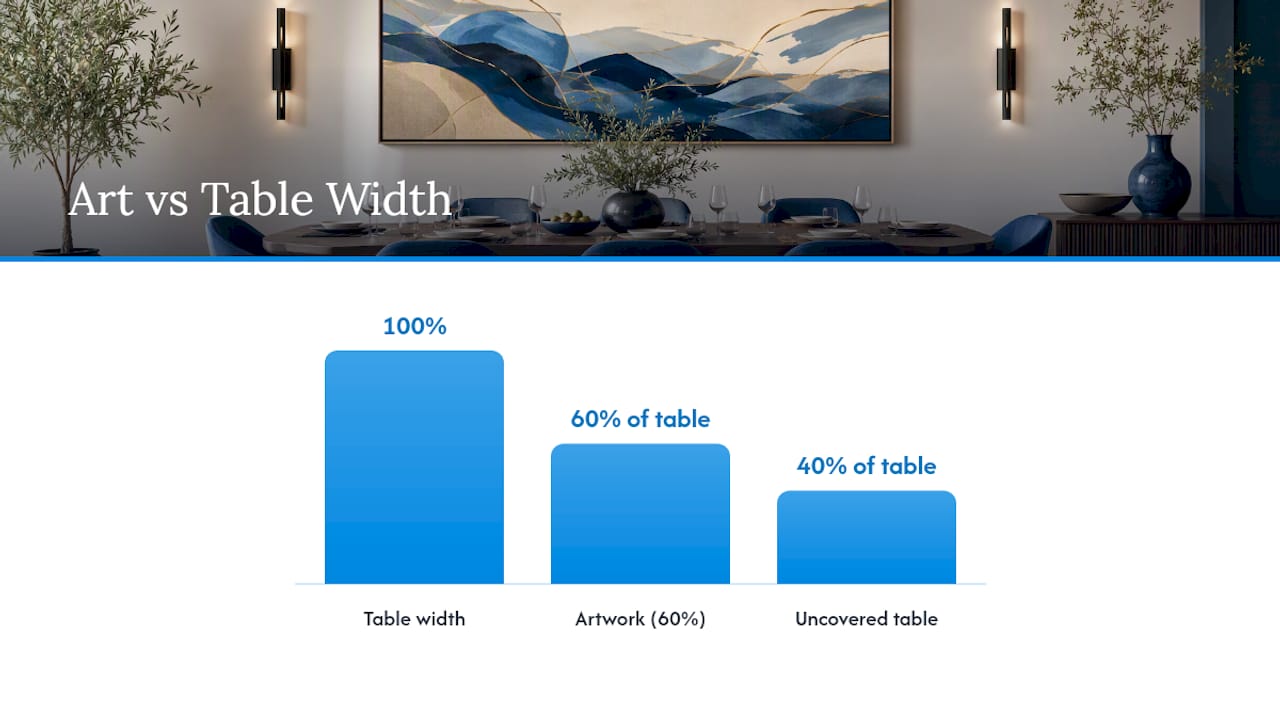
Lighting changes everything about how art reads at dinner. A single overhead fixture flattens texture and color, while layering dimmable overhead light with sconces or picture lights lets you shift the mood from a bright weekday lunch to a low, warm dinner party.
A few placement habits make a real difference:
- Leave visible breathing room between the top of a sideboard and the bottom of the art, don’t crowd the two together.
- Echo one or two wall colors in objects on the sideboard surface, a vase or bowl in a matching tone ties the layout together.
- Pick one textural element, either a woven piece or a 3D object, and skip the second one. Two competing textures in a dining room usually looks busy instead of layered.
Materials, Texture, and Care for Everyday Hosting
Canvas is the lowest-maintenance option here: lightweight, frameless, and easy to order in a custom size for an odd wall, and understanding what makes a custom fine art portrait last helps you choose the right materials for durability. Framed prints look more formal but the glass and finish need occasional wiping, especially near a kitchen pass-through. Textiles and woven objects add warmth but collect dust faster than anything else on this list. Mirrors and ceramics need secure mounting and should stay clear of high-traffic spots where a dropped serving dish could reach them. For renters, picture ledges, removable hooks, and peel-and-stick options let you commit to nothing.
Sizing a Canvas the Easy Way With Sensecanvas
Sensecanvas carries over 15,000 designs and builds each one to a custom size, with pieces starting at $85. That range covers everything from a single oversized statement canvas to a matched triptych for a long dining wall. To order: measure your wall and table, pick a target width using the sizing rules above, choose framed or frameless, then place the order. For tight rooms, the canvas sizing guide for small spaces and the general art sizing guide walk through the same math in more detail.
Mixing Art Styles and Frames Without It Looking Random
The easiest way to combine different pieces without a messy result is to pick one shared thread and let everything else vary around it. That thread might be a frame color, a color palette, or a subject like nature or travel. A gallery wall of black frames holding botanical prints, a family photo, and one abstract piece still looks curated because the frames match, even though the subjects don’t.
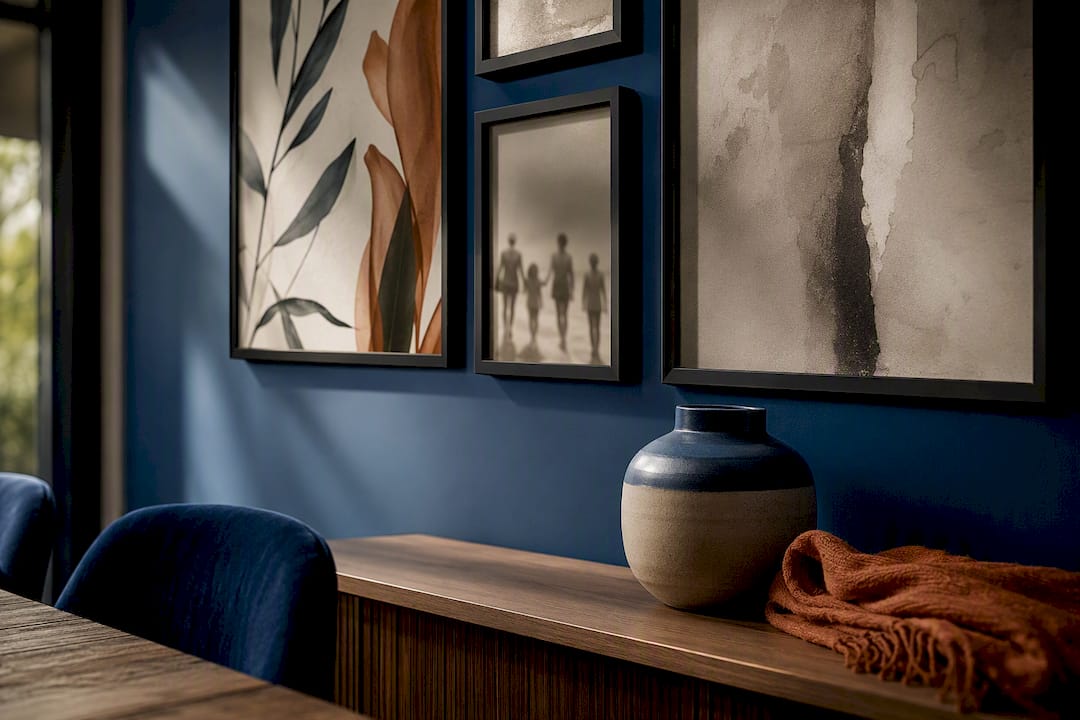
Mixing a canvas with framed prints works especially well in dining rooms, since the contrast in texture (matte canvas next to glossy glass) adds depth without adding visual noise. Keep frame widths within a similar range too, a chunky 2-inch frame next to a hairline metal one usually reads as a mistake rather than a choice.
If you’re combining a statement piece with smaller supporting art, let the statement piece set the palette and pull one or two of its colors into the smaller frames. That’s a simpler rule than trying to match every piece to every other piece, and it holds up whether you’re working with three pieces or twelve.
One more thing worth trying: pair a bold, graphic canvas with something more muted and textural nearby, like a woven basket or a simple ceramic plate. The contrast keeps the wall from feeling like a single flat block of pattern.
Making the Wall Feel Like Your Home
The fastest way to make a dining room wall feel personal is to include at least one piece that has nothing to do with matching the room, a family photo, a piece from a trip, an object tied to your background or your household’s traditions. Homeowners increasingly gravitate toward art that reflects personal values or family memory rather than whatever’s trending, and that instinct holds up over time better than chasing a look.
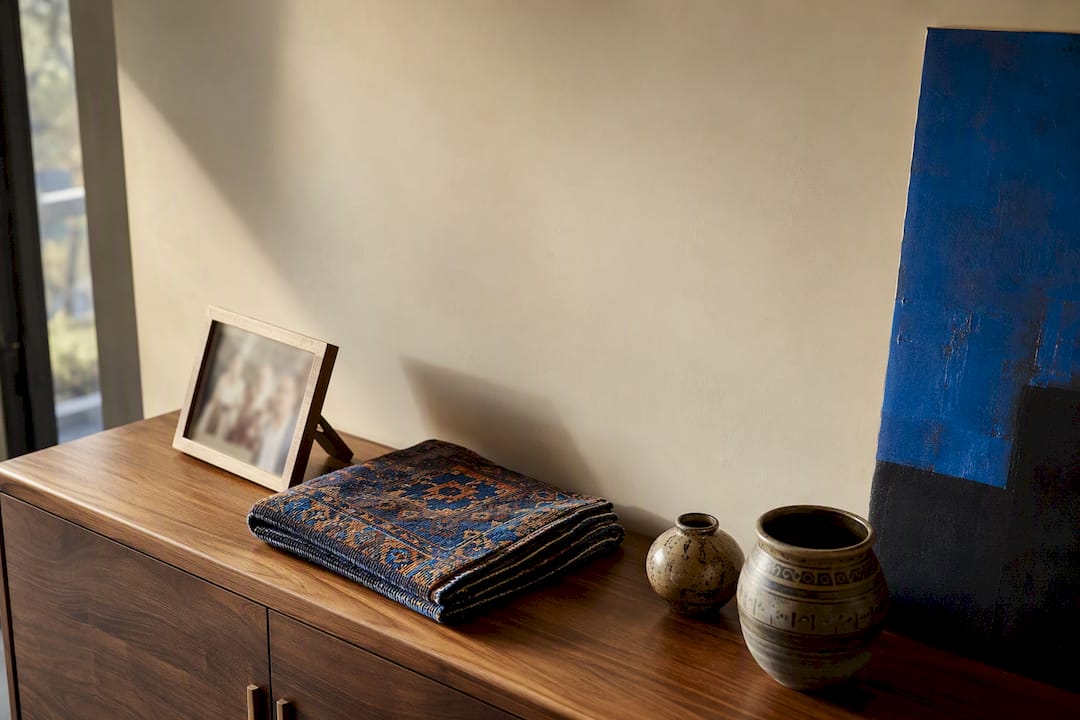
If your household has a cultural tradition worth showcasing, textiles, patterned ceramics, or a specific color palette tied to that heritage can anchor the whole room without needing to explain themselves to guests. A woven textile from a specific region, a set of ceramics passed down through family, or artwork referencing a shared history all do double duty: they decorate the wall and they start a conversation.
Balance matters here. One deeply personal object next to one polished statement piece reads as intentional. Five personal objects with no unifying element usually reads as clutter. If you’re not sure where to start, pick your single most meaningful object first, then build the rest of the wall around the colors or mood it sets.
Why Dining Room Walls Matter More Than People Think
Good art on a dining room wall gives guests something to talk about before the food arrives, which matters more than most people give it credit for. The best dining rooms balance one deeply personal piece with a bigger, bolder anchor, so the space feels curated but not staged. Pick one idea from this list and commit to it this weekend rather than waiting for the perfect piece.
— Sense
Order a Custom Canvas Sized to Your Table
Once you know your target width and center height, the last step is finding a piece that actually fits, and this is where most off-the-shelf art falls short. Sensecanvas solves that by letting you set the exact dimensions before you order, so you’re not stuck cropping a piece down or leaving awkward gaps beside a too-small print. With over 15,000 designs starting at $85, there’s room to find something that matches your palette whether you’re after a bold abstract statement piece or something quieter.

Start by measuring your wall and table width, then use the sizing rules below as your shopping checklist:
| Sizing rule | Target |
|---|---|
| Art width vs. table width | 60% |
| Art width vs. sideboard width | Match sideboard width |
| Center height from floor | 57 to 60 inches |
| Gap above furniture | 6 to 12 inches |
Head to Sensecanvas to browse the full catalog and enter your custom dimensions at checkout, or explore the room-by-room styling guide for more placement ideas before you decide.
Where to Learn More
For deeper inspiration and sourcing, check HGTV for styled dining wall photos, Southern Living for entertaining-focused ideas, IKEA for practical how-tos, and The Spruce for renter-friendly options.