Art That Improves Client First Impressions Fast
A single, well-chosen canvas piece hung in your reception area does more for client perception than a new logo or a fresh coat of paint. The research backs this up: brand environments act as fast trust proxies, and clients read the quality of your surroundings as a direct signal of the quality of your work. The fastest move you can make is to order one striking large-format canvas or a coordinated multi-panel installation for your primary client-facing wall, then work outward from there.
Three elements drive the most impact:
- Scale: A piece that fills at least 60% of the wall width reads as intentional, not decorative.
- Cohesion: Color tone and subject matter that align with your brand’s personality signal discipline.
- Material quality: Gallery-wrapped canvas with a UV-protective finish looks premium from across the room.
Sensecanvas offers over 15,000 designs across abstract, nature, motivational, and specialty themes, with custom sizing starting at $85. Browse sizing options and start your order today.
Table of Contents
- Why artwork in client-facing spaces changes what clients think
- How to pick canvas art that improves client impressions
- What customization specs should you request when ordering?
- Installation, lighting, and staging tips that maximize first impressions
- What to expect on cost, lead time, shipping, and returns
- Before-and-after proof that art changes client impressions
- How to maintain visual consistency across multiple client-facing spaces
- Key Takeaways
- What the right art investment actually signals
- Sensecanvas makes it easy to order the right piece
Why artwork in client-facing spaces changes what clients think
Clients form a judgment about your organization before anyone says a word. The reception area carries disproportionate weight: wall installations and high-quality feature pieces transform a waiting moment into an active brand impression that primes clients positively before a meeting even begins.
The mechanism is straightforward. Clients use environmental quality as a proxy for organizational competence. A bare or generic wall says “we didn’t think about this.” A curated canvas says “we pay attention to detail.” Consistent, high-quality visuals across reception, meeting rooms, and corridors reinforce that message at every touchpoint.
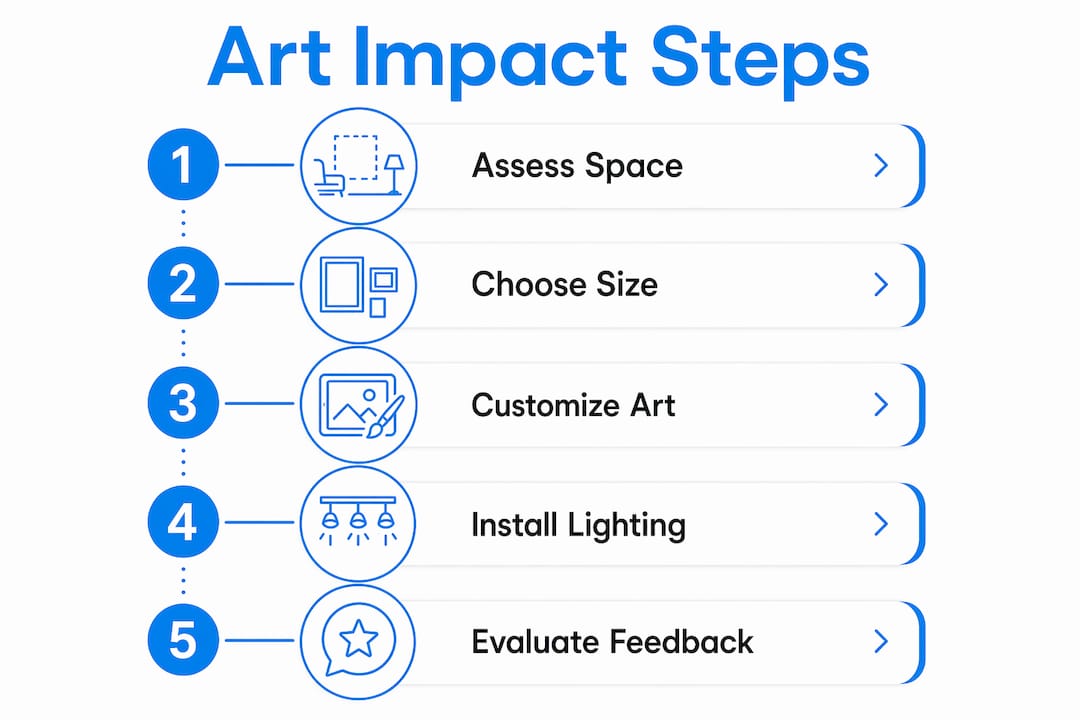
The business case is equally clear. Superior client experiences are a key differentiator in professional services, and small moments like a curated reception area influence satisfaction and perceived value as much as larger milestones. The 5Es framework used by client-experience strategists identifies the “Entice” stage, the pre-engagement moment when a client first enters your space, as the highest-leverage point for building initial trust.
Clients read these signals in seconds:
- Material quality of wall finishes and art
- Visual consistency across rooms
- Lighting and how it frames the space
- Whether the art connects to the brand’s personality or feels random
How to pick canvas art that improves client impressions
Prioritize scale first, color tone second, and narrative fit third. A piece that is the wrong size for the wall undermines everything else, regardless of how good the image is.
- Define your audience and meeting type. A law firm’s reception calls for calm, authoritative imagery. A creative agency can push bolder, more abstract work. A financial office might use themed financial art to reinforce its niche.
- Pick theme and tone. Neutral palettes (warm grays, earthy tones, muted blues) read as stable and trustworthy. High-contrast or vivid palettes signal energy and creativity. Match the palette to what your clients expect from you.
- Choose scale and placement. Use the wall-width rule: the art or grouping should span a large majority of the wall it occupies. For a 10-foot wall, that means 72–96 inches of visual coverage. A single large piece works for a focal wall; a triptych works when you need to fill a wider span without one oversized print.
- Verify materials and finish. Gallery-wrapped canvas on a solid stretcher bar, with a UV-protective coating, holds up in commercial spaces and reads as high-quality from a distance.
- Finalize customization. Specify exact final dimensions, aspect ratio, and any crop instructions when you order. Sensecanvas supports custom sizing for commercial interiors so the piece fits your wall precisely.
Pro Tip: Before you commit to a final order, photograph your wall with a measuring tape visible, then mock up the canvas dimensions in a photo-editing app or even with painter’s tape on the wall. Color and scale read very differently in person than on a screen.
What customization specs should you request when ordering?
Specify exact final dimensions, aspect ratio, and intended wall location with every order. Vague requests produce generic results.
| Format | Typical Size Range | Viewing Distance | Best Use |
|---|---|---|---|
| Single panel | 24×36 in to 36×48 in | 8–15 ft | Focal wall, reception desk backdrop |
| Diptych (2 panels) | 24×36 in each | 10–18 ft | Conference room, corridor feature wall |
| Triptych (3 panels) | — | — | Wide lobby wall, open-plan office |
Material and finish choices to confirm before checkout:
- Canvas type: Poly-cotton blend or 100% cotton; poly-cotton holds color longer in high-traffic spaces.
- Gallery wrap depth: 1.5-inch deep stretcher bars give a more substantial, frameless look.
- Frame option: Floating frame adds a gallery feel; no frame keeps the look modern and minimal.
- Surface finish: Matte reduces glare under overhead lighting; gloss intensifies color saturation.
- UV-protective coating: Non-negotiable for spaces with natural light or strong artificial lighting.
For custom orders, include a high-resolution image file (300 DPI minimum at final print size) and note any crop instructions. If you are working from a brand color palette, specify the hex codes so the printer can calibrate output accordingly.
Installation, lighting, and staging tips that maximize first impressions
Correct placement and lighting make the same canvas read premium or amateurish. The art is only half the equation.
- Hang at eye level. The center of the piece should sit 57–60 inches from the floor, which is the standard gallery hang height and where most adults’ eyes land naturally.
- Clear furniture by at least 6–8 inches. Art that sits too close to a sofa or desk looks cramped and unintentional.
- Center on the wall or anchor to a furniture grouping. Centering works for symmetrical spaces; anchoring to a sofa or desk works better in asymmetrical rooms.
- Use appropriate hardware. For canvases over 30 pounds, use wall anchors rated for the weight. Multi-panel works need a level and a template to keep spacing consistent (2–3 inches between panels is standard).
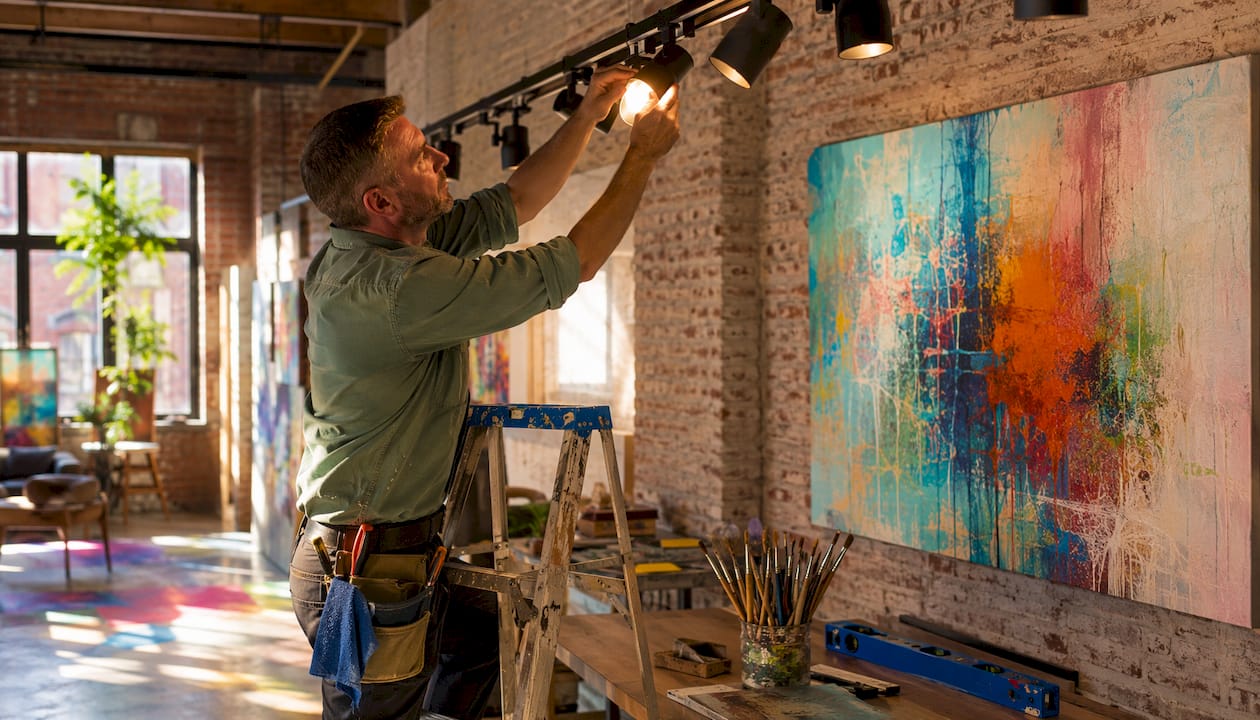
For lighting, aim for fixtures with a Color Rendering Index (CRI) of 90 or above and a color temperature of 2700–3000K. That range renders colors accurately without the harsh blue cast of cooler bulbs. Picture lights or adjustable track lighting angled at 30 degrees from the wall minimize glare on glossy finishes.
Pro Tip: Place a smaller accent piece near the entry point of your reception area to draw the eye inward. This guides sightlines naturally toward the main feature wall and gives clients a sense of intentional curation from the first step inside.
What to expect on cost, lead time, shipping, and returns
Budget realistically before you order. Canvas art for client-facing spaces is an investment, and the total cost includes more than the print itself.
- Price range: Sensecanvas prints start at $85. Larger custom sizes and framed options run higher; plan for $150–$300+ for statement pieces in the 36×48-inch range.
- Production time: Standard orders typically take 3–7 business days to produce before shipping.
- Shipping: U.S. domestic shipping adds 3–7 business days depending on destination and carrier. Rush options may be available; confirm at checkout.
- Returns: Canvas prints are custom-made, so most vendors, including Sensecanvas, have limited return windows. Review the return policy before ordering, and use a mockup approval step to reduce the risk of a mismatch.
- Installation and lighting add-ons: Budget $50–$150 for hardware and $100–$400 for professional picture lighting, depending on fixture type and electrician rates in your area.
Retention improvements in professional services consistently produce outsized margin benefits, which means even a modest investment in your client environment can pay back quickly.
Before-and-after proof that art changes client impressions
Documented space refreshes reliably shift client impressions in favor of the host. The pattern is consistent: a bare or generic wall replaced by a curated canvas installation changes how clients describe the firm before they sit down.
What typically changes after a well-executed installation:
- Perceived professionalism: Clients associate a curated space with organizational rigor.
- Warmth: Art with natural tones or organic subjects softens a corporate environment and lowers defensiveness.
- Brand clarity: A piece that reflects the firm’s personality gives clients a reference point for what the brand stands for.
After a space refresh, a brief conversational interview with two or three clients surfaces whether the new art shifted perceived professionalism and generates authentic testimonials you can use going forward.
How to maintain visual consistency across multiple client-facing spaces
Consistency across reception, meeting rooms, and corridors creates cumulative credibility. One great piece in the lobby loses half its impact if the conference room feels like a different company.
Build a simple brand-art kit:
- Approved color palette: 2–3 hex codes that anchor all art selections across spaces.
- Image tone guide: A one-page reference showing approved subject categories (abstract, nature, motivational) and those to avoid.
- Size and frame spec sheet: Standard dimensions and frame style for each room type so every installation matches.
- Refresh schedule: Plan to evaluate installations every 18–24 months. Canvas prints in high-traffic areas can fade or sustain minor damage; catching this early keeps the space looking intentional.
A cohesive visual theme across spaces also reinforces wayfinding. Coherent visual cues help clients navigate your space smoothly, which transfers directly to perceptions of organization and care.
Pro Tip: Tag each installed piece with a small internal label on the back (date installed, canvas dimensions, Sensecanvas order number). When it is time to refresh or replace, you have the exact spec ready to reorder without remeasuring.
Key Takeaways
The single most effective move for client-facing spaces is a large-format, gallery-wrapped canvas sized to cover a large majority of the feature wall, chosen to match your brand’s color palette and audience expectations.
| Point | Details |
|---|---|
| Scale drives impact | Art should span a large majority of the wall width to read as intentional, not decorative. |
| Match tone to audience | Neutral palettes signal stability; bold palettes signal energy — choose based on client expectations. |
| Verify materials | Gallery wrap, UV coating, and a CRI 90+ light source are the three non-negotiables for a premium look. |
| Plan installation costs | Budget for hardware and lighting ($150–$400 total) in addition to the canvas price. |
| Start with Sensecanvas | Browse over 15,000 designs with custom sizing from $85 at sensecanvas.com. |
What the right art investment actually signals
The conventional wisdom says art in an office is a nice touch. That undersells it considerably. What a well-chosen, properly installed canvas actually communicates is that someone in the organization made a deliberate decision, followed through on the details, and cared enough to get it right. Clients notice that. They may not say “I love your canvas,” but they will leave with a stronger sense that you are the kind of firm that executes well.
The mistake most businesses make is treating the reception wall as the last item on the renovation list, something to fill after the furniture arrives. Flip that. The art on the primary client-facing wall is the first thing a client sees and the last thing they remember. A bold abstract that aligns with your brand’s color palette, hung at the correct height with proper lighting, does more for perceived professionalism than a new conference table. The environment is the message, and the art is the loudest part of it.
Sensecanvas makes it easy to order the right piece
Sensecanvas gives you access to over 15,000 canvas designs with full customization on size, finish, and framing, so you can order a piece that fits your exact wall and brand palette without compromise. Prices start at $85, and the catalog spans abstract, nature, motivational, and specialty themes built for both home offices and commercial client-facing spaces.
Here is how to move from this article to a finished installation:
- Measure your primary client-facing wall and calculate 60–80% of the width.
- Browse the Sensecanvas catalog and shortlist 2–3 designs that match your brand’s color palette.
- Request a custom sizing mockup with your exact dimensions before you finalize.
- Approve the proof, confirm finish and frame options, and place your order.
- Schedule delivery and installation, and add picture lighting before the first client visit.
Start browsing the full collection and request your custom mockup at sensecanvas.com.