Art Theme Checklist for Homeowners and Gift Buyers
Pick a themed decorative canvas print in one shopping trip: choose your dominant theme first, confirm the canvas covers 60–75% of the furniture width beneath it, and verify the print specs (canvas weight, ink type, gallery-wrap finish) before you add to cart. That three-step sequence is the core of every good collectors checklist for decorative canvas prints, and everything below unpacks each step in detail.
Key Takeaways
| Point | Details |
|---|---|
| Theme before browsing | Choose dominant theme, 30% neutral buffer, and 10% accent before opening a catalog. |
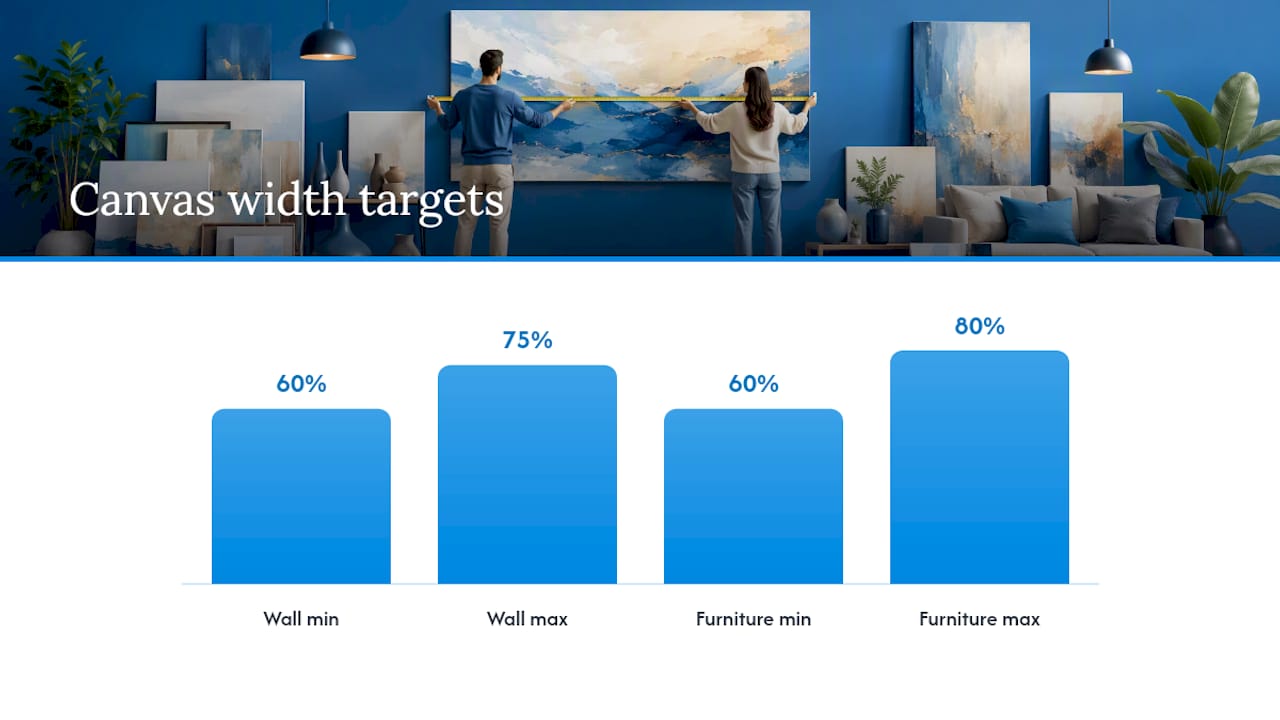
| Size rule | Canvas should cover 60–75% of wall width, or 60–80% of sofa width, centered at 57 inches. |
| Material check | Confirm gallery-wrap construction, pigment inks, and no pixelation in the preview. |
| Budget baseline | Sensecanvas starts at $85; framing, custom sizes, and archival inks raise the price. |
| Sensecanvas | Over 15,000 designs with customization, mockup previews, and multiple size options from $85. |
Table of Contents
- What does a good art theme checklist cover?
- How do you choose the right theme for a room?
- How do you measure for the right canvas size?
- How do you match colors and style to your existing décor?
- What print quality specs should you check before buying?
- Where should you hang it, and how high?
- What should you budget, and how long will it take?
- How do you buy a canvas print as a gift?
- How do you keep a canvas print looking its best?
- Why Sensecanvas is worth checking first
- Ready to order from Sensecanvas?
- Sources
What does a good art theme checklist cover?
Before you open a single product page, run through these items. Print this list or screenshot it for quick reference while browsing.
Theme
- Dominant theme chosen (abstract, botanical, motivational, animal, pop motif)
- Theme covers roughly 60% of planned pieces; 30% neutral/abstract; 10% accent
- Theme matches room function (calm for bedroom, energetic for kitchen or office)
Size
- Wall width measured (write it here: ____ in)
- Sofa or furniture width measured (write it here: ____ in)
- Target canvas width = 60–75% of wall span, or 60–80% of sofa width
- Mounting height noted (standard eye-line: 57 in to canvas center)
Color
- One or two accent colors from the room identified
- Artwork repeats those tones without matching exactly
Material
- Gallery-wrap construction confirmed (no staples on face)
- Ink type listed on product page (pigment preferred for longevity)
- No visible pixelation in the high-resolution preview
Budget and timeline
- Starting price noted ($85 at Sensecanvas)
- Production + shipping window confirmed before ordering
- Return/exchange policy reviewed
Ready-to-buy pass/fail: if every box above is checked, you are ready to order.
How do you choose the right theme for a room?
Start with what the room is for, not what you like in the abstract. A bedroom asks for calm; a living room invites conversation; a home office benefits from focus or motivation. Once you know the room’s job, picking a theme gets fast.
Designers apply a 60/30/10 rule to avoid the “theme-park” look: 60% of your pieces reflect the dominant theme, 30% stay neutral or abstract, and 10% introduce an unexpected accent. In practice, that means one bold botanical print, two soft abstract pieces, and one quirky typographic accent in a four-piece living room grouping.
Quick room-by-room examples:
- Bathroom: botanicals or spa-inspired prints; soft greens and whites
- Living room: abstract geometric anchor piece with one or two complementary neutrals
- Kitchen: playful food motifs or bold typography; high-contrast colors hold up against busy countertops
- Home office: motivational quotes or architectural prints; keeps energy focused without distracting
Pro Tip: Pick a theme that complements your existing textiles rather than matching them exactly. If your sofa throw is terracotta, look for artwork that carries a warm amber or rust tone, not the identical terracotta shade. Near-match feels intentional; exact match feels accidental.
For a deeper look at building a cohesive theme across multiple rooms, Sensecanvas’s guide to creating a home art theme walks through the full workflow.
How do you measure for the right canvas size?
Getting the size wrong is the single most common decorating mistake. A canvas that is too small floats on the wall; one that is too large crowds the room.
Step-by-step measurement:
- Measure the full width of the wall where the canvas will hang (in inches).
- Multiply by 0.60 and 0.75 to get your target size range.
- If the canvas hangs above a sofa or bed, measure the furniture width instead and target 60–80% of that span, sitting 6–12 inches above the furniture back.
- Mark the center point at the standard museum eye-line, which is approximately at adult eye level, and aim to hang the canvas center there…
- Adjust up by 4–6 inches if the primary viewing is from a standing position (entryways, hallways).
Pro Tip: Before you hang anything, cut paper templates to your target dimensions and tape them to the wall. Live with them for a day. What looks right on a product page often reads differently at scale on your actual wall.
| Canvas size | Best for | Typical room use |
|---|---|---|
| Small (under 24 in) | Accent or grouping piece | Bathroom, hallway, shelf display |
| Medium (24–36 in) | Focal point in smaller rooms | Bedroom, home office |
| Large (36+ in) | Main anchor piece | Living room, dining room |
| Panoramic (wide format) | Above sofa or bed | Living room, primary bedroom |
Common size recommendations confirm small canvases under 24 inches work as accents, medium 24–36 inch pieces suit bedrooms and offices, and large pieces over 36 inches anchor living rooms.
For gallery walls, three reliable layouts work consistently: the grid (matching sizes in even rows), the salon hang (mixed sizes contained within an imaginary rectangle), and pairs-of-three (three matched pieces in a horizontal row). Plan any of these on the floor first, then transfer positions to the wall with painter’s tape before drilling.
How do you match colors and style to your existing décor?
Repeat one or two accent colors already present in the room rather than trying to match exactly. Perfect color matches flatten the visual interest; near-matches create depth.
Four reliable color strategies:
- Complementary: artwork pulls from the opposite side of the color wheel from your dominant room color (blue room, warm amber artwork)
- Analogous: artwork stays in the same color family as the room (green room, teal and sage prints)
- Monochromatic: artwork uses lighter and darker values of the room’s main color
- Neutral base: artwork stays in blacks, whites, and grays, letting texture and subject carry the visual weight
On the framing question: framed artwork reads more formal and structured; canvas prints read softer and more modern. A traditional living room with crown molding and wood furniture benefits from a framed piece. An open-plan modern space with concrete or white walls suits a gallery-wrap canvas with no frame. For help matching specific interior styles, Sensecanvas’s homeowner matching guide covers the most common pairings.
What print quality specs should you check before buying?
Not all canvas prints are built the same. At the product page, look for these specifics before ordering.
- Canvas weight: heavier gsm (grams per square meter) means less sag and better ink hold
- Gallery-wrap construction: image wraps around the stretcher bars; no staples visible on the face
- Stretcher-bar quality: kiln-dried wood resists warping; check that corners are braced
- Print resolution: zoom into the preview; no visible pixelation at the size you are ordering
- Ink type: pigment inks last significantly longer than dye-based inks under normal light exposure
- Lightfastness claim: look for any mention of archival or UV-resistant inks on the product page
At catalog price tiers, gallery-wrap construction and clean previews are the baseline; higher tiers add floater frames, archival inks, and museum-grade canvas. For most decorative home use, a well-constructed gallery-wrap with pigment inks is the right call.
| Quality indicator | What it means | Impact |
|---|---|---|
| Gallery-wrap | Image wraps edges; no border needed | Cleaner look, no frame required |
| Pigment ink | Longer color stability than dye ink | Colors stay vivid for years |
| Kiln-dried stretcher bars | Resists humidity warping | Stays flat over time |
| High-res preview | No pixelation at print size | Sharp detail at full scale |
Where should you hang it, and how high?
The 57-inch center rule applies to most rooms: hang the canvas so its center sits at eye level, roughly 57 inches from the floor. Above a sofa, that often means the bottom edge of the canvas lands about 6–12 inches above the sofa back.
For hardware, match the anchor to the wall type:
- Drywall with no stud: use toggle bolts or drywall anchors rated for the canvas weight
- Into a stud: a single screw with a picture hook handles most canvas sizes up to 36 inches
- Plaster walls: use a masonry bit and a wall plug; plaster cracks easily with standard nails
For gallery clusters, keep gaps between pieces at 2–3 inches for a tight, curated look, or 4–6 inches for a more relaxed arrangement. The total cluster should still follow the two-thirds wall-span rule as a single visual unit.
Lighting placed at roughly a 30-degree angle illuminates the artwork without creating glare on the canvas surface. Track lighting or a picture light mounted above the frame both work well.
What should you budget, and how long will it take?
Decorative canvas prints range widely. Sensecanvas prices start from $85, which covers a standard gallery-wrap canvas in a popular size. Price climbs with size, framing upgrades, archival ink options, and custom dimensions.
| Cost driver | Effect on price |
|---|---|
| Larger size | Proportional increase |
| Floater or shadow-box frame | Adds a size-dependent fee |
| Archival/UV-resistant inks | Premium tier pricing |
| Custom dimensions | May add a production surcharge |
| Expedited shipping | Varies by carrier and distance |
Production time for a standard canvas print typically runs a few business days before shipping. Custom orders take longer. Before you finalize any order, confirm the production window, the shipping estimate, and the return or exchange policy. Most reputable sellers allow returns for damaged or misprinted items; size and color preference returns vary by retailer.
How do you buy a canvas print as a gift?
A themed canvas print makes a strong gift when it is personalized beyond just the design. Text overlays (a family name, a meaningful date, a short quote) move a print from decorative to personal without complicating production significantly.
Timing matters. For standard orders, allow the production window plus shipping. For custom text or non-standard sizes, add several extra business days. During peak holiday seasons, add a buffer of at least one to two weeks beyond the stated estimate.
For gifting presentation: an unframed gallery-wrap ships flat and is easy to wrap; a framed piece ships in a larger box but arrives ready to hang. If you are sending directly to the recipient, check whether the seller offers gift messaging or discreet packaging. Personalized family name canvases are a reliable starting point for gift buyers who want something that feels custom without a long lead time.
How do you keep a canvas print looking its best?
Canvas prints are low-maintenance, but a few habits extend their life noticeably.
- Dust lightly with a dry microfiber cloth; never use wet cloths or spray cleaners directly on the canvas
- For light spots or smudges, dampen the cloth slightly and blot; do not rub
- Keep prints away from direct sunlight; UV exposure fades pigment inks over time
- Avoid hanging in high-humidity rooms (bathrooms without ventilation, laundry rooms) unless the canvas is sealed; moisture causes stretcher bars to warp
- For long-term storage, wrap in acid-free paper and store flat or upright; never stack heavy objects on top
Pro Tip: Use LED lighting to illuminate your canvas rather than halogen or incandescent. LED produces minimal UV and very little heat, which are the two main causes of color fade in decorative prints.
Why Sensecanvas is worth checking first
Sensecanvas carries over 15,000 designs across themes including abstract, animals, motivational quotes, celestial, pop motifs, and more. That range means you can apply the 60/30/10 rule across an entire room using pieces from one catalog, keeping finish and print quality consistent.
Key features to know before you order:
- Starting price: $85 for a standard gallery-wrap canvas
- Customization: multiple size options, text personalization, and custom dimension requests
- Framing choices: gallery-wrap standard; framed and floater-frame options available on select designs
- Mockup previews: high-resolution previews on product pages let you check detail before ordering
- Product specs: material, size chart, and finish details listed per product
For themed gifting, the personalized family name homestead canvas and the poker card game room print show the range from sentimental to bold. Check the size chart on each product page and confirm your wall measurements match the available options before ordering.
What a theme-first approach actually changes
Most people shop for canvas prints by browsing until something catches their eye. That works fine for impulse buys, but it produces walls that feel assembled rather than considered. The theme-first approach flips the sequence: you decide the mood and the room’s job before you open a catalog, which means every piece you look at gets filtered immediately. You stop at the ones that fit; you scroll past the ones that do not.
One strong botanical print surrounded by two soft abstract pieces reads as a curated collection. Three botanical prints read as a theme park. The neutral pieces do not dilute the theme; they give it room to breathe.
Ready to order from Sensecanvas?
With over 15,000 designs and prices starting from $85, Sensecanvas covers the full range from bold pop-motif pieces to calm botanical prints, all available with size customization and gallery-wrap finishing.
Ordering takes four steps: pick your design, choose your size and frame option, approve the mockup preview, and add any personalization (text, custom dimensions) before checkout. Before you confirm, double-check your wall measurements against the size chart, review the delivery estimate, and read the return policy for your specific order type. For a gift, the family name colorful canvas ships ready to present. For a living-room anchor, the abstract ocean print is a strong starting point.
Sources
- Canvas Wall Art, Decoded: Sizing, Framing, and the Gallery-Wall Compos – CURATED SENSE
- How to Choose Wall Art Like an Interior Designer
- How to Select Wall Art for Every Room in Your Home
- Canvas Wall Art Ideas: How to Choose the Perfect Piece
- How to Choose Wall Art for Your Home | Complete UK Guide - Ivy Grey Interiors