10 City Skyline Wall Art Ideas That Fit Any Room, With Sizing Tips
The best way to pick city skyline wall art is to choose the style that fits your room’s mood and scale first, then pick the material that keeps the skyline’s fine lines sharp rather than blurry. A minimalist line drawing needs a different treatment than a photographic panorama. Customizable sizing options make it easy to get the right fit once you’ve settled on a look.
TL;DR:
- Fine detail skylines with thin architecture elements perform best on smooth canvas or acrylic finishes to maintain crispness.
- Appropriate sizing typically means a piece is about two-thirds the width of the furniture below or above it for optimal visual impact.
- Panoramic photographs suit living rooms as statement pieces, while muted silhouettes or night scenes create calm atmospheres in bedrooms.
- Personalization options, including adding coordinates or a custom date, are simple to incorporate if measured and mocked up before printing.
- Canvas remains the most flexible and affordable option for testing different styles and sizes, with pieces starting around $85.
Table of Contents
- 10 City Skyline Wall Art Ideas Worth Stealing
- Which Material Keeps Skyline Detail Sharp?
- How Big Should Skyline Wall Art Be?
- What Skyline Style Works Best in Each Room?
- How Do You Customize a City Skyline Canvas?
- What Skyline Wall Art Trends Are Worth Following?
- Why Canvas Still Wins for Most Skyline Art Buyers
- Order a Custom Skyline Canvas From Sensecanvas
- Sources
10 City Skyline Wall Art Ideas Worth Stealing
Skyline art isn’t one thing. It ranges from moody black-and-white photography to laser-cut metal silhouettes that throw shadows on the wall behind them. Here are ten distinct directions, each suited to a different room and budget.
- Photographic panorama at dusk. Warm window lights against a darkening sky work in living rooms with neutral furniture.
- Minimalist single-line silhouette. One continuous outline of a skyline reads as timeless and fits almost any decor style, from Scandinavian to industrial.
- Backlit acrylic cityscape. LED strips behind the print create a glow effect that suits modern bedrooms or media rooms.
- Laser-cut metal skyline. A raw or brushed-steel cutout adds texture to industrial lofts and exposed-brick spaces.
- Wood-layered 3D silhouette. Hand-finished wood panels give depth and a tactile, almost sculptural feel to a reading nook or entryway.
- Retro travel-poster palette. Flat colors and bold type recall vintage airline art, great for a playful home office or kid’s room.
- Mixed-media metal-on-wood. Combining materials adds contrast between rustic and industrial, a popular move in higher-end interiors.
- Personalized coordinate skyline. Adding latitude and longitude or a custom date turns a generic city into a specific memory piece.
- Panoramic triptych over a sofa or bed. Three panels split one continuous skyline for long walls that a single canvas can’t cover.
- Watercolor or ink-wash skyline. Soft edges and muted tones suit a nursery or a calmer bedroom better than sharp photography.
Which Material Keeps Skyline Detail Sharp?
Material choice decides whether fine architectural detail, antenna lines, window grids, bridge cables, stays crisp or turns into a fuzzy smear. Each option handles light and detail differently.
- Canvas (giclée print): Warm, textured finish that suits photographic and painterly skylines; matte canvas can soften very fine lines, so cityscape photography with strong geometry prints best on a smoother canvas weave.
- Metal: Delivers the crispest continuous silhouette for skylines with tall, thin towers, and works well as large-format metal wall art, though it can feel cold without other warm decor nearby.
- Wood: Adds grain and dimension, but detailed high-rises can look chunky if the cutout scale is too small.
- Acrylic (back-printed): Glossy, vivid, and ideal for backlighting, though it shows fingerprints and glare in bright rooms.
Pro Tip: If a skyline has a lot of thin architectural detail, like a forest of antennas or cables, choose a smooth canvas or acrylic finish rather than a heavily textured canvas. Texture flattens fine lines and makes detailed skylines look soft or cheap once printed at scale.
How Big Should Skyline Wall Art Be?
Sizing mistakes are the most common reason skyline art looks like an afterthought instead of a focal point. Designers generally recommend making the piece about two-thirds the width of the furniture it hangs above.
- A sofa pairs well with a canvas sized to roughly two-thirds its width.
- A queen bed frame suits a skyline piece sized appropriately for the bed width, or a triptych spanning the headboard.
- Center the artwork at a typical gallery height, generally around eye level.
- Above furniture, leave a moderate amount of space, such as several inches, between the top of the sofa or headboard and the bottom of the frame.
For triptychs, keep spacing between panels consistent, typically 9 to 12 millimeters, and use a level to mark a horizontal guide line through the center of the whole composition rather than aligning each panel’s top edge. Confirm your wall anchors can hold the combined weight before hanging, especially with metal or wood panels. Check our guide to sizing art for your walls before ordering if you’re unsure of your wall dimensions.
What Skyline Style Works Best in Each Room?
The right skyline changes depending on what the room is for. A bold panorama that anchors a living room would overwhelm a small bedroom.
- Living room: A panoramic photographic print or a multi-panel triptych works best as a statement wall behind seating; go for high contrast and saturated color if the room already leans neutral.
- Bedroom: Dusk or nighttime scenes in muted blues and grays feel calmer than a bright daytime skyline; soft line art also works if you want minimal visual noise before sleep.
- Home office: Structured black-and-white silhouettes or a single framed photographic skyline read as professional without competing with a video call background.
- Small spaces: A scaled-down panorama, a vertical crop of a single iconic tower, or one strong horizon line can create the illusion of depth without eating up limited wall space. Our ideas for small-space canvas art cover more of this.
If you’re planning the room around the art rather than the other way around, a gallery of finished interior spaces can help you settle on wall color and trim before you commit to a piece.
How Do You Customize a City Skyline Canvas?
Personalizing a skyline piece takes a handful of decisions, and getting them right before ordering saves a reprint.
- Measure your wall space and the furniture it sits above.
- Choose the crop or zoom, full skyline versus a tighter shot of specific towers.
- Pick a color grade: full color, black and white, or a tinted monochrome.
- Decide whether to add coordinates, a city name, or a custom date.
- Choose single canvas or multi-panel triptych based on wall width.
- Request a digital mockup before final approval.
Sensecanvas carries over 15,000 designs across styles, with sizing customization and pieces starting around $85, which makes testing a few crop or color options before committing far less risky than a one-shot custom print elsewhere.
Pro Tip: Always ask for a digital mockup on your actual wall dimensions before ordering. It’s the fastest way to catch a crop that cuts off a landmark tower or a color grade that clashes with your existing furniture.
What Skyline Wall Art Trends Are Worth Following?
A few finishing moves separate a dated skyline print from one that still looks current years later.
- Minimalist single-line drawings continue to outlast trend cycles better than busy photographic collages.
- Mixed-media pieces, layered acrylic or metal-on-wood, add dimensionality that flat prints can’t match.
- Backlit acrylic gives a subtle glow effect without needing a full smart-lighting setup.
- Retro poster palettes bring warmth to otherwise cool, modern rooms.
- Personalized coordinates turn a generic skyline into something specific to your own story.
For finishing touches, a slim black or brushed-metal frame usually reads more modern than an ornate one, and a warm-white picture light mounted above the piece brings out texture in metal or wood cutouts after dark. If you’re building a gallery wall around the skyline, keep the surrounding frames in one consistent tone so the skyline stays the visual anchor.
Why Canvas Still Wins for Most Skyline Art Buyers
Canvas isn’t the flashiest option on this list, but it’s the one that balances cost, customization, and durability better than metal or wood for most households. It ships easily, hangs on a standard D-ring without special wall anchors, and takes color grading and cropping changes without the production complexity that metal or 3D wood cutouts require.
That flexibility is why Sensecanvas built its catalog around it. Across 15,000-plus designs with adjustable sizing, canvas remains the format that lets a shopper test an idea, a crop, a palette, without committing to a $300 metal cutout on the first try.
— Sense
Order a Custom Skyline Canvas From Sensecanvas
A skyline idea can be turned into an actual piece on your wall through four simple steps, without the guesswork of a custom studio order. You pick the style, the size, and the finish, and get to see it before it prints.
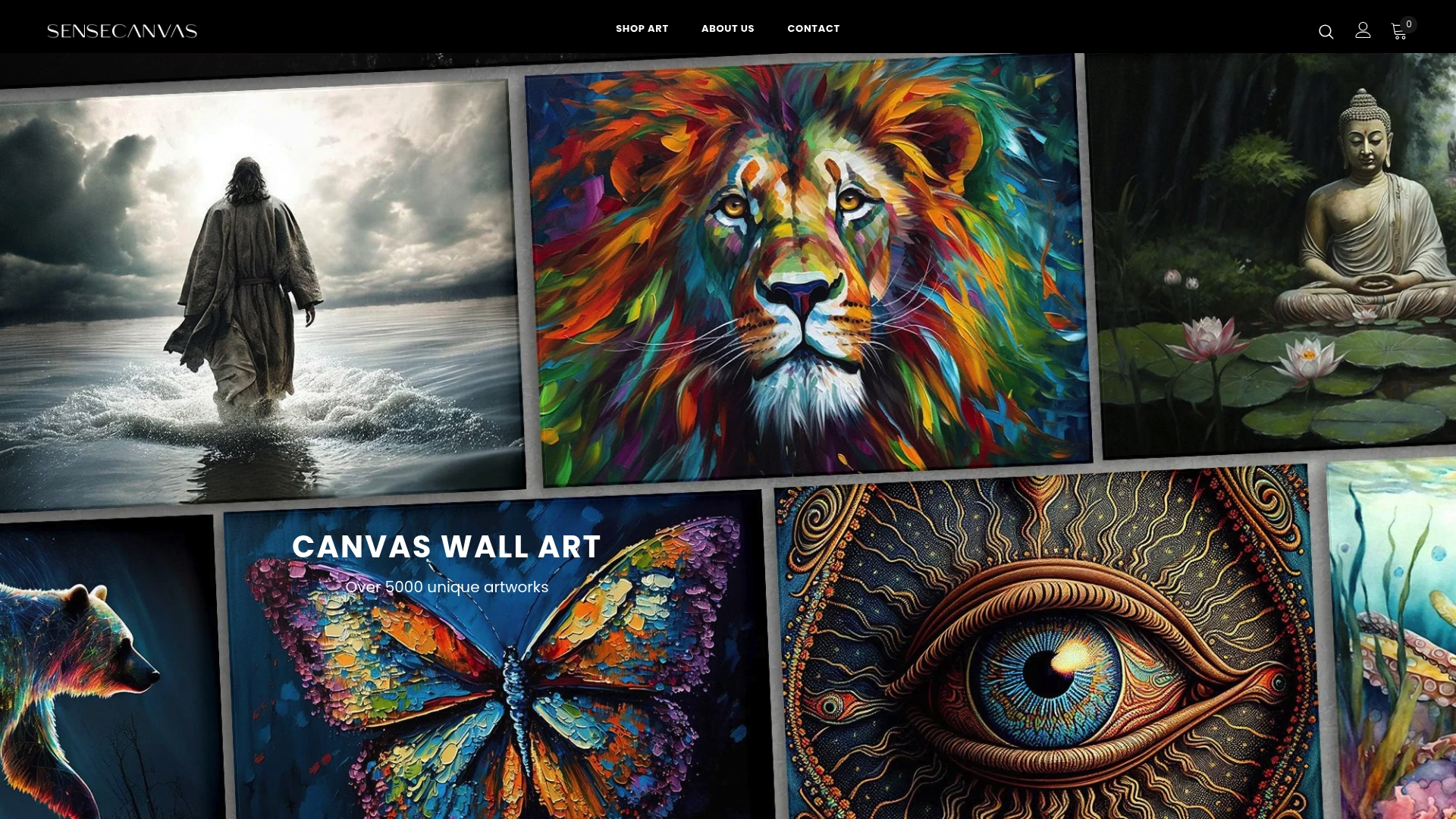
Start by selecting a skyline style, photographic, silhouette, or panoramic, from the catalog or your own reference photo. Next, choose the size and material that fits your wall and furniture, guided by the two-thirds rule covered earlier. Request a digital mockup so you can confirm the crop, color grade, and any added text or coordinates before it goes to print. Once you approve it, the order ships.
Pieces start near $85, and sizing adjusts to fit sofas, beds, or awkward hallway walls alike. Browse the full canvas wall art collection and start building your custom skyline today.