Canvas Print vs Painting: Which Is Right for Your Wall?
For most homes, offices and gifts, a canvas print is the practical choice. You choose the image, the size and the room it suits, and you hang it in days instead of hunting for a one-of-a-kind piece. An original painting is a single object made by one hand, which is a different purchase with a different purpose. This guide explains the difference in plain terms, shows you how to tell the two apart when you are looking at one, and helps you decide which fits your space.
TL;DR
- A canvas print is an image reproduced onto canvas. A painting is paint applied by an artist, so every original is unique.
- Canvas prints suit decorating around a theme, size or palette, and they work well for gifts, offices and multi-room projects.
- A 10x loupe and raking light reveal the difference: prints show dots or even ink spray, paint shows uneven pigment and brush hairs.
- Light and humidity matter for both. Hang art away from direct sun and steam, and give it steady conditions.
- At Sense Canvas, designs are exclusive to the platform and can be customized for size or composition.
Table of Contents
- What is the actual difference?
- How do they look different up close?
- How to tell a canvas print from a painting
- What about oil painting vs canvas print?
- Care and light: what both need
- What affects the cost?
- Which one fits your situation?
- A simple way to decide
- Where Sense Canvas fits
- Our perspective
- FAQ
- Sources
What is the actual difference?
A painting is made by applying paint to a surface. When that surface is canvas and the paint is oil or acrylic, you have a canvas painting. Nobody else has the same one, and the object itself carries the artist’s hand.
A canvas print is a reproduction. An image, often a photograph, a digital illustration or a scan of an artwork, is printed onto canvas and stretched over a frame, so the finished piece can be made in different sizes. The two can look alike from across a room, which is why the words get mixed up. Many product titles even include “painting” in the name, though the item is a print.
That single distinction, one object versus a reproducible image, drives nearly every other difference: price, size options, care, how a piece fits a room and what it means as a gift.
| Canvas print | Original painting | |
|---|---|---|
| What it is | Image printed on canvas and stretched | Paint applied by an artist |
| Uniqueness | The design can be produced in several sizes | One of a kind |
| Size | Chosen to fit your wall | Fixed by the artist |
| Subject range | Thousands of designs to browse | Whatever that artist made |
| Matching a room | Easy to match to color, theme and size | Depends on what is available |
| Delivery | Made to order | The finished object itself |
How do they look different up close?
From a few feet away, a good canvas print gives you the color and presence you expect from a painting. Up close, the surfaces differ in ways that are easy to learn.
Paint has physical depth. Brushstrokes sit on top of the canvas, edges of color overlap, and the surface catches light unevenly. According to a professional seller’s guide on telling originals from prints, original oil and acrylic paint casts tiny shadows when you shine a light across it at a low angle. A printed surface is generally flatter, because the color lives in the ink layer.
What a print gives you in return is consistency and range. Because the image is digital, the print can be crisp, colorful and sized for the wall rather than limited to what the artist happened to paint. For vivid styles such as abstract, pop, floral or animal subjects, that clean color is much of the appeal.

How to tell a canvas print from a painting
This comes up when you are browsing a listing, visiting a market or looking at a piece someone gave you. Four checks cover most cases.
- Use a loupe. Under a 10x loupe, offset prints show a regular dot pattern, giclée prints show fine, even ink spray, and paint shows uneven pigment, cracks and brush hairs. A phone camera with zoom works in a pinch for the dot pattern.
- Rake the light. Hold a flashlight almost parallel to the surface. Real paint stands up and throws small shadows. A print stays level.
- Look at the signature. A signature on an original may be integrated into the paint layer, while a printed signature may look flat and printed. Check whether it sits in the paint or on top of it.
- Check the edges and back. Look at how the canvas wraps the frame, and read any labels or edition numbers on the back.
None of these is a test of whether a piece is good. A print made with care is a legitimate way to enjoy an image. The checks tell you what you are holding so you can decide whether it fits your purpose. If you are comparing prints with each other, our guide to canvas print quality checks covers resolution and pixel targets, and the one on giclée printing explains what that term should mean on a product page.
What about oil painting vs canvas print?
Oil is the benchmark people have in mind when they compare. An oil painting is built in layers: a canvas, a sizing, a ground and then the paint. A research paper from the Smithsonian’s conservation community notes that these layers, which can include linen, hide-glue sizing, an oil ground and oil paint, each respond differently to environmental change. In practice, that means an oil painting is a layered object that wants stable surroundings.
A canvas print is a simpler structure: printed canvas on a stretcher frame, ready to hang. That simplicity is part of its appeal in busy spaces such as living rooms, offices and kids’ rooms, where you want art that is easy to place and easy to live with.

If what you love is the look of a painterly image, a print delivers that look at the size you choose. If what you want is a collectible object with a maker’s history, an original is the category built for that. Most people decorating a home or workplace are after the first, and that is where we focus.
Care and light: what both need
Both kinds of artwork do best with good light habits. Light damage is cumulative, and the Library of Congress notes that lower light levels over longer periods can be as damaging as brighter light for shorter ones. Its guidance for display is to protect light-sensitive items from UV radiation and to watch temperature, humidity and pollutants.
Museum rules show how much materials differ. The Smithsonian’s light duration guidelines allow unlimited exposure for oil paintings at 300 lux, while watercolors and works with organic pigments and dyes are limited to 6 months over 5 years at 50 lux. You do not need a light meter at home, but the lesson carries over: a spot that is bright all day is a spot to avoid for any artwork.
A few habits that work in a normal house:
- Hang art on a wall that does not get direct afternoon sun.
- Keep it away from heat sources such as radiators and fireplaces.
- Avoid placing canvas right next to a shower or tub. Our bathroom guides explain what works on a bathroom wall and how to place it safely away from steam.
- Dust gently with a soft dry cloth. Our canvas care guide lists the full routine.
Lighting also changes how art reads. A well-aimed fixture makes colors look richer, and it is worth planning with the artwork. This interior lighting guide walks through how to layer light in a room, and our own piece on wall art lighting covers aim angle, color rendering and glare for hung canvas.
What affects the cost?
The two categories are priced on different logic.
An original painting is priced on the artist: their reputation, the time the work took, the materials, the size and the market for their work. There is only one, so the price reflects scarcity.
A canvas print is priced on the product: size, the materials, the finishing and whether it can be customized. Because the design can be produced again, you are paying for the made object rather than for the only copy in existence. That is why prints let you outfit several rooms, or a whole office, with a consistent look.
For print buyers, one more term is worth knowing: edition. A limited edition caps how many copies exist, while an open edition does not. Our guide explains how to read that on a listing.
Which one fits your situation?
Homeowners
If you are decorating a living room, bedroom or hallway, start with the wall: its width, the sofa or bed beneath it, the colors in the room. A print lets you pick the image first and then set the size to match. Collections such as abstract, floral and animal give you a theme to build around, and if your space is small, our small-space canvas ideas show how to scale pieces without clutter.
Interior designers
Original art, in the words of one designer’s overview, raises the perceived value of a design and makes a project stand apart from rooms furnished from the same catalog. The goal of distinct, memorable rooms is exactly why designers look for art that is not generic. Designs at Sense Canvas are exclusive to the platform and can be customized for size or composition, which gives a project art that is not found everywhere and still fits the plan. When a client wants the same look across several rooms, units or floors, a design that can be produced in matching sizes keeps the set cohesive.
Gift-givers
A gift needs to feel chosen. Personalization is the easiest way to get there, and a custom canvas can carry a family name, a theme the recipient loves or a size that suits their wall. Our Personalized Family line is built around exactly that idea, with family-name designs in colorful layouts.
Business owners
Offices and shops need art that sets a tone, goes up quickly and can be sized to a particular wall. Motivational and money-themed designs suit workspaces, and abstract and street-art styles suit lobbies and meeting rooms. Our street art buyer’s guide explains that style if you are considering it.
Art enthusiasts
If you love collecting, an original gives you a direct line to an artist. If you love variety, a catalog of more than 15,000 designs lets you explore styles from abstract to pop to trippy and live with them on your walls.
A simple way to decide
Ask four questions:
- Do I know the room’s size and color scheme? If yes, a print sized to the wall will fit on the first try.
- Do I need several matching pieces? A reproducible design makes sets straightforward.
- Is this a gift with a personal touch? Customization turns an image into something specific to the recipient.
- Do I want art I can change as my taste or the room changes? Prints make it easy to refresh a wall.
If most answers are yes, a canvas print is your piece. For all of these situations, we make that route easy.
Where Sense Canvas fits
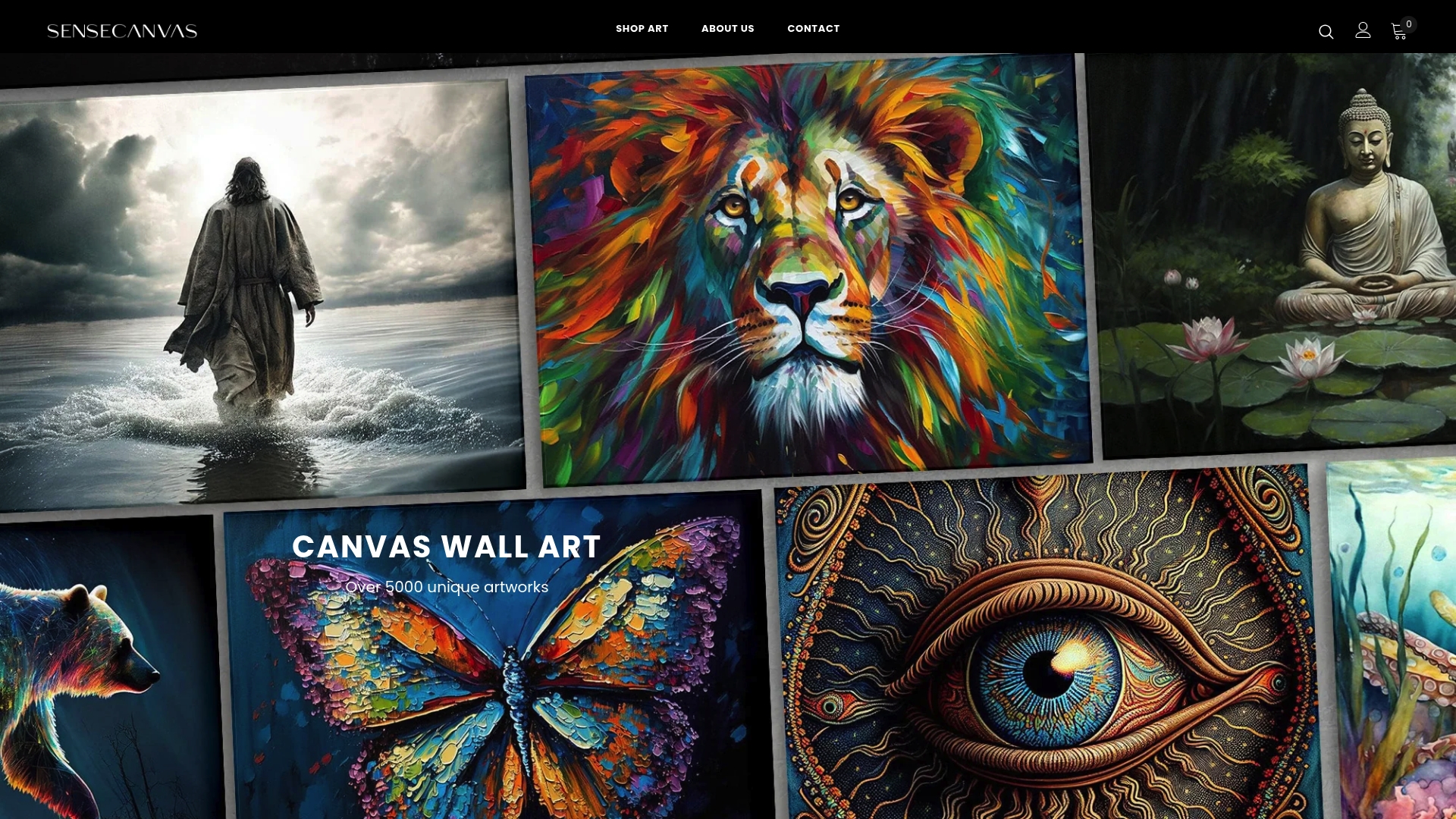
Sense Canvas offers more than 15,000 canvas wall art designs across abstract, animal, money and motivation, pop, personalized family, trippy and floral themes. Each design is exclusive to the platform and can be customized for size or composition. Our pieces are handcrafted from premium, artist-grade materials, are designed for easy installation, and come with a satisfaction guarantee and free global shipping.
Start with the theme that matches your room on the Sense Canvas home page, or browse the full collection and choose a size for your wall.
Giving a gift or furnishing a family room? The Personalized Family designs, such as Family Name Gathering, put the family name front and center.
Our perspective
We make canvas wall art, so we see this question from the wall’s side. Most people who search for canvas print versus painting are not choosing between art history and a shortcut. They have a room, a budget, a deadline or a person to surprise, and they want something that looks right when they step back.
That is why we put sizing and customization at the center. A piece is only as good as its fit: the right proportions for the wall, the right colors for the room, the right subject for the person. Every design we offer is exclusive to our platform, and you can adjust size or composition, so the piece you hang is chosen for your space rather than settled for.
Quality matters as much as choice. We handcraft our canvas art with premium, artist-grade materials and design it for easy installation, because art that is a hassle to hang tends to stay in the box. Our satisfaction guarantee and free global shipping are there so the decision feels simple.
A canvas print is a way to live with an image you love, at the size you need, without waiting for the one object that fits. For homes, offices and gifts, that is the choice we stand behind.
Sense
FAQ
Is a canvas print the same as a painting?
No. A canvas print is an image reproduced onto canvas and stretched over a frame. A painting is made by applying paint to a surface, so each original is unique. Some print listings use the word “painting” in their titles, so check the product description for what the item actually is.
Is a print or an original painting the better choice for a home?
For most homes, a print is the easier fit because you can pick the image and set the size to your wall. It also lets you match a room’s colors and theme, and refresh the look when you want. Originals suit buyers who want a one-of-a-kind object from a particular artist.
How can I tell whether a canvas is printed or painted?
Use a 10x loupe and look for a regular dot pattern or fine, even ink spray, which signal a print. Uneven pigment, cracks and brush hairs signal paint. Shining a light across the surface at a low angle also helps, since real paint casts tiny shadows.
Can I customize a canvas print?
Yes. At Sense Canvas, designs can be customized for size or composition, and the Personalized Family line is built around family names. Choose the design that fits your space and the size that fits your wall.
Where should I hang a canvas?
Choose a wall away from direct sun, heat sources and steam. The Library of Congress advises protecting light-sensitive items from UV radiation and watching temperature and humidity, and those habits keep any canvas looking its best.
Sources
- How to Tell if a Painting Is an Original or a Print
- Is My Painting Real? How to Tell if You Have an Original or a Print
- Failure Mechanisms in Canvas Supported Paintings
- Limiting Light Damage, Library of Congress
- Light Duration Guidelines, Smithsonian
- Original Art for Interior Designers: The Complete Overview
- Interior lighting guide