What Is Art-Led Interior Design? A 2026 Guide
Art-led interior design is the practice of selecting artwork first and building every other design decision around it. Instead of treating art as a finishing touch, this approach uses a chosen piece as the conceptual anchor that drives color palettes, furniture choices, material finishes, and lighting plans. The result is a space that feels curated rather than assembled. In 2026, art-driven design has moved from a niche collector’s habit into a mainstream approach for homeowners who want rooms with genuine personality and lasting visual coherence.
What is art-led interior design and how does it work?
Art-led interior design is defined as a design methodology where a single artwork or curated art collection serves as the primary reference point for all spatial decisions. The industry also refers to this as an “art-first” approach, and both terms describe the same core principle: art leads, everything else follows.
The difference from traditional interior design is fundamental. In conventional practice, homeowners select furniture, paint colors, and textiles first, then shop for art that “goes with” the room. Art-led design reverses that sequence entirely. The artwork is chosen before a single paint chip is pulled or a sofa is ordered.

This reversal produces measurable benefits. Homeowners who start with art report faster design decisions and less decision fatigue, because the artwork acts as a filter. Every subsequent choice either supports the piece or it does not. That clarity removes the paralysis that comes with open-ended decorating.
The approach also produces more cohesive results. When a room’s palette, textures, and mood all trace back to a single emotional source, the space reads as intentional rather than accumulated.
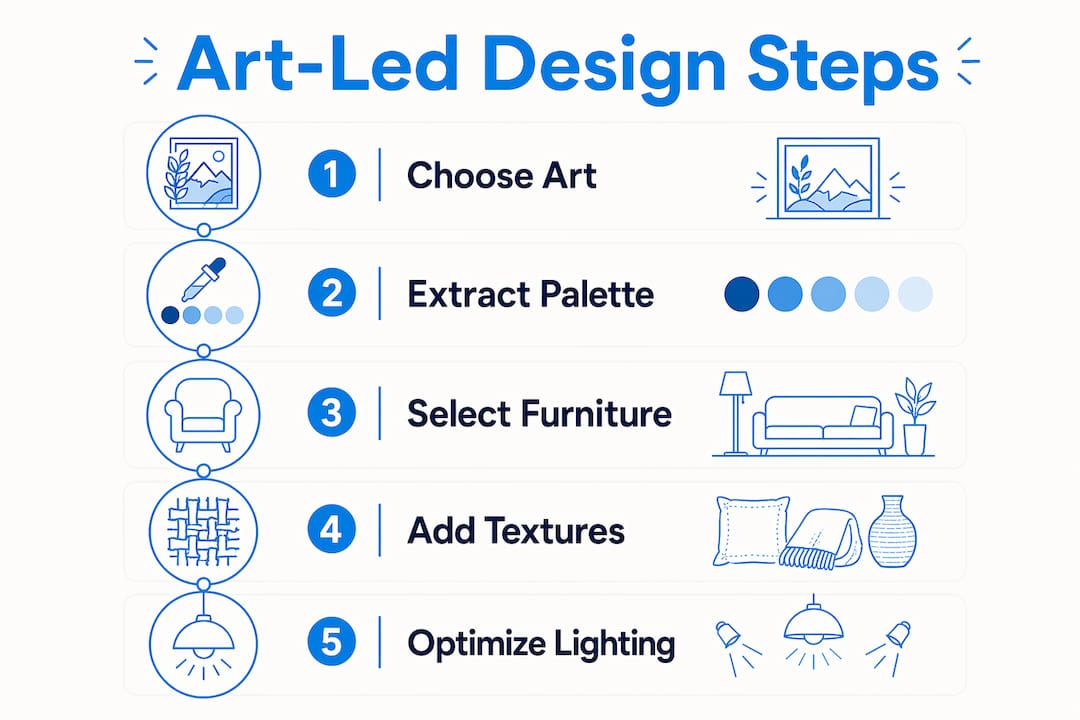
How to implement the art-first approach step by step
The four-step framework used by professional designers gives homeowners a clear path from blank room to finished space.
-
Select your centerpiece artwork. Choose a piece that produces a genuine emotional response. The criterion is not “does this match my sofa” but “does this piece move me.” Scale matters here. A large canvas on a primary wall commands the room; a smaller piece works better as part of a grouped arrangement.
-
Extract the design language from the art. Pull the dominant and accent colors directly from the artwork. Note its texture, mood, and energy. A bold abstract with deep navy and burnt orange tells you the room can handle rich textiles and warm wood tones. A soft watercolor landscape calls for linen, muted walls, and natural light.
-
Plan furniture layout to complement the art’s scale and presence. Large-scale artworks in rooms with high ceilings define the room’s identity and guide where seating and tables should sit. Furniture should frame the art, not compete with it. Low-profile pieces keep the eye moving upward toward the work.
-
Plan lighting before anything else is installed. Lighting is a structural decision, not a styling one. Decide on track lighting, accent fixtures, or natural light sources at the same time you finalize the artwork’s position. Changing lighting after furniture is in place is expensive and often ineffective.
Pro Tip: When extracting colors from your artwork, use a physical print or high-quality photo rather than a screen image. Screen brightness distorts color temperature, and paint chips matched to a glowing monitor will look wrong under natural light.
This framework works for any budget and any room size. The logic scales from a single canvas in a studio apartment to a full art collection in a multi-room home.
How does art-led design differ from “decorator art”?
The distinction between art-led design and decorator art is the most important concept in this entire approach. Understanding it changes how you shop, how you hang, and how your room ultimately feels.
“Decorator art” refers to the practice of choosing artwork solely to match existing furnishings. The result is technically coordinated but emotionally flat. The art disappears into the room rather than animating it. You have seen this in hotel lobbies: inoffensive prints that match the carpet and mean nothing.
Art-led design demands the opposite. The artwork should create a point of tension, surprise, or depth that pulls the room together around something real.
“Art should be treated as an equal participant in shaping the room’s identity and atmosphere from the beginning, rather than being added later. The architecture and furnishings surrounding artwork should frame and reinforce its presence to avoid competition and visual noise.” — Interior design principle from AS Designs
Three specific design tools separate art-led interiors from decorator approaches:
- Negative space. Negative space and sightlines are used deliberately to let artwork breathe. Crowding a strong piece with competing objects kills its impact. A gallery wall works when spacing is intentional; it fails when it is just filling wall area.
- Sightlines. The first view of a room should land on the art. Furniture arrangement, doorway alignment, and even rug placement can direct the eye toward the centerpiece.
- Scale awareness. A piece that is too small for its wall reads as an afterthought. The general rule: err larger. Most homeowners underestimate the scale a wall can hold.
The art coordination with furniture styles matters too. A mid-century modern sofa and a baroque oil painting can coexist, but only if the room’s other elements mediate the contrast deliberately rather than accidentally.
How can homeowners reflect their personal identity through art-led design?
Personal connection is the non-negotiable foundation of art-led design. A piece you love but cannot fully explain will serve your space better than a technically perfect choice you feel neutral about. Emotional connection and long-term enjoyment outperform trend-matching every time.
Here is how to build a space that genuinely reflects who you are:
- Start with what you already love. If you have a piece you have moved from home to home, that is your anchor. Build the new room around it rather than retiring it.
- Consider local or emerging artists. Using local artists adds a narrative layer that mass-produced prints cannot replicate. The story behind a piece becomes part of the room’s identity.
- Balance scale with function. A dramatic oversized canvas works in a living room but overwhelms a narrow hallway. Match the art’s physical presence to the room’s actual use and traffic patterns.
- Avoid the “gallery wall as wallpaper” trap. Grouping many small prints to fill a wall is not art-led design. It is pattern. Choose fewer, stronger pieces and give each one room to register.
- Mix minimalism and maximalism deliberately. An art-focused home does not have to be sparse. A bold, colorful abstract can coexist with layered textiles if the colors trace back to the same source.
Pro Tip: Before committing to a piece for a primary wall, live with a printed mock-up at full scale for a week. Tape paper to the wall at the exact dimensions. Your reaction after seven days is more reliable than your reaction in a gallery.
The role of art in home decor extends beyond aesthetics. The most impactful interiors balance personal expression with thoughtful design, allowing personality to emerge naturally rather than being forced.
What role does lighting play in art-led interior design?
Lighting is the single most underestimated element in art-focused home decor. Most homeowners plan it last. In art-led design, lighting must be planned from the start as a structural decision, not a styling afterthought.
The right lighting does three things: it reveals the artwork’s true colors, it creates a focal hierarchy in the room, and it shifts the room’s mood across different times of day. Poor placement does the opposite. Glare washes out color. Shadows flatten texture. Warm-toned bulbs shift cool blues toward green.
The most effective lighting types for art-led interiors include:
- Track lighting. Adjustable heads let you redirect light as your collection changes. This is the most flexible option for homeowners who rotate pieces.
- Accent or picture lights. Mounted directly above or below a canvas, these create a focused pool of light that separates the artwork from the wall. They work best for single statement pieces.
- Natural light. Indirect natural light is ideal for art. Direct sunlight causes fading and glare. Position art perpendicular to windows rather than opposite them.
Pro Tip: Use bulbs rated at 2700K–3000K for warm-toned art and 3500K–4000K for cool-toned or high-contrast pieces. The color temperature of your bulb changes how the artwork reads more than almost any other variable.
Lighting also connects to ambiance in ways that extend beyond the art itself. The same principle that makes music-inspired candle collections emotionally resonant applies here: layered sensory elements, each reinforcing a central mood, produce a space that feels complete rather than decorated.
The 2026 art trends shaping homes reflect this shift. Homeowners are investing in lighting infrastructure alongside art acquisition, treating both as permanent features rather than accessories.
Key Takeaways
Art-led interior design produces cohesive, personally resonant spaces because it uses a chosen artwork as the single reference point for every other design decision.
| Point | Details |
|---|---|
| Art leads every decision | Select your centerpiece artwork before choosing paint, furniture, or textiles. |
| Extract the design language | Pull colors, textures, and mood directly from the artwork to guide all other choices. |
| Plan lighting early | Treat lighting as a structural element, not a styling finish, to keep art as the focal point. |
| Avoid decorator art | Choose pieces for emotional connection, not color matching, to create rooms with real depth. |
| Personal identity drives authenticity | Local artists, meaningful pieces, and deliberate scale choices produce spaces that reflect who you are. |
Why art-led design is the only approach worth taking seriously
I have seen homeowners spend months selecting the perfect sofa, the right rug, and a paint color they agonized over, only to hang a print at the end that makes none of it cohere. The room looks finished but feels empty. That is the decorator art trap in its most common form.
What changes when you start with the art is not just the sequence. It is the entire logic of the room. Every decision has a reference point. You stop asking “does this look good?” and start asking “does this serve the piece?” That shift removes most of the uncertainty from the process.
The rooms I find most memorable are not the ones with the most expensive furniture. They are the ones where you walk in and immediately understand something about the person who lives there. That understanding comes from the art. The furniture just holds the space.
Artist-led design views the home as a large-scale composition where every element contributes to a unified narrative. That is not a luxury concept. It is available to any homeowner willing to start with a piece they genuinely love and build outward from there.
The practical advice is simple: stop treating art as the last purchase. Make it the first. Everything else will follow with more clarity and less regret.
— Sense
Sensecanvas: canvas art built for art-led interiors
Art-led design only works when the centerpiece is worth building around. Sensecanvas offers over 15,000 canvas artworks across styles including abstract, animal themes, motivational, and more, all available with custom sizing so the piece fits your wall rather than the other way around.
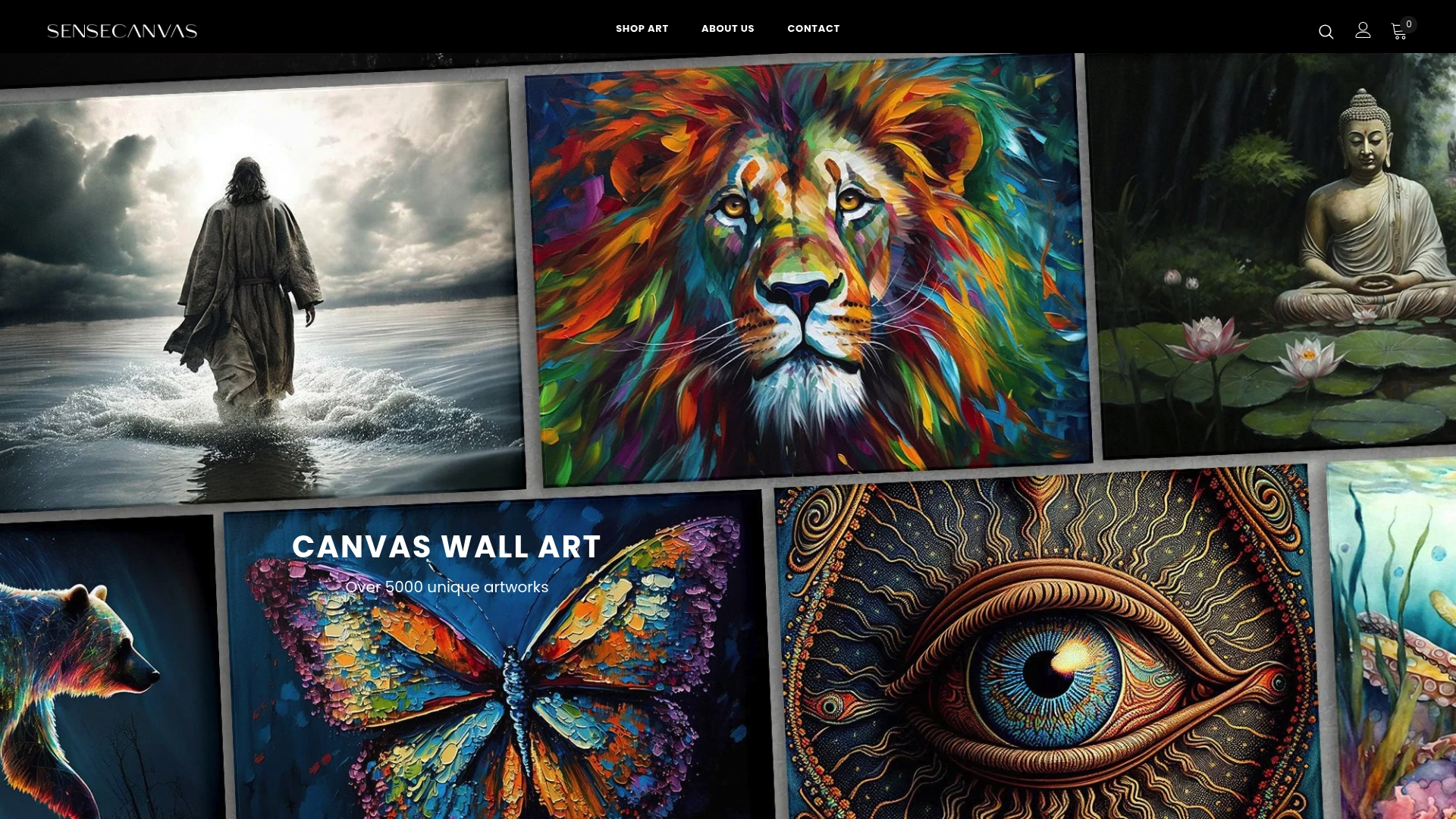
Every piece at Sensecanvas starts at $85, which makes it practical to commit to art-first decorating without a collector’s budget. The catalog covers the full range of moods and palettes a homeowner might need, from bold graphic prints to soft, layered abstracts. If you are ready to start your room with the art and let everything else follow, browse the full canvas art collection and find the piece that becomes your anchor.
FAQ
What is the core principle of art-led interior design?
Art-led interior design places artwork at the center of all design decisions, selecting a centerpiece piece first and deriving the room’s palette, materials, and layout from it rather than adding art at the end.
How does art-led design differ from traditional decorating?
Traditional decorating selects furniture and paint first, then finds art to match. Art-led design reverses this sequence, using the artwork as the primary reference point for every other choice.
What type of art works best as a design anchor?
Any piece that produces a genuine emotional response works as a design anchor. Scale, color range, and mood matter more than style category. A piece you love will guide decisions more effectively than a technically correct but neutral choice.
Does art-led design require a large budget?
Art-led design works at any budget. The key is selecting a piece with enough visual presence to anchor the room. Canvas prints starting at accessible price points, like those at Sensecanvas, give homeowners a strong starting point without requiring gallery-level spending.
How do I incorporate art in a room I have already furnished?
Start by identifying the strongest existing piece or acquiring one that resonates with you. Use it to audit what stays, what moves, and what changes. Repaint, reposition furniture, and adjust lighting to support the art rather than compete with it.