Why Nature Art Calms Interiors: the Science Behind It
Nature-inspired art calms interiors by triggering a deep biological response called biophilia, the human brain’s innate affinity for natural forms, colors, and patterns. This is not a design trend. It is a measurable psychological and physiological effect backed by research. Studies show that nature art reduces anxiety and depression symptoms significantly over time, and that even brief exposure lowers cortisol levels. For anyone building a calmer, more restorative home, understanding why nature art calms interiors is the first step toward making intentional choices that actually work.
Why does nature art calm interiors? The science explained
Nature art calms interiors because it activates attention restoration theory, a well-documented psychological mechanism where natural imagery softly engages the brain’s involuntary attention system. This gives the directed attention system, the part you use for focused work and decision-making, time to recover and replenish. The result is a measurable drop in mental fatigue and stress. It is the same reason a walk in the park feels restorative. A painting of a forest or a canvas of ocean waves produces a quieter version of that same effect from inside your living room.
The physiological evidence is clear. Viewing nature art lowers cortisol levels and improves mood, with those effects persisting even after exposure ends. That sustained response matters because it means the art continues working passively throughout your day. A 31% stress reduction was maintained 30 minutes after exposure to nature-based art installations, which suggests the calming effect is not just momentary.
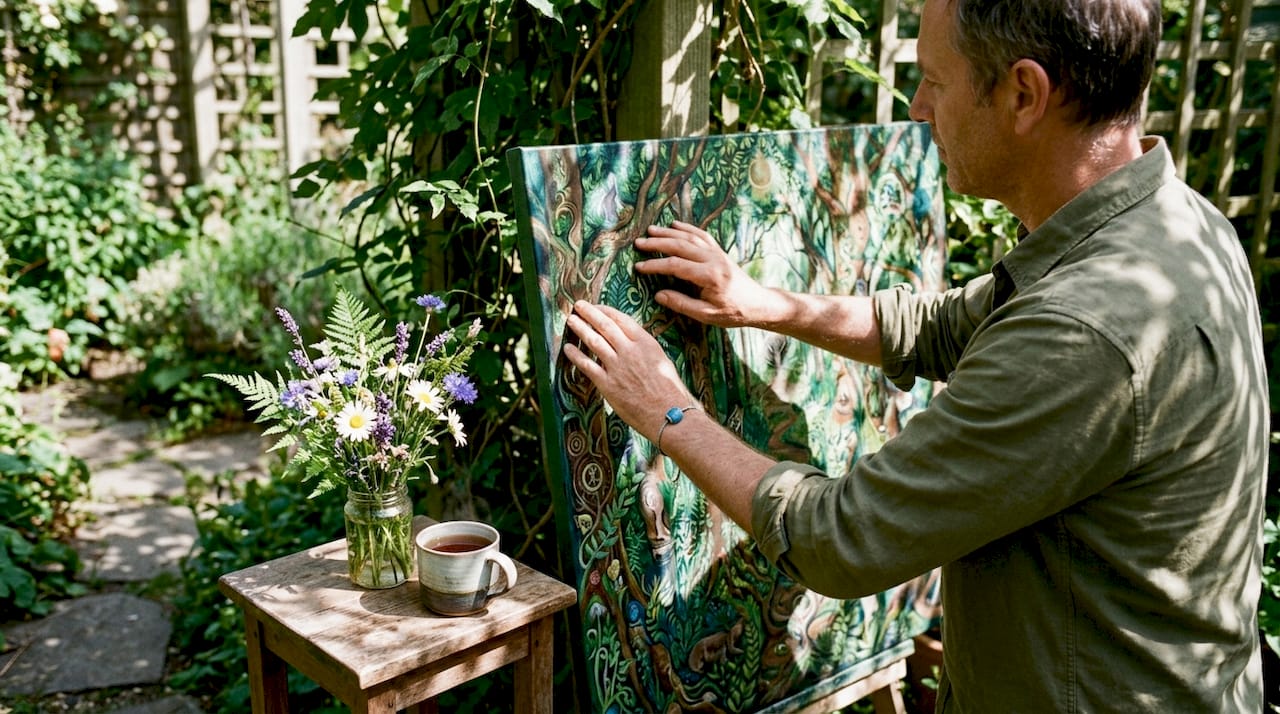
Nature art also reduces rumination, the repetitive negative thinking that drives anxiety. Research confirms that engaging with nature imagery significantly decreases rumination, with statistically meaningful results. That makes nature-themed art more than decoration. It functions as a quiet mental health tool embedded in your walls.
The key mechanisms at work include:
- Biophilia activation: The brain recognizes natural forms as safe and non-threatening, which lowers the nervous system’s alert state.
- Attention restoration: Soft, organic imagery replenishes cognitive resources without demanding focused effort.
- Cortisol reduction: Physiological stress markers drop measurably after viewing nature art.
- Rumination interruption: Nature imagery breaks cycles of anxious thought by redirecting attention gently outward.
What makes nature art especially calming in a room?
Not all nature art produces the same calming effect. The specific visual qualities of a piece determine how much it soothes versus stimulates. Color is the most immediate factor. Soft blues, earthy greens, and warm neutrals soothe the nervous system by signaling safety and stillness. These palettes appear throughout nature in water, soil, foliage, and stone, so the brain reads them as familiar and low-threat.
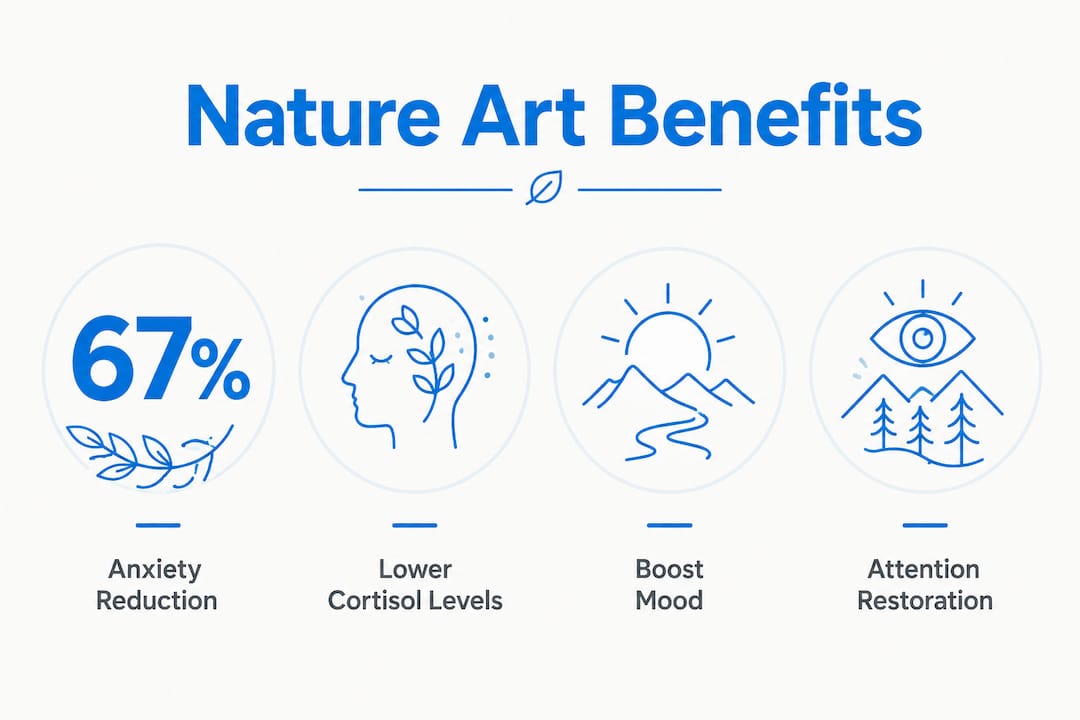
Texture plays an equally important role. Mixing tactile-like textures, such as rippled water surfaces or wood grain patterns, with earthy color palettes creates a multisensory grounding experience. This works better than flat imagery because the brain processes depth and texture as additional signals of a real, stable environment. A canvas with visible brushwork that mimics bark or stone does more calming work than a smooth, graphic print of the same subject.
Pattern structure also matters. Fractal and branching patterns found in trees, coastlines, and ferns are recognized by the brain as inherently non-threatening. These patterns balance freedom and cohesion in a way that mirrors natural systems, and the brain responds with comfort rather than alertness. High-contrast, geometric, or chaotic compositions produce the opposite effect.
The calming characteristics to look for in nature art include:
- Color palette: Soft blues, sage greens, warm taupes, and sandy neutrals over bright or saturated tones.
- Texture: Visible brushwork or layered surfaces that suggest depth and natural material.
- Pattern: Organic, rhythmic, or fractal compositions rather than sharp geometric shapes.
- Abstraction level: Gentle abstraction allows personal emotional connection without prescriptive imagery.
- Contrast: Low to moderate contrast keeps the eye moving slowly rather than snapping between focal points.
Pro Tip: Avoid nature prints with stark white backgrounds and high-contrast black outlines. They read as graphic design, not nature, and stimulate rather than soothe.
How to integrate nature-inspired art into your home effectively
Placement and scale determine whether nature art actually calms a room or simply occupies wall space. A piece that is too small for a large wall loses its psychological impact. A piece that is too large for a narrow hallway creates visual pressure. The goal is for the art to feel like a natural extension of the room, not an afterthought.
Follow these steps to place nature art with intention:
-
Identify the room’s primary focal point. In a living room, this is usually the wall behind the sofa. In a bedroom, it is the wall behind the headboard. Place your largest or most emotionally resonant nature piece here so it anchors the room’s mood from the moment you enter.
-
Match scale to the wall and furniture. A canvas should span roughly two-thirds the width of the furniture it hangs above. A piece that is too narrow creates visual imbalance and weakens the calming effect.
-
Choose art by room function. Bedrooms benefit from the softest, most muted nature imagery, think misty forests, still water, or abstract botanicals. Living rooms can handle slightly more dynamic compositions, such as a deer forest canvas with layered depth. Home offices respond well to open-sky or landscape prints that give the eye a visual resting point during focused work.
-
Balance art with lighting. Natural light enhances the calming qualities of nature art by revealing texture and depth. Position pieces where daylight can reach them, or use warm-toned artificial lighting to avoid the flattening effect of cool white bulbs.
-
Use multiple pieces for rhythm. A gallery wall of three to five nature prints in a cohesive palette creates visual rhythm that feels more organic than a single isolated piece. Vary the subjects slightly, water, foliage, sky, to mimic the layered complexity of a real natural environment.
-
Prioritize mood over trend. The art that calms you is the art that resonates with you personally. A piece that evokes a specific memory of a place in nature will outperform a trendy print that leaves you emotionally neutral.
The impact of art in interiors is not accidental. Intentional placement turns a canvas into a functional part of the room’s emotional design.
What deeper benefits does nature art offer beyond a calm atmosphere?
Nature art does more than reduce stress in the moment. Long-term exposure to biophilic art environments produced a 67% improvement in depression symptoms and a 72% reduction in anxiety symptoms over 12 months. Those numbers come from structured interventions, but they point to something meaningful for everyday home environments. Living with nature art consistently is not the same as hanging a print and forgetting it. The ongoing visual relationship builds emotional resilience over time.
One of the less discussed benefits is nature art’s role in processing eco-anxiety. The British Association of Art Therapists describes nature art as a co-therapist that helps people process climate distress and ecological grief by providing symbolic connection and fostering emotional regulation. Rather than increasing distress, confronting natural imagery in a safe domestic context builds resilience rather than despair.
Nature art also changes meaning over time. Your response to a painting of a winter forest at 9 AM on a stressful Monday is different from your response on a relaxed Sunday afternoon. That evolving relationship is part of what makes nature art a lasting investment rather than a static decoration.
“Responding to nature imagery moves beyond aesthetics. It creates an emotional connection that evolves over time and personal circumstances, offering a quiet, renewable source of grounding within your own home.”
The role of art in home decor extends well past visual appeal. Nature-themed pieces bring softness and humanity to modern interiors that can otherwise feel cold or impersonal. They reconnect you to natural rhythms in a way that no furniture choice or paint color can replicate.
Key takeaways
Nature art calms interiors through biophilia, attention restoration, and cortisol reduction, making it one of the most research-supported tools in residential interior design.
| Point | Details |
|---|---|
| Biophilia drives the calm | The brain reads natural forms as safe, which lowers the nervous system’s alert state immediately. |
| Sustained stress relief | A 31% stress reduction persists 30 minutes after exposure, meaning art works passively throughout your day. |
| Color and texture matter most | Soft blues, earthy greens, and tactile brushwork produce stronger calming effects than flat or high-contrast imagery. |
| Placement amplifies impact | Hanging nature art at a room’s focal point and matching scale to furniture maximizes its psychological effect. |
| Long-term emotional benefit | Consistent exposure to nature art builds emotional resilience and reduces anxiety symptoms over months, not just minutes. |
What I’ve learned from watching nature art change a room
I have seen clients dismiss nature art as “too safe” or “too obvious,” then return months later saying it was the best decision they made for their home. The skepticism is understandable. Nature prints can look generic in a catalog. But the right piece, placed with intention, does something that no abstract or figurative work can replicate. It makes a room feel like it breathes.
The lesson I keep coming back to is this: trust your nervous system, not your aesthetic ego. If a piece of art makes you slow down when you walk past it, that is the effect you want. That involuntary pause is attention restoration theory working in real time. You do not need to understand the science to feel it.
I have also noticed that the people who get the most from nature art are those who choose pieces connected to a real memory or place. A canvas of a Pacific Northwest forest means something different to someone who grew up hiking there. That personal resonance amplifies every calming mechanism the art already has. Generic “calm” and personal “calm” are not the same thing. Choose the art that belongs to your story, and it will keep giving back.
— Sense
Nature-inspired canvas art for your home
Sensecanvas offers over 15,000 canvas wall art pieces, including a curated selection of nature-inspired prints built around the calming palettes and textures discussed throughout this article.
Whether you are looking for a serene ocean scene, a layered forest composition, or an abstract botanical, Sensecanvas carries options across a wide range of sizes and price points starting from $85. Every piece is available with custom sizing so you can match the scale to your specific wall and furniture. The abstract ocean canvas is a strong starting point for bedrooms and living rooms where soft blues and fluid texture are the goal. Browse the full nature art collection to find the piece that fits your space and your mood.
FAQ
Why does nature art reduce stress indoors?
Nature art activates biophilia and attention restoration theory, which lower cortisol levels and reduce mental fatigue. Research shows a 31% stress reduction is maintained 30 minutes after exposure to nature-based art.
What colors in nature art are most calming?
Soft blues, earthy greens, and warm neutrals are the most calming color choices. These palettes soothe the nervous system by signaling safety and stillness, mirroring colors found throughout the natural world.
Where should I hang nature art for the best calming effect?
Hang nature art at the room’s primary focal point, such as the wall behind a sofa or headboard. Use a room-by-room approach to match the subject and mood of the art to the function of each space.
Does nature art help with anxiety long-term?
Yes. A longitudinal study found that biophilic art environments reduced anxiety symptoms by 72% over 12 months, suggesting that consistent exposure builds lasting emotional resilience rather than just temporary relief.
What type of nature art works best in a bedroom?
Muted, low-contrast imagery such as misty forests, still water, or soft abstract botanicals works best in bedrooms. Avoid high-contrast or busy compositions, which stimulate rather than soothe the mind before sleep.